


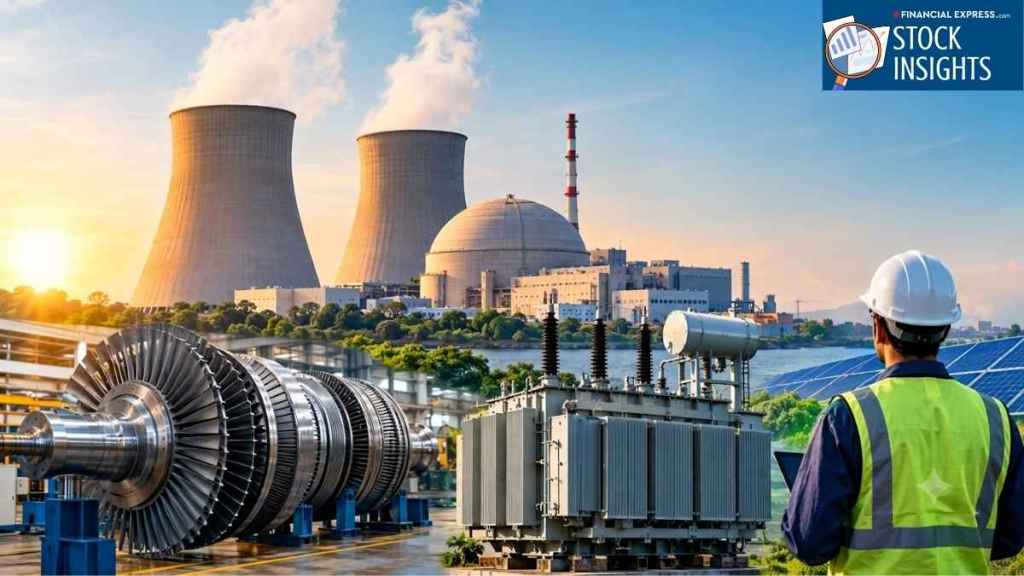

India’s nuclear power sector is entering a new phase. As of today, India’s installed nuclear power capacity stood at around 7.7 gigawatts electric, according to the World Nuclear Association. The government, however, has set a far more ambitious target: 100 GW of nuclear capacity by 2047. That would require a nearly 13-fold expansion of the existing capacity.
The 100 GW Horizon: Sizing India’s ₹20 Lakh Crore Nuclear Bet
The scale of investment required is equally striking. Estimates from Singapore-based Nuclear Business Platform suggest that achieving this target could require around $214 billion, or approximately ₹20 lakh crore. Private capital and participation will likely play a larger role in supporting the sector’s growth.
That is where the policy shift becomes important. The SHANTI Act opened the door to private-sector participation in India’s nuclear energy industry. The next phase of growth will also depend on technology. Small Modular Reactors are a key part of India’s nuclear ambitions, with the Union Budget 2026 allocating ₹20,000 crore towards their development.
The government aims to develop and commission five indigenous SMRs by 2033. The broader ambition is to raise nuclear power’s contribution to India’s electricity mix from around 3% today to 25% by 2050, although achieving that target will depend on execution, financing, technology and regulatory progress.
Against this backdrop, we examine two stocks that have recently announced their Q2FY27 results. One is an established player with a dominant position in the sector, while the other, a power and transformer company, has secured its maiden order, potentially opening up a new growth opportunity.
#1 Bharat Heavy Electricals Limited
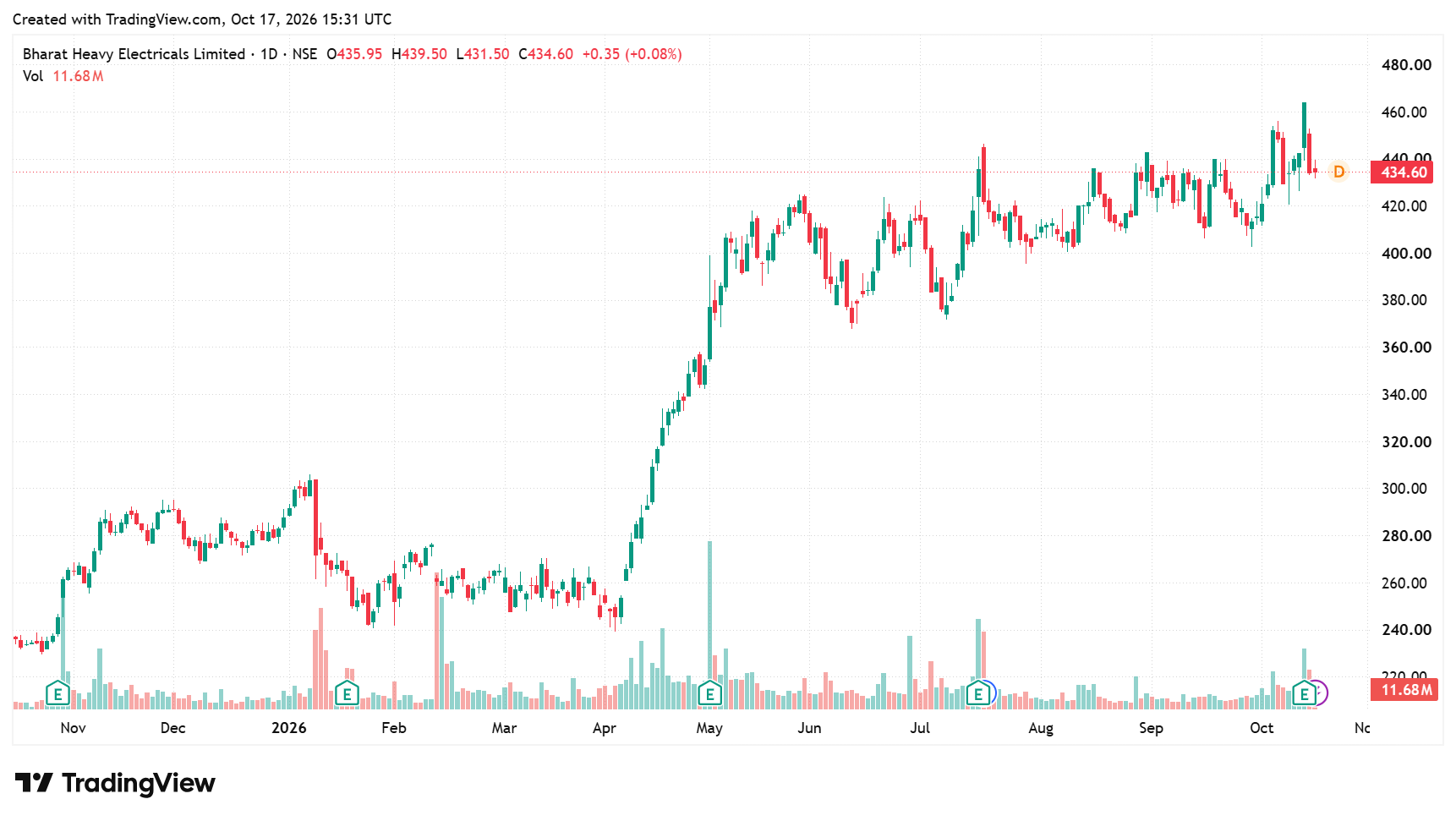
Bharat Heavy Electricals Limited (BHEL) is a public sector undertaking. BHEL provides capital goods and EPC services for the power (thermal, hydro, nuclear, gas, and solar), transmission, transportation, defence, oil and gas, and process industries. BHEL has an installed base of 179 gigawatts (GW) in conventional utility power, representing a 53% share in India.
BHEL’s Nuclear Moat: Dominating India’s Three-Stage Atomic Fleet
BHEL accounts for 60% of India’s installed nuclear power capacity on the secondary side. It is the only enterprise associated with all three stages of the Indian Nuclear Power Programme. It is the sole domestic supplier of nuclear steam turbines and generators, providing complete EPC solutions for Turbine-Generator islands across 220 MWe, 500 MWe, and 700 MWe ratings.
On April 6, 2026, the company achieved a milestone with the first criticality of the 500 MWe Prototype Fast Breeder Reactor at Kalpakkam. It has supplied 15 nuclear utility sets in India totalling 5.4 GW. As India ramps up its clean energy capacity, nuclear power has emerged as a key part of BHEL’s non-thermal growth story.
Non-Thermal Diversification: Sizing the ₹2.57 Lakh Crore Backlog
BHEL maintains a nuclear order book of ₹12,800 crore as of Q1FY27. Nuclear forms part of BHEL’s non-thermal order book (which totals over ₹66,000 crore) as the company diversifies away from its dependence on conventional thermal coal. The order book is ₹2,57,000 crore, providing revenue visibility at 6.8x trailing twelve-month sales.
Management states that nuclear power is gaining traction to power infrastructure like data centres. BHEL is collaborating with key stakeholders to support the indigenous design and development of Bharat Small Modular Reactors alongside advanced Pressurised Water Reactor (PWR) and PHWR technology platforms.
The company has successfully commissioned 3 units of India’s highest-rated 700 MWe PHWRs at Kakrapar and Rawatbhata. For these projects, BHEL supplied a wide range of critical systems, including turbine-generator sets, nuclear steam generators, reactor headers, PCP motors, control and instrumentation packages, and generator transformers.
The company has developed an in-house advanced condition monitoring system called ‘KAMPAN’ for 220 MWe nuclear turbines. This system is designed for turbine supervisory instrumentation and vacuum unloader systems. BHEL plans to implement this technology across 7 nuclear units. The company also reported a strong financial performance in Q2FY27.
Q2FY27 Financial Performance: Operational Leverage Expands Margins to 11%
Revenue grew 24% year-on-year to ₹9,300 crore in Q2FY27. This topline expansion was driven by broad-based execution acceleration across Power and Industrial Segments. EBITDA (Earnings Before Interest, Tax, Depreciation, and Amortisation) grew 76.6% to ₹1,025.8 crore as margin expanded by 330 bps to 11%. BHEL’s net profit more than doubled (120%) to ₹809.6 crore.
#2 Transformers and Rectifiers (India) Limited
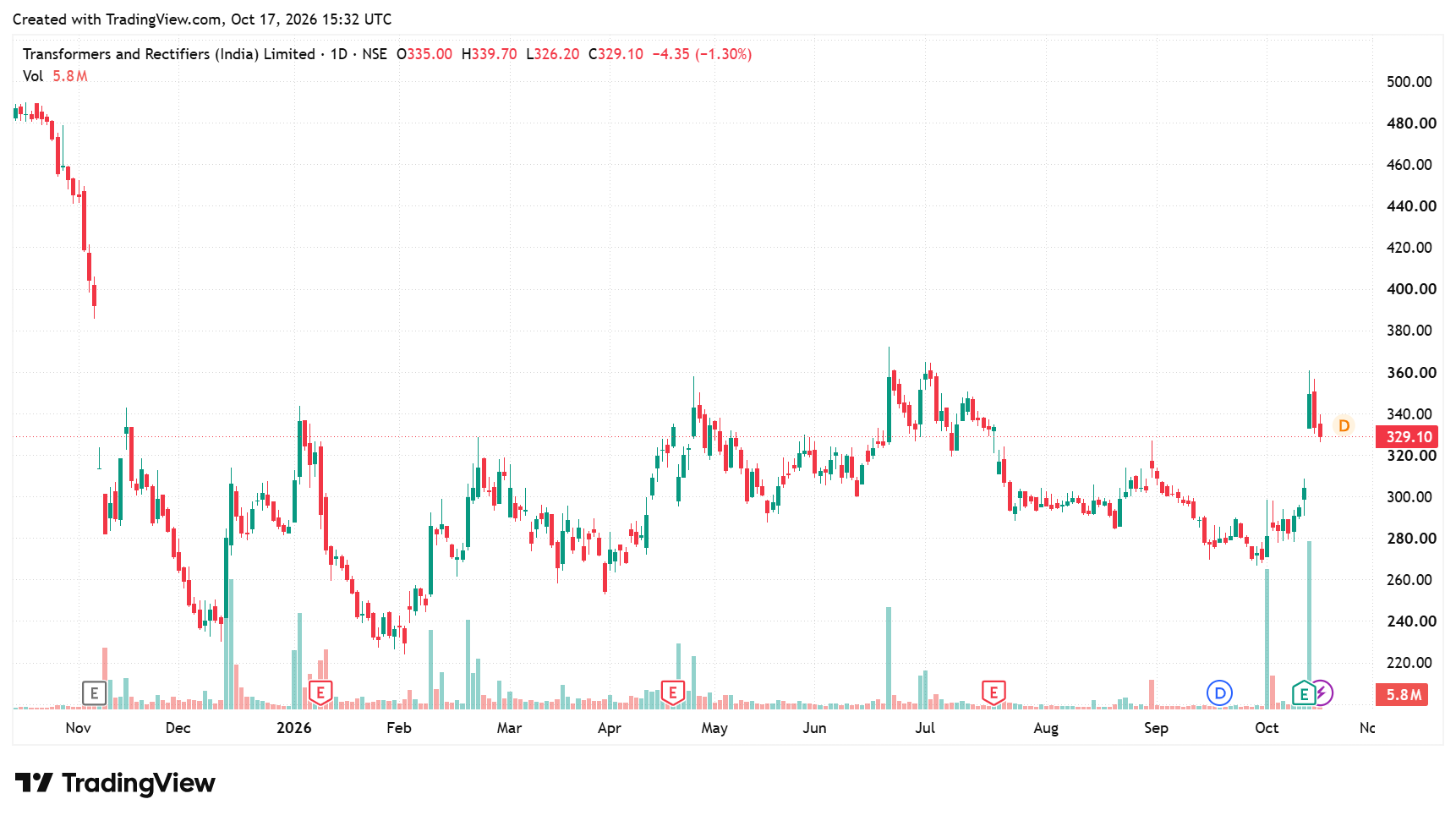
Transformers and Rectifiers (India) Limited (TARIL) manufactures power, distribution, furnace, rectifier, and specialty transformers, as well as shunt and series reactors. TARIL makes equipment across voltage classes ranging from 5 kV to 1,200 kV and capacities from 0.5 MVA to 500 MVA (and up to 1,200 kV class auto transformers).
Nuclear Expansion: Breaking Crompton’s Hold on NPCIL Kaiga Units
TARIL secured its landmark first-ever nuclear power order from the Nuclear Power Corporation of India Limited (NPCIL) for the Kaiga Units 5 & 6 project. TARIL was awarded the contract to manufacture and supply 400 kV+ class Generator Transformers. TARIL secured this contract in direct competition with major established transformer manufacturers such as Crompton.
Nuclear power generator transformers demand extreme reliability, stringent quality standards, and rigorous safety certifications. This marks TARIL’s entry into a high-margin niche alongside its developments in High Voltage Direct Current and extra-high-voltage (EHV) grid solutions.
Management emphasised that qualifying for NPCIL nuclear projects is repetitive. As NPCIL rolls out additional nuclear power plants across India, TARIL is now qualified to compete for and capture follow-on orders. Note that the transformer component accounts for about 15-18% of the project’s relevant equipment expenditure.
Scaling to ₹4,000 Crore: Decoding TARIL’s ₹21,000 Crore Project Pipeline
TARIL has guided for consolidated revenue of approximately ₹3,200 crore in FY27, a growth of roughly 25-28% YoY over FY26. Management maintains margin guidance with an EBITDA margin around 16% and a PAT margin between 9% and 10% for FY27. This revenue visibility is secured by an unexecuted order book of ₹7,237 crore as of Q2FY27.
The unexecuted pipeline exceeds ₹21,000 crore. Management has outlined a strategic roadmap to achieve US $1 billion in group revenue by FY30. The company achieved baseline revenue of ₹2,500 crore in FY26. It plans to scale toward ₹4,000 crore by FY28 as new capacities ramp up and backward integration becomes fully operational.
Operating Leverage at Scale: How TARIL Boosted Q2 Margins to 17.4%
In Q2FY27, revenue grew by 60.7% year-on-year to ₹739.4 crore. This increase was driven by better capacity utilisation and operating leverage across manufacturing plants. EBITDA stood at ₹128.7 crore, with a margin of 17.4%, compared to ₹58.8 crore and a 12.8% margin in Q2 FY26. Net profit reached ₹81.3 crore, up 116.8% from ₹37.5 crore in Q2FY26.
Valuation Reality Check: BHEL’s 52x P/E vs TARIL’s 32x Discount
With superior growth and profitability, TARIL leads the return ratios chart (Return on Capital Employed (ROCE) and Return on Equity (ROE)). These ratios are broadly in line with the industry’s median return ratios. BHEL’s bottom line, on the other hand, has been volatile, reflecting the capital-intensive nature of the business and the cyclical nature of its earnings.
This is why BHEL’s five-year historical median Price-to-Earnings (P/E) valuation appears extremely rich, as its relatively low earnings denominator in the past has inflated the multiples.
While profitability has been gradually improving, the key question is whether the company can sustain this improvement amid sectoral tailwinds, even though the current multiple is at a premium to the industry median.
TARIL’s valuation, meanwhile, has moderated from its peak and now trades at a P/E of 32.4, which is at a discount to both its historical and industry median.
| Valuation Comparison (X) | ||||
| Price-to-Earnings Multiple | Return Ratios | |||
| Company | Company | 5Y Median | ROCE (%) | ROE (%) |
| BHEL | 52.6 | 122.2 | 9.1 | 6.2 |
| TARIL | 32.4 | 38.6 | 23.3 | 19.1 |
| Industry | 33.9 | 23.5 | 20.0 | |
| Source: Screener.in (Data as of October 16 2026) | ||||
India’s nuclear power expansion presents a long-term opportunity, but not every stock will benefit equally. BHEL brings an established position and a ₹12,800 crore nuclear order book, while TARIL’s maiden NPCIL order opens a new growth avenue.
The real differentiator will be execution. BHEL must convert its backlog into sustainable earnings. TARIL must demonstrate that its first nuclear order can translate into repeat business. That said,keep these stocks on your watchlist to see how they tap into upcoming demand.
Disclaimer:
Note: Throughout this article, we have relied on data from http://www.Screener.in and the company’s investor presentation. Only in cases where the data were unavailable have we used an alternative, widely accepted and widely used source of information.
The purpose of this article is only to share interesting charts, data points, and thought-provoking opinions. It is NOT a recommendation. If you wish to consider an investment, you are strongly advised to consult your advisor. This article is strictly for educational purposes only.
About the Author: Madhvendra has been deeply immersed in the equity markets for over seven years, combining his passion for investing with his expertise in financial writing. With a knack for simplifying complex concepts, he enjoys sharing his honest perspectives on startups, listed Indian companies, and macroeconomic trends.
A dedicated reader and storyteller, Madhvendra thrives on uncovering insights that inspire his audience to deepen their understanding of the financial world.
Disclosure: The writer and his dependents do not hold the stocks discussed in this article.
The website managers, its employee(s), and contributors/writers/authors of articles have or may have an outstanding buy or sell position or holding in the securities, options on securities, or other related investments of issuers and/or companies discussed therein. The articles’ content and data interpretation are solely the personal views of the contributors/ writers/authors. Investors must make their own investment decisions based on their specific objectives, resources, and only after consulting such independent advisors as may be necessary.