



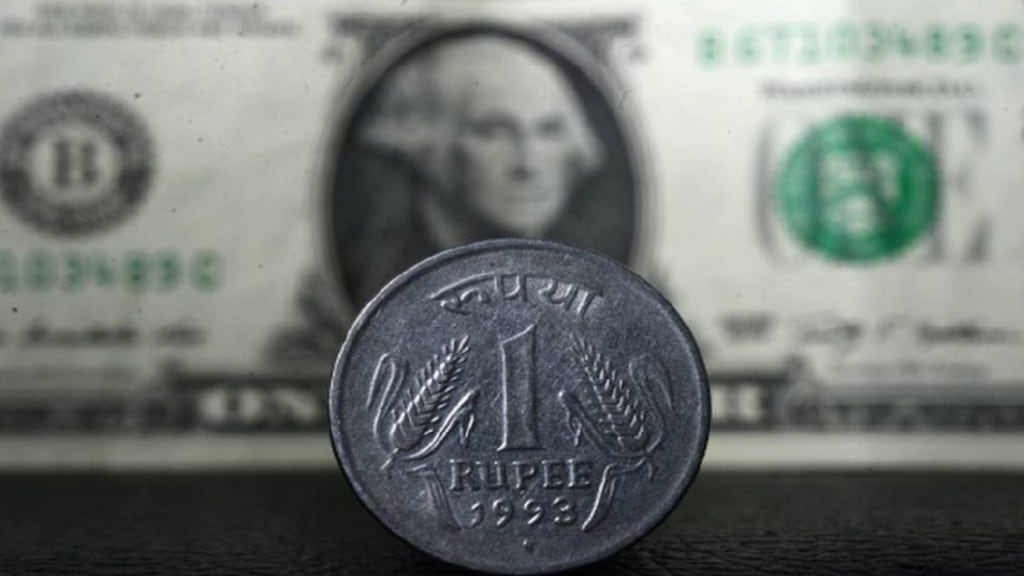
The rupee has been on a weak streak. The currency hit fresh lifetime lows below the 90 per dollar mark. According to Bank of America, this weakness is on the back of weak capital flows and the lingering uncertainty about the US-India trade deal.
The Bank of America report highlighted that the currency had already experienced a significant depreciation of 12.1% in Real Effective Exchange Rate (REER) terms over the last year, a magnitude the brokerage considered “large by historical standards”.
Bank of America on Rupee: Inflation threat looms ahead
The rupee weakness generally adds to inflationary pressures. Bank of America’s research suggested that a 5% weakness in the REER can imply as much as a 35 basis point (0.35%) increase in inflation over three to four quarters. This, the report noted, is the direct cost of currency fluctuation borne by consumers and businesses.
While the threat remains material, Bank of America expected the impact to be mitigated in the near term. This was largely due to lower global energy prices, which provided a useful cushion by offsetting the higher cost of crude imports. Yet, the report warned, the currency weakness was already contributing to elevated gold prices and was visible in core CPI inflation, confirming that the currency’s slide was already filtering through to consumer costs.
Bank of America on Rupee: Trade deal uncertainty fuels capital flight
The decline in the rupee came amid weak trade and portfolio flows, along with growing uncertainty over the India-US trade deal, which kept the currency under pressure.
Bank of America’s report cited the uncertainty surrounding the finalisation of a US-India trade deal to reduce tariffs as crucial for supporting portfolio flows. Bank of America argued that until this trade picture is settled, the confidence needed for large-scale capital commitment remains elusive.
Bank of America on Rupee: Import compression hits domestic demand
Within the mechanism of GDP growth, the report stated that imports typically are the first point of impact when the Rupee weakens. This effect is particularly felt in discretionary and consumer-related imports.
A weaker Rupee does tend to improve the trade balance over time, which is the textbook “J-Curve” effect. However, BofA was firm that this positive correction was likely to work more strongly through import demand compression, that is, consumers simply buying less expensive foreign goods rather than an immediate uplift in exports. The report explained that a 5% depreciation in REER typically weakens imports by 2.3%. In simple terms, the immediate economic effect of a sliding currency is that domestic consumption takes a hit first, saving foreign currency at the expense of demand.
Bank of America on Rupee: What a weak currency implies
Bank of America pointed out that a weaker exchange rate can increase government expenditure, particularly on fertilizer subsidies, as imported feedstock becomes costlier. This is a material negative for the fiscal deficit. However, the brokerage identified a possible offset. The RBI’s persistent intervention to stabilise the currency was expected to increase its foreign exchange earnings.
This, the Bank of America analysis concluded, could result in a potentially larger dividend from the RBI in FY27, which would serve to cushion or offset some of the resultant fiscal burden, leaving the net outcome somewhat “unclear”.