



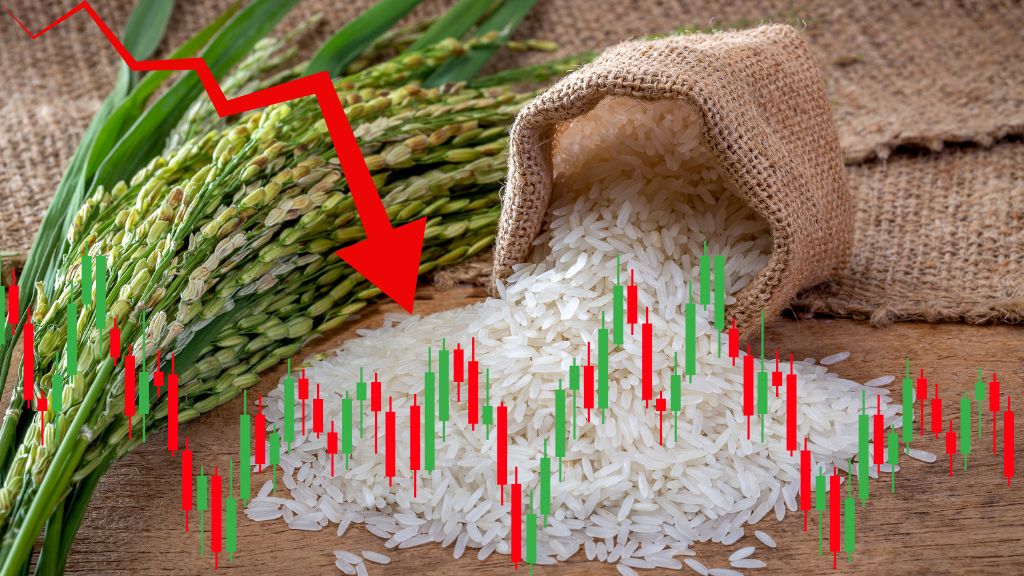
Indian rice exporter companies saw sharp knee-jerk reaction in early trade after US President Donald Trump hinted fresh tariff warnings. He signalled that his administration could impose additional tariffs on agricultural imports, including Indian rice. The warning immediately ompacted investor sentiment, pulling down stocks such as LT Foods, KRBL and GRM Overseas. However some counters saw slight recovery after initial drop.
LT Foods share price lead the fall
Trading began on a weak note for all major rice exporters. LT Foods share price slipped over 7% in the intraday trade today. KRBL, one of the largest basmati exporters, saw a decline of 1%, while GRM Overseas dropped nearly 4%. Kohinoor Foods also traded nearly 1% lower.
The sudden drop was triggered by comments made by the U.S. President during a meeting at the White House, where he hinted at using tariffs “aggressively” to safeguard American farmers.
Share of Indian rice exports to US under 5%
One of the reasons for the recovery seen in some stocks like KRBL is because India’s share in rice imports by US is under 5% and is primarily concentrated to Basmati rice variants. In terms of FY24 numbers, India had exported a little over 2 lakh tonne of rice to US and this is valued under $400 million. Just to put it in context, India’s total basmati exports were well over 52 lakh tonnes in FY24. The dominant markets for Indian Basmati rice exports continue to be Saudi Arabia, UAE, Iran and other West Asian nations. Several African nations like Benin, Senegal and Nigeria are key markets for non-Basmati rice exports
What President Trump said about Indian rice imports
The remarks came during a session involving farmers, lawmakers and senior officials, where the U.S. administration announced a fresh assistance package worth $12 billion for American farmers. According to the reports, this aid would be funded by tariff revenues collected from various trade partners.
During the discussion, representatives raised concerns about struggling rice producers in southern U.S. states. They pointed out that imports from India, Thailand and Vietnam were arriving at much lower prices, making it difficult for domestic farmers to compete.