


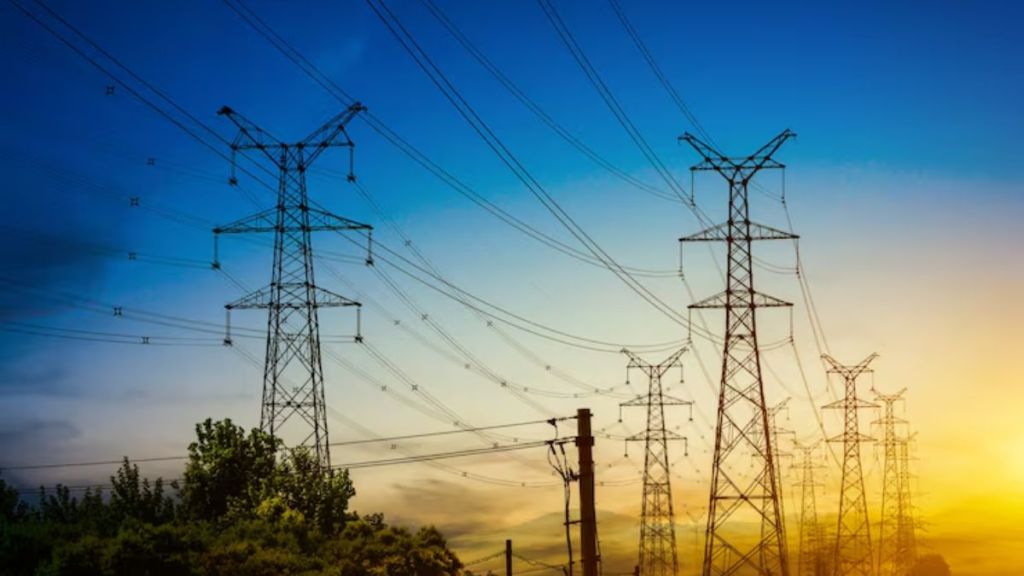

India wants to run its homes and factories on clean energy. But making clean power is only half the job. Someone must also carry it from solar and wind farms to the cities that use it. The government has unveiled the PM Dhara Scheme. This is phase three of whta was earlier known as the Govt’s Green Energy Corridor program.
The global brokerage house Nomura has shared its outlook on India’s capital goods sector and identified its top stock picks within the space. The new government programme involving Rs 1.9 lakh crore could create fresh demand for transmission equipment and battery storage solutions.
According to the Nomura report, GE Vernova T&D India, Hitachi Energy India and CG Power and Industrial Solutions are its top picks in the capital goods space. The brokerage believes the latest phase of the Green Energy Corridor could provide greater visibility for companies involved in transmission equipment and battery energy storage systems.
Let’s take a look at what makes this programme important for capital goods companies and what is the brokerage house saying –
Rs 1.9 lakh crore transmission push
On September 30, 2026, the Union Cabinet approved the Green Energy Corridor Phase-III (GEC-III).
According to the Nomura report, the programme has an overall outlay of Rs 1.9 lakh crore. Of this, around Rs 1.4 lakh crore is earmarked for the Intra-State Transmission System (ISTS), while Rs 50,000 crore is planned for Battery Energy Storage Systems (BESS).
The programme aims to evacuate 135 gigawatts (GW) of renewable energy and deploy 50 gigawatt-hours (GWh) of battery storage.
The report noted, “At Rs 1.9 trillion, the outlay for GEC-III is significantly higher than GEC-I and GEC-II.”
The government wants the programme completed by FY33. It is also expected to support India’s target of reaching 900 GW of installed non-fossil fuel capacity by 2035.
Why PM Dhara or GEC-III matters for capital goods sector
More renewable power also means more transmission infrastructure is required to move electricity from generation sites to consumers. According to Nomura, this is where equipment manufacturers could see increased demand.
The report said, “GEC-III marks a sharp step-up from earlier phases in terms of outlay.” The programme is expected to involve substantial additions of transmission lines and substations. It also includes battery storage, creating another potential area of demand.
But there is a catch. The previous phases have not progressed at the same pace.
What happened with Green Energy Corridor-I and GEC-II?
The first phase of the Green Energy Corridor targeted the integration of 24 GW of renewable energy across eight states.
The brokerage house Nomura in its report noted that the original completion deadline was December 2020. However, it was later extended to March 2023. The delays were partly linked to the Covid-19 pandemic. The targets were largely achieved, according to data from the Ministry of New and Renewable Energy (MNRE).
The second phase had a target of integrating 20 GW of renewable energy across seven states.
However, its execution has been slower.
As per the report, 73 of 91 packages had been tendered and 67 awarded by December 2025. Yet, no renewable energy projects had been connected under Green Energy Corridor-II, based on information provided by the states.
PM Dhara unveiled: Which stocks does Nomura prefer?
This is where the report gets interesting for investors. According to Nomura, GE Vernova T&D India, Hitachi Energy India and CG Power and Industrial Solutions could be major beneficiaries of the latest transmission investment cycle.
The brokerage said, “the sharply higher outlay, addition targets, CFA and inclusion of the BESS component under GEC-III boosts the demand visibility for transmission equipment manufacturers.”
The report said, “greenfield projects under GEC-III will be awarded under the TBCB route.”
What investors need to watch
For now, the key question is execution. The scale of GEC-III is significantly larger than previous phases, but timely tendering, project awards and commissioning will determine how quickly the spending translates into actual orders for capital goods companies.
Disclaimer: This article is based on research reports from one or more brokerage firms and is for informational purposes only. The views, target prices, and recommendations expressed are those of the respective brokerage firms and do not reflect the official policy or position of Financial Express. This should not be construed as an offer, solicitation, or recommendation to buy or sell securities. Investors must conduct their own independent due diligence and seek advice from a SEBI-registered financial advisor before making any investment decisions.