


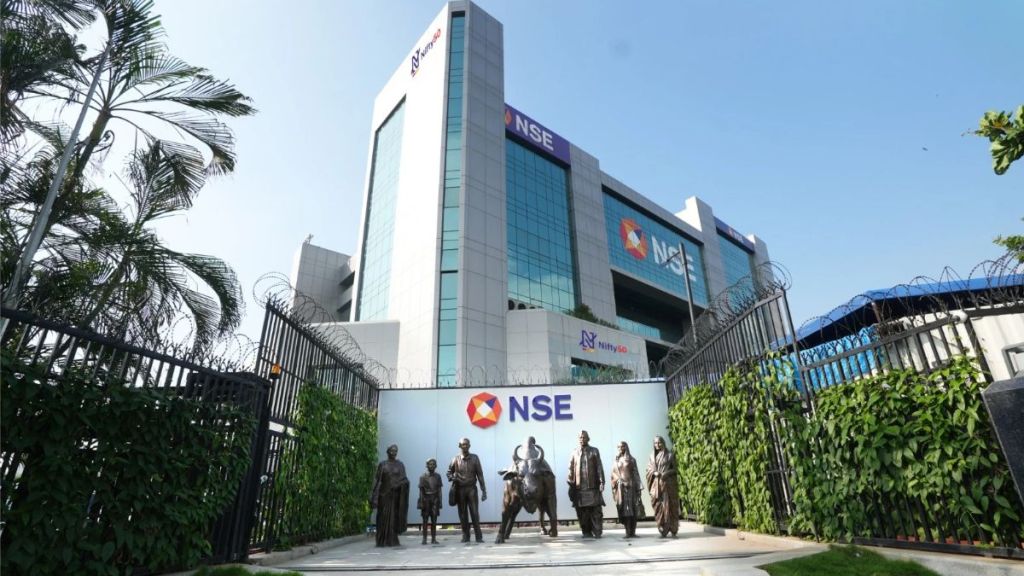

Jefferies has initiated coverage on NSE with a ‘Buy’ rating and a price target of Rs 2,085, implying an upside of approximately 17.3%. The global investment bank believes the National Stock Exchange of India (NSE) can benefit from this untapped demand, its leading position in exchange trading and opportunities to build revenue beyond its core business.
Jefferies expects revenue to grow at a compound annual growth rate (CAGR) of 15% between FY27 and FY29, while earnings per share (EPS) are projected to rise at a 16% CAGR through FY29. Higher operating margins, technology services and new businesses could provide further support to earnings.
NSE’s dominance provides a strong base for growth
NSE held leading positions across cash equities, equity options, equity futures, and clearing and settlement. It accounted for approximately 93% of cash equity market share and 75% of equity options in FY26, while commanding virtually the entire equity futures market.
Jefferies considers this market leadership a key advantage as trading activity expands and the exchange develops additional revenue streams. NSE generated revenue of Rs 16,600 crore in FY26, compared with Rs 17,100 crore in FY25.
The brokerage expects revenue to increase to Rs 17,400 crore in FY27, Rs 19,800 crore in FY28 and Rs 23,000 crore in FY29. Stabilisation in equity options market share, higher cash market turnover and growing technology revenue are expected to support the recovery.
Revenue growth is expected to accelerate through FY29
Jefferies expects NSE’s revenue to grow at a 15% CAGR over FY27-29, with EPS projected to increase at a 16% CAGR through FY29. The brokerage expects stronger revenue and operating leverage to support earnings growth over the period.
NSE: Jefferies earnings estimates (FY27-FY29)
| Financial metric | FY26 actual | FY27 estimate | FY28 estimate | FY29 estimate |
| Revenue | Rs 16,600 crore | Rs 17,400 crore | Rs 19,800 crore | Rs 23,000 crore |
| Adjusted EBITDA | Rs 12,700 crore | Rs 13,300 crore | Rs 15,300 crore | Rs 18,000 crore |
| Adjusted EBITDA margin | 76% | 77% | 77% | 78% |
| Adjusted EPS | Rs 43 | Rs 46 | Rs 53 | Rs 62 |
Source: Jefferies estimates. Figures are rounded.
Adjusted EBITDA is projected to rise from Rs 12,700 crore in FY26 to Rs 18,000 crore in FY29. Adjusted EPS is expected to increase from Rs 43 to Rs 62 over the same period.
Jefferies forecasts EBITDA margins to expand by around 200 basis points to 78% by FY29. Higher revenue and operating leverage are expected to support this improvement.
Equity options regulation remains a key earnings risk
Equity options accounted for around 60% of NSE’s operating revenue in FY26, making regulatory action in this segment important to its earnings outlook. Weekly index options represented approximately 40% of NSE’s revenue, compared with around 65% for BSE.
Jefferies expects NSE’s equity options market share to stabilise at around 65%. The brokerage also noted that clients with low trading turnover accounted for around 2-3% of equity options premiums, limiting the potential impact of measures aimed at protecting small traders.
The effects of earlier regulatory changes are expected to be largely absorbed in Jefferies’ forecasts. Stabilisation in options activity, together with growth in cash equities and other businesses, is expected to support revenue growth over the coming years.
New businesses could generate Rs 2,242 crore by FY30
Commodity derivatives, electronic gold receipts (EGRs) and mutual fund order processing offer NSE opportunities to expand beyond its established exchange operations. Jefferies estimates that these businesses could generate combined revenue of Rs 2,242 crore by FY30.
That amount would equal around 13.5% of FY26 revenue and 13.8% of FY26 profit after tax, according to the brokerage’s estimates. Their potential contribution is not included in Jefferies’ base-case forecasts.
NSE: Key growth drivers
| Growth opportunity | Estimated FY30 revenue |
| Commodity derivatives | Rs 859 crore |
| Mutual fund order processing | Rs 123 crore |
| Electronic gold receipts | Rs 1,260 crore |
| Total | Rs 2,242 crore |
Source: Jefferies estimates.
Commodity derivatives could benefit from new products and higher trading volumes, while NSE has scope to expand its presence in this segment. The brokerage estimates that EGRs could generate revenue of Rs 1,260 crore by FY30 as electronic receipts support the development of gold trading.
Mutual fund order processing could add another source of revenue, with digital platforms providing opportunities to expand adoption. Jefferies sees these businesses as potential additions to earnings beyond its core forecasts.
Technology services could grow at a 23% CAGR
Data and technology services provide another source of potential growth for NSE. Jefferies estimates that these activities accounted for around 8% of FY26 revenue and expects them to grow at a 23% CAGR through FY29.
NSE is also expected to add around 600 colocation racks over two years. These services could increase revenue from activities that are less directly tied to transaction volumes.
Jefferies expects growth in technology services, alongside stronger core revenue, to support profitability. It forecasts EBITDA margins to reach 78% by FY29, compared with 76% in FY26.
Low equity participation leaves room for expansion
India’s direct equity investor base has increased around fourfold since Covid-19, according to Jefferies. However, direct equity participation remains at approximately 3% of the population, compared with 18% in China.
The global investment bank expects further participation in financial markets to support trading activity and demand for exchange services over time. A broader investor base could benefit NSE as more individuals enter the equity market.
Market volatility could also support revenue. Transaction charges on equity options are linked to premium turnover, so higher volatility can increase premiums and exchange revenue, while some operating costs do not rise proportionately.
NSE trading at a discount to BSE: Jefferies
Jefferies bases its price target of Rs 2,085 on 35 times estimated December 2028 EPS. The valuation represents a premium of approximately 15% to the brokerage’s assessed fair value for BSE, reflecting NSE’s business diversification, margins and dividend yield.
The report notes that NSE traded at a discount to BSE on FY28 estimated earnings multiples, despite the advantages Jefferies attributes to its business mix and growth prospects.
The ‘Buy’ rating rests on expected revenue acceleration, stronger margins and the possibility that newer businesses could contribute additional earnings beyond the core forecasts.
Regulatory and operational risks remain
Jefferies identifies tighter regulation of equity options, cyberattacks and disruption to benchmark indices as key risks to its assessment of NSE.
Further restrictions on options trading could reduce activity and transaction revenue. Cybersecurity incidents or disruption to market infrastructure could also affect the exchange’s operations and reputation.
The contribution from newer businesses may fall short of estimates if product adoption or trading volumes develop more slowly than expected.
NSE’s next phase of growth
NSE’s established market position gives it a strong starting point, but its longer-term growth will also depend on expanding technology services and building new sources of revenue. Jefferies believes these opportunities support its ‘Buy’ rating, although regulatory action and operational risks remain important considerations.
Disclaimer: This article is based on research reports from one or more brokerage firms and is for informational purposes only. The views, target prices, and recommendations expressed are those of the respective brokerage firms and do not reflect the official policy or position of Financial Express. This should not be construed as an offer, solicitation, or recommendation to buy or sell securities. Investors must conduct their own independent due diligence and seek advice from a SEBI-registered financial advisor before making any investment decisions.