


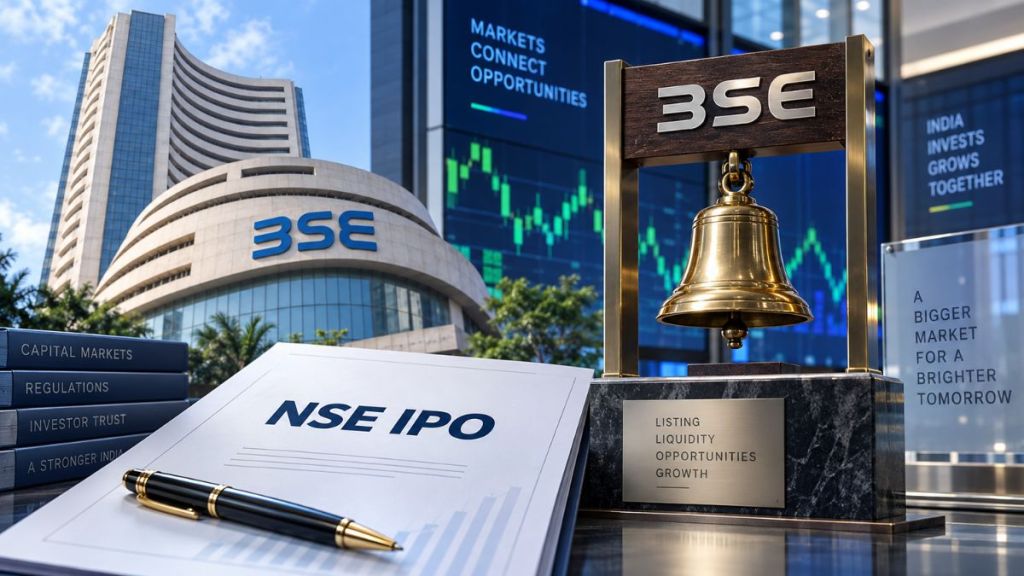

The long wait is finally over. The allotment for the much-awaited NSE IPO is over, and the shares are all set to make their market debut, but there is a twist in the tale. NSE will list on BSE and not on NSE. Wondering why or how?
Why will NSE shares not list on NSE
The listing rules have a deep regulatory history. They follow strict norms as per regulations guiding the listing of exchanges under the Securities Contracts (Regulation) (Stock Exchanges and Clearing Corporation) Regulations, 2019, or the SECC Regulations. These regulations govern market infrastructure institutions.
The NSE shares will not trade on its own exchange, as that raises concerns about ‘conflict of interest’. It raises questions about transparency, fairness, and regulatory independence.
Where will NSE shares trade?
As a result, the country’s largest stock exchange and a key pillar in India’s financial system will list on Asia’s oldest stock exchange, BSE. The NSE shares listing will be undertaken on September 24 on BSE – its biggest competitor.
NSE IPO details
The NSE IPO is a Rs 22,561.57 crore issue. Primarily an OFS, the issue price has been fixed at Rs 1,785 per share. The issue was subscribed 5.7 times.
NSE’s public offer received bids for 50.58 crore shares against 8.86 crore shares on offer. The minimum bid lot for a retail investor was eight shares. At Rs 1,785 a share, one lot was worth Rs 14,280. Kotak Mahindra Capital is the book running lead manager and MUFG Intime is the registrar of the issue.
NSE: About India’s largest stock exchange
The National Stock Exchange was incorporated in November 1992 and it is headquartered at Bandra Kurla Complex, Mumbai. The exchange in a market leader in both the cash and the F&O segment. It operates a vertically integrated, multi-asset class exchange spanning trading, clearing, listing, index and data services across the cash market, equity futures and options, exchange-traded currency and commodity derivatives, a mutual fund platform, the wholesale debt market and interest rate futures.
As per its RHP, it has been the largest exchange in India by cash market and equity derivatives turnover since FY01 and is a first-level regulator under SEBI’s framework. As of June 30, 2026, it served 132.37 million unique registered investors.