


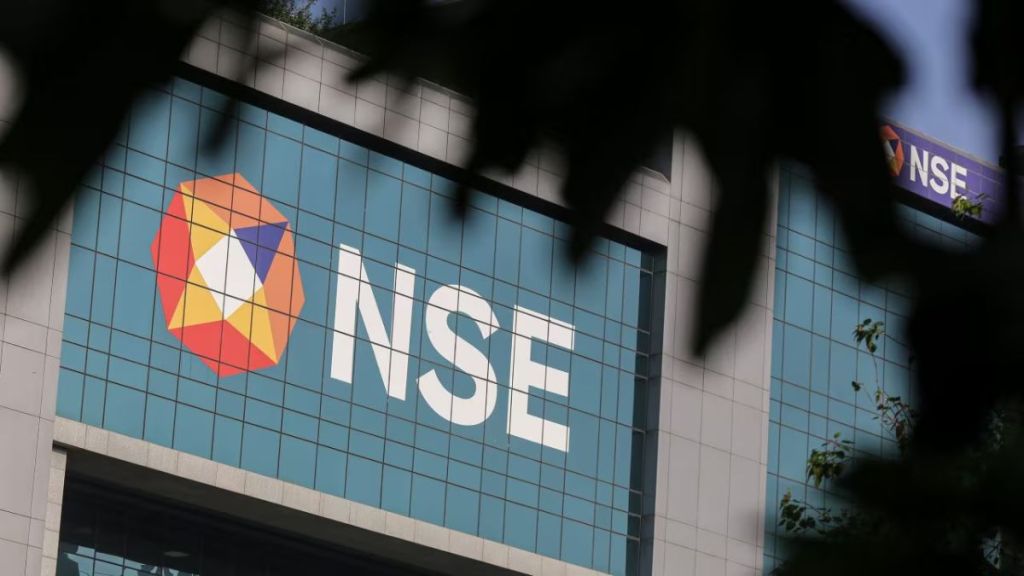

NSE is a proxy for India’s growth, and its fortunes will remain closely tied to the country’s economic progress, Managing Director and Chief Executive Ashishkumar Chauhan said on Thursday as the exchange made its stock-market debut.
“There is nothing else that represents the aspirations of India’s future more than NSE. What is good for India is good for NSE,” Chauhan said at the exchange’s listing ceremony on the BSE. “This is a proxy for India’s growth. NSE is an asset which is, in a way, reflecting India’s growth.”
Describing the listing as the beginning of a new chapter, Chauhan said the milestone would demand greater vigilance, sharper execution and a renewed focus on serving the country.
“As we enter trading in public markets, it marks the beginning of a new chapter. This listing milestone calls for new alertness, thinking and an even sharper focus on execution and on serving this great nation of ours called Bharat,” he said.
Chauhan said NSE’s shareholder base had expanded sharply following the initial public offering. More than 3.4 million retail investors were allotted shares in the issue, taking the exchange’s investor family to about 3.6 million from roughly 200,000 before the listing.
Responding to concerns about a possible increase in the supply of shares after the expiry of lock-in restrictions, Chauhan said existing investors had shown little inclination to sell. “Even before listing, we had 200,000 investors, and none of them was willing to sell, even during the IPO. We had to request them to sell,” he said.
The IPO was entirely an offer for sale by existing shareholders, with no fresh capital flowing to NSE.
Chauhan said the exchange had already been operating substantially like a listed company for the past four-and-a-half years, publishing quarterly results, disclosing material developments and holding investor calls every quarter.
“Effectively, we were a listed company for all practical purposes,” he said. Consequently, the incremental compliance requirements arising from the listing would be limited.
However, he said NSE would become even more alert to its disclosure responsibilities. “We have always acted as a listed company over the last four-and-a-half years, and we will continue to act with even greater alertness to give as much information as possible to market participants and all stakeholders,” he said.
The exchange’s subsidiaries would continue to operate as before, Chauhan said. If any of them became sufficiently large and regulators required a separate listing—as happened with depository NSDL—NSE would comply.
Chauhan also underlined NSE’s role in modernising India’s capital markets. “Organisations like NSE are set up once in a lifetime. NSE has played an important role in transforming India’s capital markets,” he said.
He described capital markets as institutions built fundamentally on confidence. “Markets for capital are basically markets of trust,” Chauhan said, adding that they were “the essence of a well-functioning society”.
On tighter regulatory measures in the derivatives segment, Chauhan said concerns that the changes could permanently slow market participation were misplaced. “People think the market will slow down, but historically it never does,” he said.
India still had a “huge runway” of potential new retail investors, he added, indicating that the exchange remained confident about the longer-term expansion of market participation despite near-term regulatory changes.
Chauhan also struck a personal note, describing his position at NSE as the high point of his professional life.
“After 35 years of my career, I consider my role at NSE the biggest honour and privilege of my life. This will never be surpassed,” he said.