


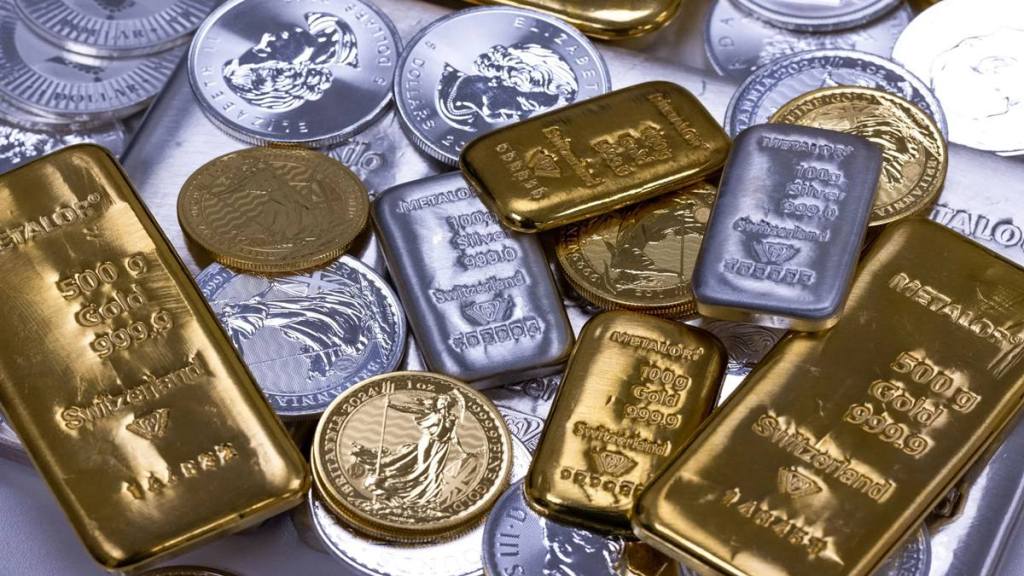

Gold and silver are bouncing back even as the US Fed raises rates and signals more increases could follow. Gold climbed past $4,300, and silver pushed toward $64 an ounce on Thursday, clawing back the previous session’s losses. Both gold, at $4,375, up over 2.5%, and silver, at $65, rising over 3.75%, are showing renewed strength in the international market.
On MCX India, spot gold is Rs 1,50,868 per ten grams, while silver trades at Rs 2,28,705 per kg, both slightly lower than the previous day’s close.
On Wednesday, the US Fed raised the fed funds rate by 25 basis points to 3.75%-4%, as expected, its first rate increase since July 2023. But despite the rate hike, precious metals are bouncing back a day later.
This shows that gold and silver don’t move because of just one thing. Different forces push and pull on prices, and which one wins keeps changing.
This time, it’s oil, not rates, driving the bounce
More than the rate hike, falling oil prices are behind the rise in both metals this time. Whether this holds up remains to be seen.
Brent oil prices fell to $102 on Thursday, down almost 3%, after news that Saudi Arabia plans to restore roughly half the capacity of its East-West pipeline within days and get it fully running within six weeks.
What else is helping gold right now?
As oil price trends lower, two other things are working in gold’s favour: a weaker US dollar index and falling US debt yields. The 10, 20, and 30-year US Treasury yields are down on Thursday, with the 10-year yield falling below 5%. The US dollar is also flat at 100 and facing downward pressure.
What’s still working against gold
Oil prices are falling, but they’re still nearly 20% above where they stood a month ago. That gap points to inflationary pressure still sitting in the economy. As a result, US Fed officials have projected at least one more rate hike for 2026, with more likely in 2027.
Gold and silver prices stay capped, for now. Gold has had its ups and downs over the last nine months, but prices have stayed flat around $4,300 since December 2025. Silver tells the same story, with investors seeing no real return over that period.
Why gold and interest rates don’t get along
Gold prices and interest rates typically move in opposite directions. When rates rise, gold and silver prices tend to fall. Between the two, silver moves more than gold.
Gold’s problem with rising rates comes down to cost. When rates climb, holding gold gets more expensive, because gold earns nothing while a dollar asset or a higher-yielding one does. So investors move money out of gold and into those instead.
Bottomline
What’s keeping gold and silver in check comes down to this: surging oil prices are fueling inflationary pressure, and that pressure is what’s keeping interest rates elevated.
As and when oil prices dip, gold and silver tend to bounce, which is exactly what happened on Thursday, despite the rate hike and more hikes still possible ahead.
Still, the headwinds for precious metals remain strong, built from the combined effects of the Fed’s rate hike, a stronger U.S. dollar, persistent inflation, and multiple geopolitical pressures.
Robin Brooks, Senior Fellow, Brookings Institution, previously Chief Economist IIF and Chief FX Strategist at Goldman Sachs, wrote on X, “Gold is already bouncing. Just because you hike doesn’t mean you’re credible. Look at what’s happened to the Fed’s press conference: shortened to 30 minutes with tightly choreographed questions and Warsh picking what he wants to answer. Not good enough…”
A rate hike cycle does not necessarily mean weakness in gold prices. But which factor ends up dominant, only time will tell.
Disclaimer: This article is intended for informational purposes only and should not be construed as investment advice, financial guidance, or a recommendation to buy or sell any asset. Gold prices are subject to market volatility and may rise or fall without notice. Past performance is not indicative of future returns.