


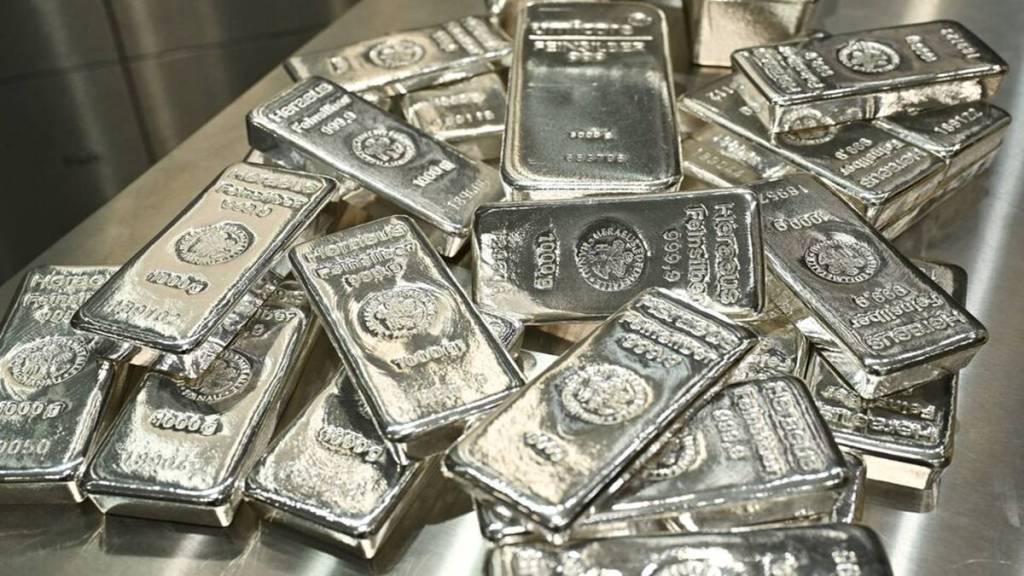

Silver and gold have both been under pressure for the past nine months. Silver and gold are influenced by similar market conditions, yet their price trends diverge. So far this year, in the international markets, silver has plunged by nearly 16%, compared to a fall of 3% in gold.
Silver has lagged behind gold in short-term performance, as indicated by its returns over the past month, six months, and year-to-date. And the gap is significant. However, when returns over a longer time horizon are considered, silver is seen to mostly outperform.
Silver vs gold: Short-term losses, long-term gains
| Period | Silver | Gold | Better performer |
| 1 month | −8.14% | −3.83% | Gold |
| 6 months | −20.14% | −12.19% | Gold |
| Year to date | −16.53% | −3.14% | Gold |
| 1 year | 23.80% | 3.81% | Silver |
| 5 years | 167.71% | 138.77% | Silver |
| 10 years | 249.72% | 233.98% | Silver |
Source: Tradingview; As of October 9; All returns in USD
What do the table show? Gold has held up better during recent declines. Silver has delivered stronger returns over the longer periods.
Long-term returns tell a different story
Over 5-10 years, silver has outperformed gold considerably. Over a much longer horizon, the picture looks slightly different.
According to data from the Silver Institute, silver and gold have generated returns of 1,131% and 1,447% since 2000 till September 2026. That’s a CAGR of 9.9% for silver, compared to 10.8% for gold, almost similar.
The big picture: Silver can deliver stronger gains than gold in certain months. It also experiences deeper periods of relative underperformance.
Why does silver fall harder than gold?
So, why does silver correct more than gold and show higher volatility in prices compared to the yellow metal?
The answer likely lies in the dual nature of silver as both a financial asset and an industrial commodity. Both metals feel pressure when macroeconomic factors like high interest rates push investors toward yield-bearing assets. Silver takes a double blow from expectations of slowing global economic growth.
Gold is considered a safe haven asset class with minimal industrial usage. Over 50% of global demand for silver, in contrast, is from industrial applications, such as electronics, electric vehicles, and solar panels.
Despite a higher interest rate scenario that affects both metals equally, silver is more susceptible to economic activity. A higher interest rate environment is unfavorable to businesses and corporations, increasing their manufacturing costs.
“Three things hit silver harder. First, it had climbed faster, so when sentiment turned, speculators sold heavily, and CME margin hikes forced even more selling.
Second, industrial demand accounts for over half of silver demand, and solar makers have been cutting back how much they use. The Silver Institute expects industrial consumption to fall 3% this year.
Third, a firmer dollar and higher yields led investors to pull money out of silver ETFs. Gold, meanwhile, held on to support from central banks and safe-haven flows,” says Dr. Renisha Chainani, Chief Research Officer, Augmont.
Gold has central banks in its support; silver does not
Gold’s resilience compared to silver is attributed to the support it receives from central banks. Gold is held as a foreign exchange reserve by central banks globally. Silver lacks similar support. That buying support acts as a stabilizing force for gold during price dips.
The holdings are sizeable too. In 2025, developed market central banks held, on average, 30% of their total reserves in gold, while emerging market counterparts held about 15%, according to the World Gold Council.
The way these banks are buying gold is also unprecedented. Central banks have bought over 1,000 tonnes of gold on average in the last three years, compared to less than 500 tonnes before that.
A shallow market makes every sell order count
Here’s another reason for silver to show higher volatility. Silver’s market size is significantly smaller than gold’s, resulting in sharp, intermittent price movements. LBMA Trade Data shows silver’s weekly turnover at $137 billion, which for gold stands at $935 billion for the period ending September 11. That puts silver’s turnover at just about 15% of gold’s.
In the shallow silver market, even small sell orders can lead to significant price drops, while price increases can be similarly amplified. Market volatility is heightened by speculators and leveraged transactions, with short-term traders rapidly liquidating positions in response to rising margin requirements, exacerbating downward trends.
Silver outlook: forecasts are being cut
Silver has fallen nearly 50% from its all-time high price of $121, made on January 29 this year. Gold, comparatively, is down 25% over the same period. The question remains: Will silver bounce back?
The outlook for silver may not be as bright as expected earlier. J.P. Morgan Global Research, in a recent report, has revised its price prediction down from a yearly average price of $84/oz set in May to $70/oz. In the first week of October, silver trades around $60.
The reason: A weakening in industrial demand, especially in solar power, which relies heavily on silver.
“Potential for solar demand for silver to fall by around 30% this year, a roughly 60 million ounce reduction year over year,” says Gregory Shearer, head of Base and Precious Metals Strategy at J.P. Morgan in the report.
Silver Institute also projects a gloomy outlook. It estimates total silver demand from the electrical and electronics sector is projected to decline by roughly 10% in 2026. Overall, Silver Institute forecasts the silver market in 2026 to end with a deficit, for the sixth year in a row.
The US-Iran war continues putting pressure on oil prices, adding fuel to inflation. US Treasury bond yields are at decadal highs and rate hike expectations are growing. If central banks and sovereign wealth funds begin selling gold due to fiscal pressures, this could further negatively affect both gold and silver prices.
“Beyond 2026, the dynamics of the silver market will be influenced by the interplay between its dual status, as that of a precious metal, and as an important industrial raw material,” says the Silver Institute report.
Bottom line: sharper swings in both directions
In the context of weakening industrial demand and macroeconomic conditions, along with constraints in the silver market’s demand and supply, the outlook doesn’t look promising. A further drop in the price of silver may not be ruled out before any sustainable up move happens. However, the same pressures weighing on silver now could turn into a tailwind. A reversal in them could trigger a sharp price rally.
Disclaimer: This article is intended for informational purposes only and should not be construed as investment advice, financial guidance, or a recommendation to buy or sell any asset. Silver and gold prices are subject to market volatility and may rise or fall without notice. Past performance is not indicative of future returns. Readers are advised to exercise due diligence and consult a qualified financial advisor before making any investment decisions.