


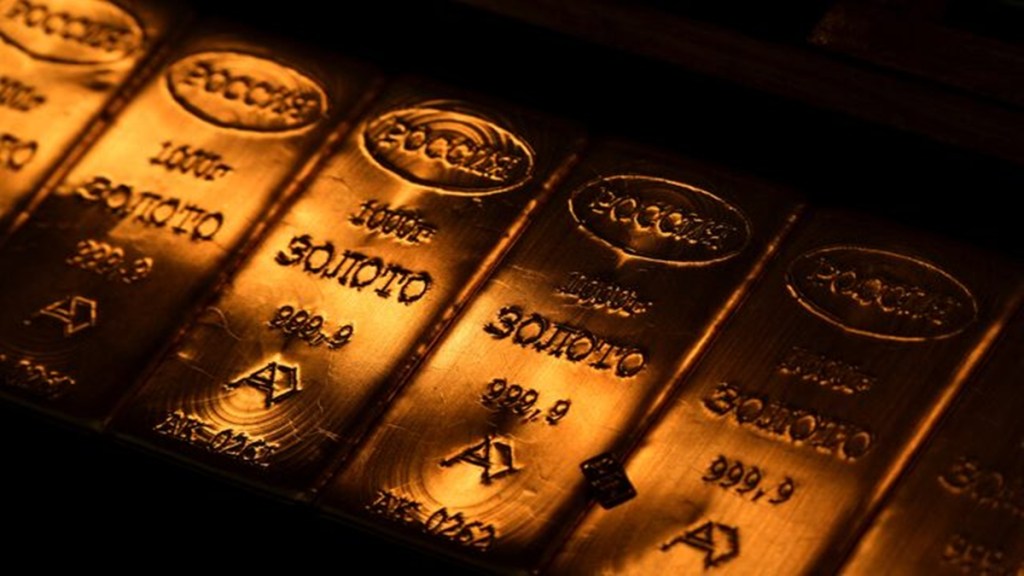

With the festive season on and Dhanteras and Diwali just around the corner, investors and buyers of gold jewellery are wondering whether prices will fall further. Gold prices have been under pressure for the last nine months.
Gold had a dream run through 2025. But for jewellery buyers, it was a different story. Many kept postponing purchases. Others settled for lower carats as prices kept climbing. Higher prices cut both ways. Jewellery demand tends to cool, while investors see the value of their gold go up. Jewellery demand in India has held up, with buyers shifting to 14 to 18 carat options.
On October 30 last year, spot gold in India was at Rs 1,19,905 per 10 grams for 24 carat. It kept climbing, and on January 29, 2026, it hit an all-time high of Rs 1,76,306. That is a jump of about 47% in three months.
Then the rally ran out of steam. On Monday, November 2, 2026, MCX spot gold trades around Rs 1,37,330 per 10 grams. That is about 22% below the peak, or nearly Rs 38,976 lower.
Here is the twist. Even after the fall, gold has still returned about 16.6% over the past year. Those who bought a year ago are in the green. Those who bought near the top are not.
In rupees, gold has to jump about 26% from the Rs 1,39,830 spot level to reclaim Rs 1,76,306. In the Indian market, buyers remain cautious, while festive demand continues to support prices.
So, is it the right time to buy gold?
Nobody has a clear answer. The answer remains elusive.
Will gold fall back to its October-November 2024 price of Rs 80,000? Will it slip to the October-November 2025 level of Rs 1,20,000 per 10 grams? Or will it cross the previous high of Rs 1,76,000? That is what Indian investors are looking forward to knowing.
Gold Prices in India
| Date | Spot gold (24K, per 10 grams) | What changed |
| January 29, 2026 | Rs 1,76,306 (record high) | +47% in 3 months vs Oct 30, 2025 (Rs 1,19,905) |
| November 2, 2026 | Rs 1,37,330 | -22.1% from peak, Rs 38,976 lower |
Source: MCX India
Gold Price in Dollars
The important thing to understand is that gold in India does not move on its own. It follows the international price, which is quoted in dollars.
On November 2, gold in the global market trades at $3,911 an ounce, up 0.85% from Friday’s close. That puts it below the $4,000 level traders had been watching as support.
The longer-term performance is more volatile. International gold is down 3% over the last year, 10% so far this year, after a 65% up move in 2025, and 14% down in six months. It is 30% below the $5,602 peak of January 29, 2026.
Why is India up 14.5% while global gold is down 3%? Duties and taxes add to the landed cost here. In May, the government hiked the import duty on gold by 9%, which supported domestic prices. The rupee’s move against the dollar has also cushioned the fall.
Currently, at least six major forces are impacting gold prices: Geopolitical tensions, oil prices, inflation, interest rates, bond yields and the dollar.
International gold at a glance
| Period | Change in gold ($ per ounce) |
| Latest price (Nov 2) | $3,911, up 0.85% from Friday’s close |
| Six months | -14.00% |
| Year to date | -10.00% |
| One year | -3.00% |
| From Jan 29 peak of $5,602 | -30.00% |
Source: Trading Economics
Is oil the biggest worry for gold right now?
Oil is a big one. It trades around $110 on November 2, down 3% from the previous close but up 10% in the last month.
The US-Iran war sits behind this. Oil was near $70 before the conflict disrupted supplies through the Strait of Hormuz.
Why does it matter for gold? Oil feeds inflation, and inflation feeds rate hike bets. US annual inflation rose to 3.7% in September from 3.4% in August. The IMF expects global inflation to rise to 4.7% this year from 4.1% in 2025.
Gold is usually seen as an inflation hedge. But there is a catch. When inflation rises, central banks raise rates, and that hurts a metal that pays no interest.
The Fed, bond yields and the dollar: where do they stand?
The US Fed, led by Chair Kevin Warsh, kept rates unchanged at October’s FOMC meeting. However, two officials dissented in favour of a 25 basis point hike. That raises the odds of an increase in December, as energy-driven inflation stays persistent. The Fed raised rates by 25 basis points in September to 3.75%-4.00%, and a similar hike is now expected at the December FOMC meeting.
Bond yields have eased for now. The US 10-year Treasury yield is just below 5% on Monday, after touching 5.31% in early October. The 30-year yield hit a high of 5.67% in the same month.
It may be too early to say yields have turned for good. Unless they ease for the same reasons that pushed them up.
The dollar index trades around 101.88 on November 2, after falling from above 102 a few days back. In October, it had touched an 18-month high near 102.50.
Why does this matter? Higher rates strengthen the dollar. When the dollar index goes up, gold loses value, since gold is a non-yielding asset.
What is still holding gold up?
Not every force is against the metal. Safe-haven buying from central banks and global ETF investors continues to give it support. Central banks are still buying in 2026, though at a slower pace than in the past three years.
Geopolitics cuts both ways. Tension can lift safe-haven demand. But pressure on finances can also force countries to sell. Turkey sold gold to stabilise the lira, while Russia drew on its reserves.
Can gold win back its lost glory before 2026 ends?
With strong headwinds in play, a record run may not be on the cards, at least in the near term. That could change if the forces pulling prices lower start to weaken.
Last week, hot US inflation data dragged gold below $4,000. A major up move looks unlikely for now, unless upcoming inflation data shows a downtrend.
What could turn the tide for gold?
A friendly climate for gold may come from lower real interest rates, softer US inflation and geopolitical worries. High inflation and a strong dollar, on the other hand, could prolong the consolidation or add pressure.
A sustained bull trend will be confirmed only if upcoming data strengthens the case for lower real interest rates. Till then, here is what to track:
- Oil prices, as they drive inflation worries
- The Fed’s December stance, and the PCE data
- The dollar index and bond yields
Bottomline
The support around $4,000 looks fragile, and gold is now below it. A sharp correction cannot be ruled out if leading indicators turn negative. The next move will depend on the dollar and interest rate expectations.
Long-term investors may, however, consider adding during major corrections. Industry experts believe the structural bull market in gold is intact. Physical buyers of jewellery may find current prices also conducive for staggered purchases.
Disclaimer: This article is intended for informational purposes only and should not be construed as investment advice, financial guidance, or a recommendation to buy or sell any asset. Gold prices are subject to market volatility and may rise or fall without notice. Past performance is not indicative of future returns. Readers are advised to exercise due diligence and consult a qualified financial advisor before making any investment decisions.