


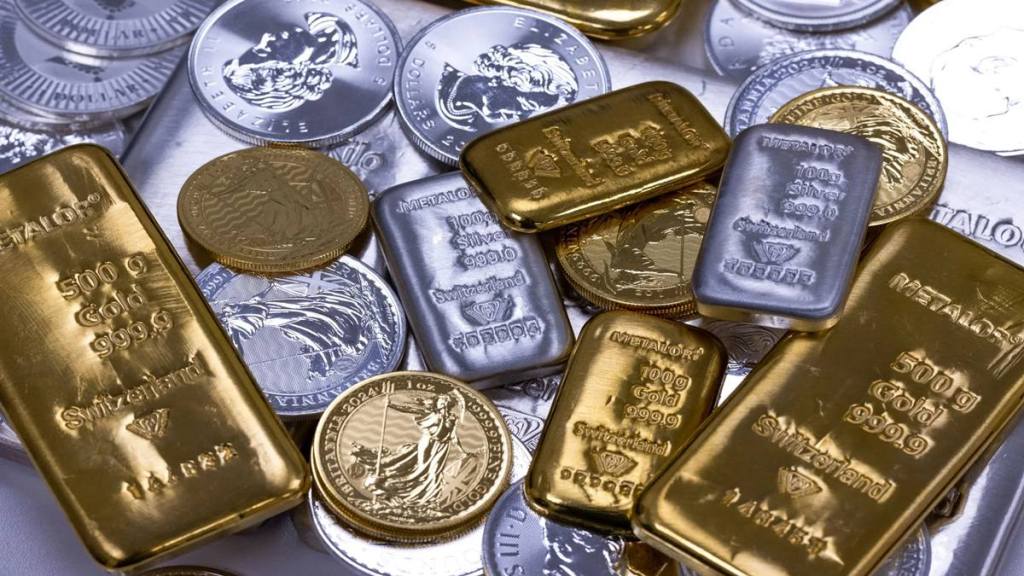

Gold and silver, the two precious metals, have cracked under pressure after the latest US inflation numbers were released by the government. Both metals fell sharply as the data landed. Gold slipped nearly 2% to around $4,083.48 an ounce, losing $78.03 from its previous close.
Silver fell even harder, shedding over 4%, or $2.571, to trade near $56.599. The sell-off has also pushed the odds of another Fed rate hike sharply higher. The international market is open, and both may witness further erosion of value in today’s trade.
Stronger US inflation data hits gold and silver
Gold and silver prices have hit their lowest level since early August, as a stronger-than-expected US inflation report prompted markets to reassess the Federal Reserve’s rate outlook.
US inflation rose to 3.7% year-on-year in September, above forecasts of 3.6%, driven by higher energy prices. Monthly CPI increased 0.6%, its biggest gain in five months, while core inflation also exceeded expectations, reaching 2.6% annually and 0.3% monthly. Core inflation excludes food and energy, so its rise suggests price pressure is not limited to fuel costs.
Fed rate hike bets jump after the report
Markets now see around a 50% chance of the Fed holding rates steady at its October meeting, down from more than 78% before the report. There seems to be increasing likelihood of a rate hike in October as well. Meanwhile, the probability of a rate hike in December has risen to nearly 99%, from 88% previously. The Fed meets on October 27-28. Higher rates generally hurt gold and silver because neither pays interest.
Although recent Fed communications had offered little indication of a back-to-back rate hike in October, the larger-than-expected increase in core CPI has brought that possibility back into focus, adding further pressure on non-yielding gold.
Treasury yields and the dollar add to the pressure
US Treasury yields continue their upward move after remaining steady above 5% for the last few days. The yield on the US 10-year Treasury note surged 9bps to 5.3% on Wednesday, approaching again highs last seen in early 2002. The US 30-year Treasury note touched 5.62% during today’s trade.
The US dollar climbed as much as 0.5% to 102.72 on Wednesday, reaching its highest level since April 2025 after fresh inflation figures strengthened expectations of further Federal Reserve tightening. A stronger dollar also makes dollar-priced gold and silver costlier for buyers holding other currencies.
Ole S Hansen, Head of Commodity Strategy, Saxo Bank, on X, writes, “For gold, the immediate challenge remains the combination of rising real yields, a stronger dollar and the prospect of tighter monetary policy, even as longer-term investment demand continues to provide underlying support.” In other words, higher yields and a firm dollar are the main hurdles for gold right now, though long-term buying interest still offers some cushion.
Disclaimer: This article is intended for informational purposes only and should not be construed as investment advice, financial guidance, or a recommendation to buy or sell any asset. Gold and silver prices are subject to market volatility and may rise or fall without notice. Past performance is not indicative of future returns. The views and recommendations expressed by experts in this article are their own and do not represent the views of Financial Express. Readers are advised to exercise due diligence and consult a qualified financial advisor before making any investment decisions.