


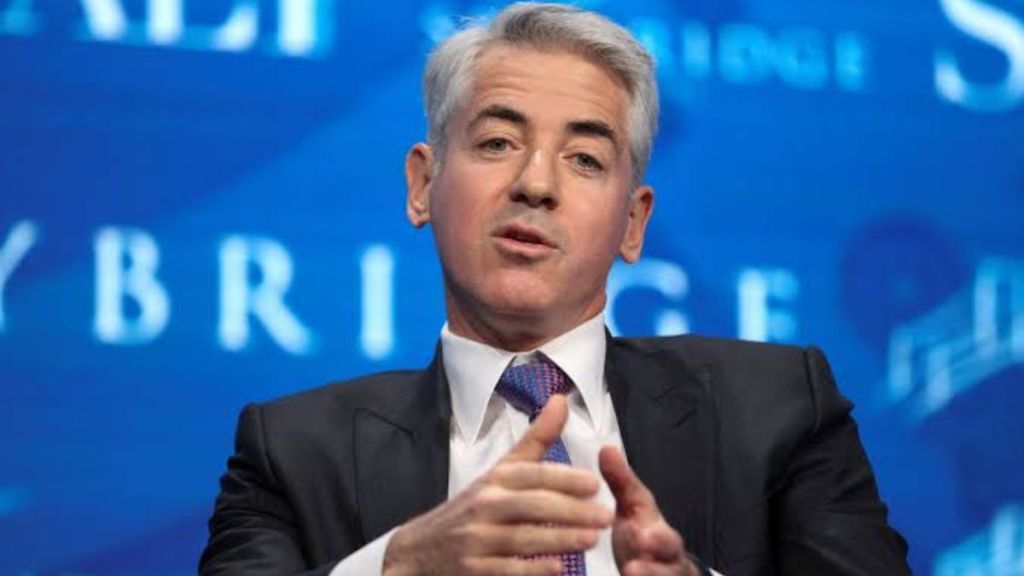

Billionaire investor Bill Ackman believes the Federal Reserve may have made a mistake by raising interest rates. He thinks that the usual link between higher rates, weaker demand and lower inflation may not work in the current AI-driven economy.
Ackman, the founder of Pershing Square, said the Fed’s decision to raise rates last week could be based on economic models that do not fully account for the huge investment being made in artificial intelligence.
He explains that companies may continue to spend heavily on AI, data centres, energy and computing power even when borrowing becomes more expensive. The reason, according to Ackman, is that the potential economic returns from developing more advanced AI systems could be so large that higher interest rates may not be enough to slow investment.
Ackman raised the question in a post on X, asking whether the Fed’s traditional approach to controlling inflation still applies in an economy where demand for AI infrastructure is growing rapidly. “What if the old models don’t apply to the current paradigm and the Fed is wrong?” he asked on X. “I think the Fed might have just made a mistake.”
The presumption that the Fed raising short-term rates reduces inflation is predicated on the belief that higher rates reduce demand and investment.
— Bill Ackman (@BillAckman) September 25, 2026
But what if higher rates don’t reduce demand and investment because the demand for intelligence and energy is unaffected by higher…
Why higher rates may not reduce AI investment
The Federal Reserve normally raises interest rates to slow the economy when inflation is too high. Higher borrowing costs can make companies less willing to invest and consumers less willing to spend. Lower demand can then help reduce pressure on prices. Ackman believes AI could challenge this relationship.
Companies involved in the AI race are spending enormous amounts on computing capacity, data centres, chips and energy. These investments are being made because companies expect AI to create very large economic returns in the future. Ackman believes that the potential returns could be so high that companies may continue investing regardless of higher financing costs.
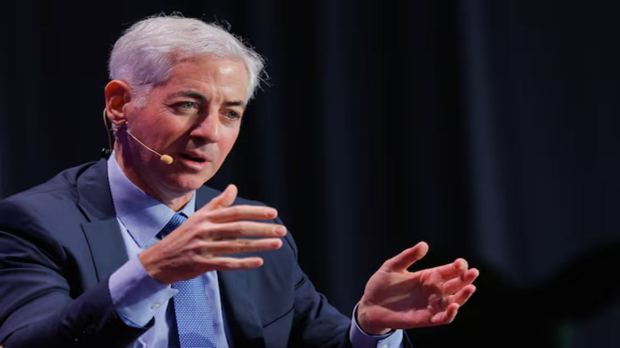
“What if higher rates don’t reduce demand and investment because the demand for intelligence and energy is unaffected by higher rates because winning the race for super intelligence has a near infinite ROI and the demand for compute will remain incalculable?” Ackman wrote. He states that the demand created by the AI race may be different from the demand seen in a normal economic cycle.
If companies believe that having more computing power or better AI systems could give them a major competitive advantage, they may be willing to accept higher borrowing costs. In that situation, raising rates may not reduce investment as much as traditional economic models would suggest.
Ackman sees a risk of higher inflation
Ackman’s bigger concern is that higher rates could actually add to inflation if companies continue to invest while passing higher financing costs through the economy.
Companies building data centres and other AI infrastructure need large amounts of electricity, equipment, land, construction services and financing. Higher interest rates can increase the cost of funding these projects.
If companies continue with these investments despite higher rates, those additional costs could become part of the prices of goods and services.
“Why won’t higher rates at this unique moment in history therefore lead to more inflation as interest costs are embedded in everything?” Ackman asked.
He believes this could create a cycle in which higher rates do not reduce demand but instead increase costs.
“The problem is compounded as the more the Fed raises rates, the more inflation we will have and the more the Fed will need to raise rates further and so on.”
This is the main point of or rather concern for Ackman. The traditional policy response assumes that higher rates will eventually reduce demand and investment. Ackman is questioning whether that assumption holds when companies see AI investment as an opportunity with potentially enormous returns.
Fed is dealing with renewed inflation
Ackman’s comments come as the Federal Reserve faces a lot of inflation related pressure. Inflation had slowed from its earlier highs but remained above the central bank’s 2% target. A new rise in energy prices following the Iran war and the resulting energy crisis has added to inflationary pressure.
Higher energy costs have pushed up headline inflation measures, including the Consumer Price Index and the Personal Consumption Expenditures Index. The US economy has also remained relatively strong, making it harder for policymakers to rely on weaker demand to bring inflation down.
The Federal Reserve raised its benchmark interest rate by 25 basis points earlier this month, taking the federal funds target range to 3.75% to 4%. The rate increase has also strengthened expectations that another hike could follow.
More rate hikes could follow
New York Federal Reserve President John Williams said on Thursday that another rate increase by the end of the year would be a reasonable possibility.
Williams said investor sentiment suggested that “it’s likely that another rate hike may be appropriate by the end of the year.”
“That seems to me a reasonable way of thinking about it. But we have to see. We’re going to collect the data and do what we did between July and September,” he told CNBC.
Williams also said the period of explicit forward guidance from the Fed was over. His comments followed a similar approach from Fed Chairman Kevin Warsh, who has said the central bank will not directly signal what it plans to do at upcoming meetings.
Other Fed officials have also warned that inflation could remain high. Boston Federal Reserve President Susan Collins said Wednesday that there was “an increased likelihood” that inflation would stay “notably” above the Fed’s 2% target.
Fed Governor Michael Barr also said that “further policy adjustments are likely to be needed to ensure inflation comes down to target in a timely fashion.”
Why the AI economy could be different
Ackman’s statement rests on the idea that the AI boom could be different from previous investment cycles. Traditional monetary policy assumes that higher borrowing costs eventually make investment less attractive. A company may delay a factory, reduce capital spending or cut expansion plans when financing becomes more expensive.
The AI industry could behave differently if companies believe that falling behind competitors carries a much larger cost than paying higher interest. Technology companies are competing to develop increasingly powerful AI systems. That competition requires large amounts of computing power and energy. Companies may therefore continue to spend even as interest rates rise.
Ackman believes this could weaken one of the key channels through which monetary policy normally works. “The presumption that the Fed raising short-term rates reduces inflation is predicated on the belief that higher rates reduce demand and investment,” he wrote.
“But what if higher rates don’t reduce demand and investment because the demand for intelligence and energy is unaffected by higher rates because winning the race for super intelligence has a near infinite ROI and the demand for compute will remain incalculable.”
Ackman’s question for the Fed
Ackman’s statement raises questions about whether economic models used by central banks need to account for the scale and nature of AI investment.
If AI-related demand remains strong regardless of higher interest rates, the usual effect of monetary tightening could be weaker. If companies also pass higher financing and energy costs to customers, inflation could remain under pressure. Thiscould make the Fed’s task more difficult as it tries to bring inflation back to its 2% target without unnecessarily weakening economic activity.
Ackman ultimately leaves the question that “But what if the old models don’t apply to the current paradigm and the Fed is wrong?” “I think the Fed might have just made a mistake. Am I right or am I wrong?”
Disclaimer: This article provides factual analysis only and is not, and should not be construed as, an offer, solicitation, or recommendation to buy or sell securities. Investors must conduct their own independent due diligence and seek advice from a registered financial advisor in the respective jurisdiction.