


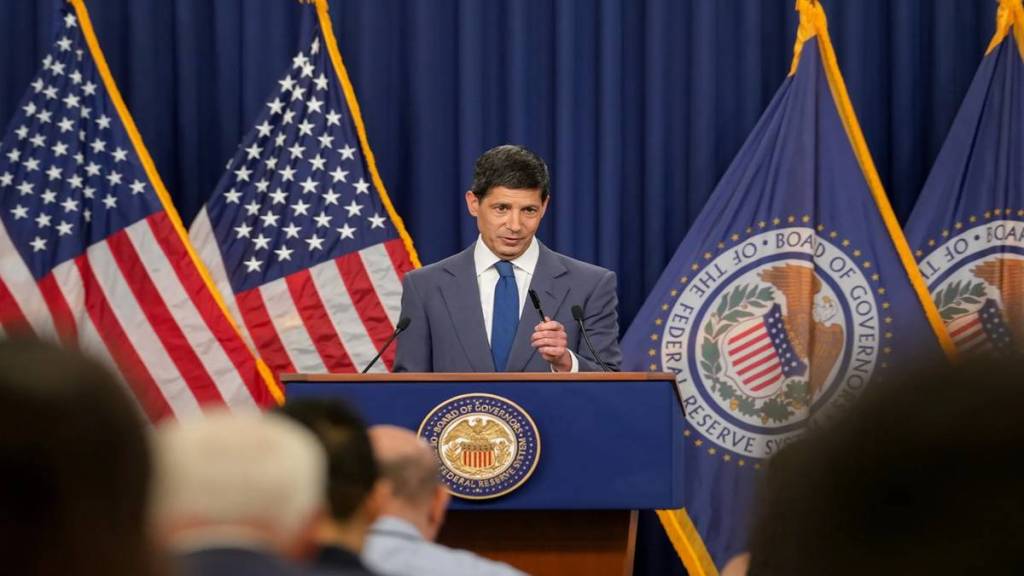

The US Federal Reserve is likely to press pause at its next FOMC meeting. The probability of a rate hike at the October FOMC meeting, scheduled for 27-28, has fallen to around 18%, as per CME FedWatch. The latest data on GDP, the job market and the PCE price index all point towards a probable pause by the US Fed. But is the pause really a done deal?
Markets are now pricing in nearly an 80% probability that the Fed will keep policy unchanged this month, while expectations for a December hike remained around 69%.
Jobs report shows cracks in hiring
The recently released job market data shows cracks in the employment sector. That may leave the US Fed to consider a pause rather than continue with a rate hike, as seen in the previous FOMC meeting.
“September’s labor report challenged the narrative of economic resilience. Hiring slowed sharply, wage growth weakened and prior months were revised lower, suggesting the labor market may be softening more quickly than expected. Yet inflation remains elevated, leaving the Fed caught between deteriorating employment data and unfinished work on price stability,” says Chris Osmond, Chief Investment Officer for Fifth Third Wealth Advisors.
The US economy added 29,000 jobs in September 2026, following a downwardly revised 1,33,000 in August and well below forecasts of 90,000. With these revisions, employment in July and August combined is 60,000 lower than previously reported.
The US unemployment rate rose to 4.2% in September 2026, up from 4.1% in August and slightly above market expectations of 4.1%. The number of unemployed increased by 78,000 to 7.11 million, while total employment surged by 406,000 to 163.15 million.
Treasury yields ease, but stay high
The US 10-year Treasury yield eased to around 5.25% on Monday, while the 30-year yield slipped toward 5.6% as traders scaled back expectations for an imminent Federal Reserve rate hike following weaker-than-expected US jobs data. Still, Treasury yields remained near their highest levels in more than two decades amid concerns over persistent energy-driven inflation, rising US fiscal risks and increasing debt issuance linked to artificial intelligence.
Inflation is still the Fed’s biggest worry
But inflation remains the biggest worry for the US Fed. The US PCE price index rose 0.3% month-over-month in August 2026, following a downwardly revised 0.1% gain in July and slightly below market expectations of 0.4%. The US core PCE price index, the Federal Reserve’s preferred measure of underlying inflation, increased 0.2% month-on-month in August 2026, coming in below the 0.3% rise expected by markets.
Growth and factory data stay firm
The US economy expanded at an annualized rate of 2.2% in Q2 2026, revised up by 0.7 percentage point from the 2nd estimate, following an upwardly revised 2.5% growth in Q1.
The ISM Manufacturing PMI edged down to 54.5 in September 2026 from 54.6 in August, compared to forecasts of 55. Still, the reading continued to point to robust growth in the manufacturing sector.
The S&P Global US Manufacturing PMI fell to 55.9 in September 2026 from a preliminary estimate of 57.0, but remained above August’s 53.9. The latest reading was the strongest since May 2022, as output and new orders expanded at faster rates.
What could still change the Fed’s mind?
However, as inflation remains high and shows no signs of trickling down, the scenario may change very quickly if US CPI data for September, which will be released on October 14, shows any signs of stickiness. The PCE price index, the preferred gauge for the US Fed, arrives a day later ( from the FOMC meeting) on October 29. A lot of job market data comes in between, before the Fed officials sit to decide on October 27-28.
Chicago Federal Reserve President Austan Goolsbee believes a rate hike is not entirely ruled out. Reuters reports that Goolsbee, on Fox Business Network, said all options are being considered regarding interest rates. He also stressed the importance of gathering evidence to aim for a return to 2% inflation.
What does the Street expect? Michael Feroli, chief U.S. economist at J.P. Morgan, feels at least one more rate hike is due this year, but doesn’t see a rate hike in 2027. “Inflation continues to look supply-shock-driven, and as such we don’t foresee a protracted hiking cycle extending into next year,” says Feroli.
Kevin Warsh, the US Fed chair, has often reiterated that inflation remains his first priority. Yet he has said little on where rates go next. His silence on future guidance adds to the uncertainty over the direction of interest rates. So, what is the Fed chair really thinking?
Disclaimer: This article is for informational purposes only and does not constitute investment advice. Readers should consult a qualified financial advisor before making any investment decisions.