



The US Federal Reserve has raised interest rates for the first time since June 2023, ending a long stretch without a hike. The federal funds rate now stands at 3.75%-4% after the 25bps hike at the September FOMC meeting.
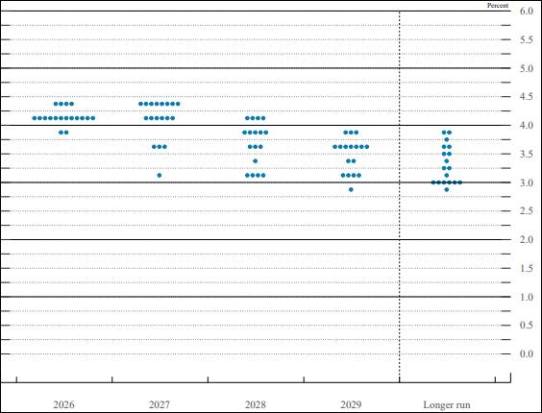
The Fed is not stopping here. There could be more rate hikes ahead. The Fed dot plot released on September 16 shows at least one more rate hike in 2026, another in 2027, before the rate cut campaign begins.
The dot plot is a chart that shows each FOMC meeting participant’s opinion on where they think the federal funds rate will be in the months ahead. There are 19 FOMC participants in total, including 7 Fed governors and 12 Federal Reserve Bank presidents, and each dot represents one person’s view.
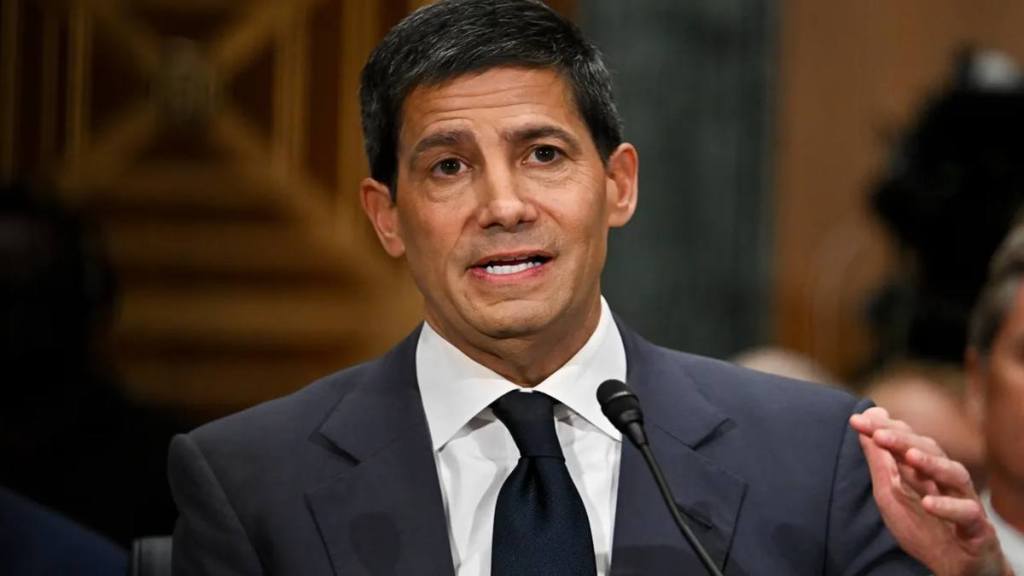
Even in September, one dot is missing, that of Fed Chair Kevin Warsh, just as it was missing in June. Warsh has again refused to provide a long-term prediction on where interest rates are headed.
In the September 2026 dot plot, there were 18 dots for 2026 and 2027, and 17 dots for 2028 and 2029, since Fed Chair Kevin Warsh did not submit any.
The signal is clear. Fed officials, and Warsh himself, want to bring down inflation by raising rates, backed by a strong job market. “Today’s projections reinforce the Fed’s inflation-fighting message. Participants expect at least one additional rate increase this year, suggesting today’s move is not necessarily a one-time adjustment,” says Artha Bharat Global Multiplier Fund.
Most Fed officials raised their rate projections from the June dot plot, expecting at least one more hike after September, with the median dot putting the fed funds rate at 4.1% by year-end 2027, and most officials clustered between 3.6% and 4.4%.
Midpoint of target range for the federal funds rate
Source: federalreserve.gov; After September FOMC meeting
How to read the table
Each shaded circle indicates the value (rounded to the nearest 1/8 percentage point) of an individual participant’s judgment of the midpoint of the appropriate target range for the federal funds rate or the appropriate target level for the federal funds rate at the end of the specified calendar year or over the longer run.
Energy Prices Could Change the Fed’s Next Move
Brent oil trades above $104, rising nearly 15% in the last month. The US CPI data released this week shows headline inflation remaining sticky, while month-on-month core inflation stayed slightly elevated.
The energy index had been declining since May but rebounded in August. It rose 23.5% for the 12 months ending May, 15.7% for June, 14.7% for July, and 16.3% for August.
This time, Warsh is not blaming rising energy costs. “The key change to the Fed’s policy statement was dropping a phrase from the July statement that partly blamed ‘supply shocks’ for driving ‘price increases in certain sectors, including energy.’ The September statement simply describes current inflation as ‘inflation remains elevated.’ The change emphasizes that the committee is committed to the inflation target and won’t make excuses for missing it,” says Bill Adams, Chief U.S. Economist, Fifth Third Commercial Bank.
Energy costs remain a key factor in these projections. The current rise in gas and diesel prices adds significant uncertainty to the Fed’s next moves. Sustained high energy prices could push the Fed toward more hikes.
“The most important known-unknown to influence monetary policy over the next few Fed decisions will be the energy price shock. The higher gas and diesel prices go, and the longer they stay up, the more the Fed will hike. Alternatively, a breakthrough unlocking energy supply from the Mideast could allow the Fed to refrain from further hikes,” adds Adams.
Bottomline
One positive from this meeting is Warsh’s ability to build credibility as an independent chairman, addressing inflationary pressures despite political pressure. Whether this rate hike stays a one-time move or turns into a series will likely depend on where energy prices go from here.
Disclaimer: This article is based on official Federal Reserve data, statements, and expert commentary as cited. Figures and projections are subject to revision; readers should verify current rates and data before making financial decisions. Financial Express is not responsible for any decisions made based on this information.