



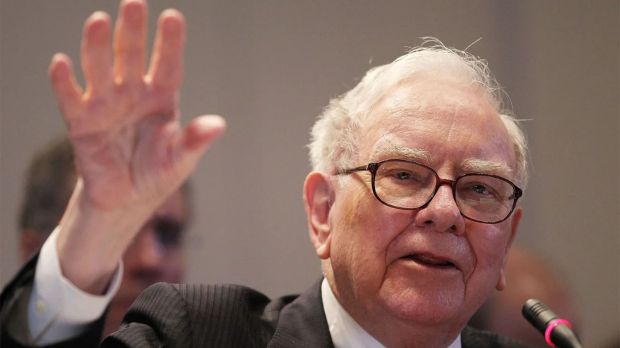
Warren Buffett stepped down as chairman of Berkshire Hathaway on September 18, closing a chapter that began 61 years ago when he took control of a failing textile mill in New England. The 96-year-old investor announced his decision in a letter to shareholders, writing that he would become chairman emeritus effective immediately while remaining on the board,
“Father Time always wins,” Buffett wrote in the letter. “He has, however, been generous with me. He has given me the opportunity to see Berkshire reach a point where I am more confident than ever about what lies ahead.”
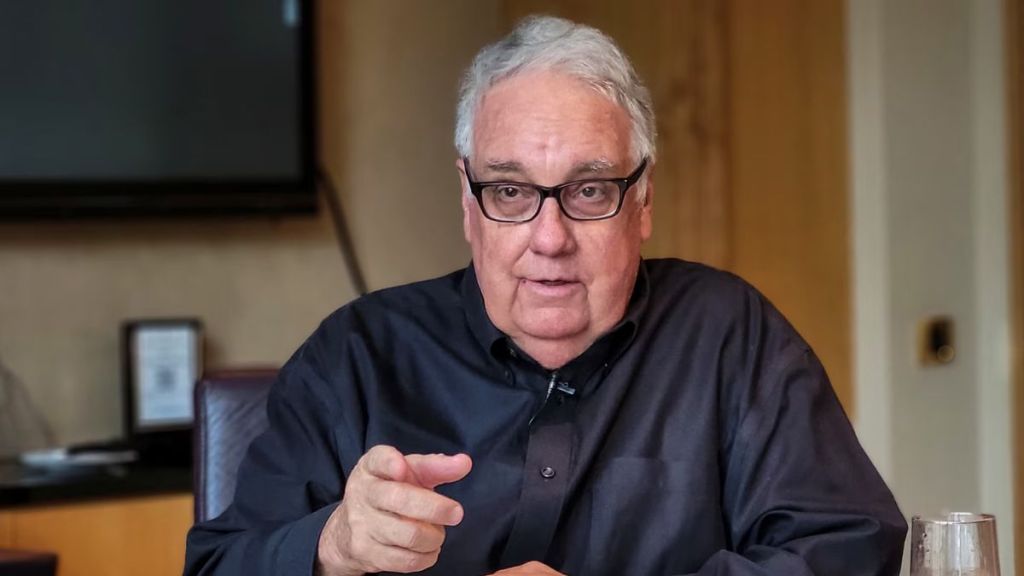
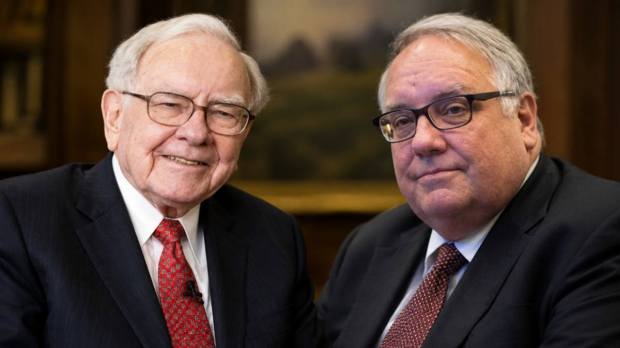
In his place, Berkshire named Howard Graham Buffett, Warren’s 71-year-old son, as the new chairman of the conglomerate. The announcement completes a transition nine months after Warren handed the chief executive role to longtime lieutenant Greg Abel, and it puts a definitive end to one of the most closely watched successions in corporate America.
A farmer, not a financier
Howard is the second of Warren Buffett’s three children, sitting between his sister Susie and his brother Peter. He grew up in Omaha but never showed much interest in his father’s world of stocks and balance sheets. He attended three colleges in the 1970s, Augustana College in Illinois, Chapman College in California, and the University of California at Irvine, without finishing a degree at any of them, the Times reported.
As reported by The New York Times, in 1986, he began working a 400-acre farm north of Omaha that his father had purchased for him. Warren, ever the deal-maker, built in an incentive: that is, he would take a smaller cut of the farm’s profits if Howard, who weighed 200 pounds at the time, kept his weight below 182.5 pounds, according to the Times.
Howard still farms today. He runs a 1,500-acre family property in central Illinois and continues to operate the original Nebraska farm, according to Fortune. He also oversees foundation-run research farms that stretch across Arizona, Illinois and beyond, work tied to his long-running advocacy for no-till agriculture, a method that limits soil disruption to preserve land for future harvests.
Farming never boxed him in. Howard took a vice president role at agribusiness giant Archer Daniels Midland, then resigned in 1995 over concerns about how the company handled price-fixing allegations, the Times noted. He later sat on the boards of Coca-Cola, Coca-Cola Enterprises, ConAgra Foods and Lindsay Corporation, among others.
For close to a decade, he also carried a badge. Howard worked in law enforcement, eventually winning election as sheriff of Macon County, Illinois, a post he held from 2017 to 2018, according to Fortune. He had spent five years as an auxiliary deputy before running for the office, and Fortune reported he still serves the county as undersheriff.
Photography rounds out his resume in a way that seems almost incongruous for a Fortune 500 chairman. Howard has documented conflict zones and wildlife across more than a hundred countries, capturing images from the front lines of the war in Ukraine to the habitats of endangered mountain lions in Florida. He has written more than a dozen books on conservation, wildlife and what his foundation calls “the human condition,” two of which landed on the New York Times bestseller list. He also produced several documentary films, including two that received Academy Award nominations, one about Ukraine’s war and another examining resource exploitation in Africa.
Guardian of the culture, not the checkbook
Howard has served on Berkshire’s board since 1993, giving him 33 years of experience before stepping into the chairman’s seat. This stretch, Warren pointed out in his shareholder letter, is longer than the apprenticeship he himself served before becoming Berkshire’s chief executive at age 34.
The job Howard is inheriting comes with a narrow scope. Day-to-day decisions will remain with Abel, who took over as chief executive at the start of this year and has already moved with speed, deploying $10 billion into Alphabet and paying roughly $6.8 billion to acquire homebuilder Taylor Morrison, according to Fortune. Howard is not expected to weigh in on those calls. His task, as Warren framed it in the letter, is to protect what makes Berkshire distinct rather than to direct its next move.
“Greg runs the company; Howard will guard its culture and values, both worth more than anything on our balance sheet,” Warren wrote in the letter. He added a memorable image for what he hopes his son’s role will amount to in practice, “Think of Howard as a policy the shareholders own and hope never to claim against.”
Abel struck a similar note in Berkshire’s own announcement of the move. “The culture Warren built and the values he championed will remain at the heart of Berkshire, and Howard will be their guardian,” he said, according to CNBC.
Susan Decker, a former Yahoo president, will continue as lead independent director, working alongside Howard and Warren, who remains on the board despite giving up the chairmanship, Fortune reported.
Howard has his own plain-spoken definition of the culture he has been asked to protect. “It’s not rocket science,” he told the Wall Street Journal in January 2025. “The culture is to keep things simple, to do what you need to do but don’t do a lot of things you don’t need to do, treat people fairly, respect your managers, respect your shareholders. Tell them the bad news upfront, be honest.”
A plan years in the making
None of this caught close observers of Berkshire off guard. Warren first raised the idea publicly in a 2011 interview with CBS News, saying he wanted Howard to eventually take on the role of nonexecutive chairman, a position meant to safeguard the company’s values without directing its strategy or picking its investments. Howard, in that same interview, said he would take the job on one condition that he could keep farming.
Lawrence Cunningham, director of the University of Delaware’s Weinberg Center and the author of several books on Berkshire, told Forbes that the plan had been public knowledge for years. “Berkshire announced long ago that Warren would recommend to the board that Howard succeed him,” Cunningham told Forbes. What changed now, he suggested, could be tied to several things at once. “The timing could be due to many things, including Warren’s outlook, Howard’s capacity and resolving other claims on his attention, or the board’s outlook,” he added.
Beyond Berkshire
Howard’s most consuming project outside the boardroom is not a company at all. Since 1999, he has served as chairman and chief executive of the Howard G. Buffett Foundation, a private charitable organization built around three priorities that is food security, conflict mitigation and the fight against human trafficking, according to the foundation’s own description of its mission.
The foundation’s work has taken Howard to more than 150 countries, and in recent years its attention has turned heavily toward Ukraine. Since Russia’s invasion in 2022, the foundation has committed more than a billion dollars to the country, funding efforts that range from mine clearing to infrastructure repair, Forbes reported.
Howard has spoken candidly about where that money runs into limits. In a January conversation with CNBC alongside his siblings, he pointed to countries like Sudan and the Democratic Republic of Congo, where he said funding alone cannot lift people out of poverty if the rule of law has collapsed. “There’s a lot of things you can fund that will go nowhere,” he said. “If you’re not addressing the real issue of rule of law then you just can’t have success.”
The instinct, toward blunt assessments and modest promises, runs through nearly everything Howard has done, from his farms to his foundation to his brief, unglamorous years wearing a badge in central Illinois. It may be exactly what led Berkshire to hand him this particular job. He will not pick stocks or approve acquisitions. He is there, in his father’s own words, as an insurance policy the shareholders hold and hope they never need to use.