


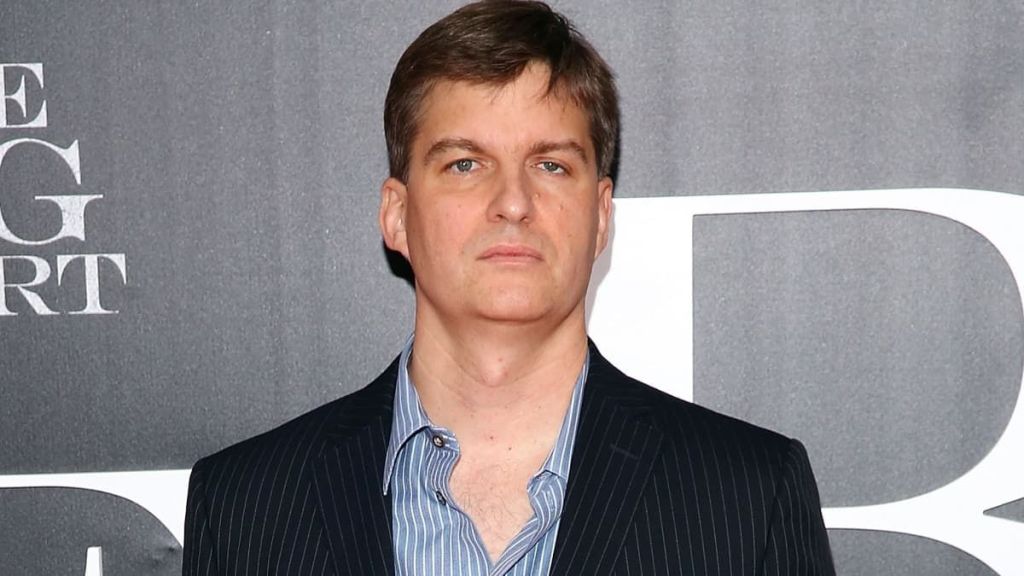

‘The Big Short’ investor Michael Burry has gained attention to the huge valuations of artificial intelligence companies by comparing the value of startup Anthropic with 78 profitable companies in the S&P 500 index. Burry made the comparison on Wednesday on X, explaining how much investors are currently willing to pay for private artificial intelligence companies compared with established businesses that have been operating for years.
Burry said investors could use the exercise to see how many profitable public companies they could theoretically buy with the valuation of a highly valued private company. “A fun game in times like these is to go to the S&P 500 Index and see how many profitable companies one can buy with the bubble private company valuation,” he wrote on X.
According to Burry, Anthropic’s valuation is large enough to match the combined value of 78 companies in the S&P 500. The comparison includes several well-known companies from sectors such as food, retail, healthcare, manufacturing, travel, energy and media.
A fun game in times like these is to go to the S&P 500 Index and see how many profitable companies one can buy with the bubble private company valuation. The number that Anthropic’s valuation buys is 78, including Domino’s, Clorox, Smucker, Stanley Black & Decker, Deckers, lululemon, McCormick, Tractor Supply, NVR, Albemarle, FedEx Freight, News Corp, Alllian Energy, Kimco Realty, Hormel Foods, Clorox, Weyerhauser, DaVita, Zimmer Biomet, Lennox, Masco, A.O. Smith, MGM, Wynn, Brown-Forman, Norwegian Cruise Lines, Hungtington Ingalls, and many more. The largest inflation adjusted valuation at pre-IPO of 1990-2000 was UPS at $119 billion, 92 years old at the time. That was 26 times earnings at a net margin of about 8.6%, 2.4x sales.
— Cassandra Unchained (@michaeljburry) October 8, 2026
Anthropic valuation versus established companies
Burry’s comparison comes at a time when investors are placing extremely high valuations on artificial intelligence companies. Anthropic, the artificial intelligence company behind Claude, reached a valuation of about $965 billion during a private funding round in May 2026.
The company has also filed a confidential prospectus and is reportedly preparing for a possible initial public offering. Reports have suggested that Anthropic could seek a valuation of as much as $2 trillion in a future listing.
Burry did not specify the exact Anthropic valuation he used for his calculation of the 78 companies. His point, however, was to focus on the gap between the value being placed on a fast-growing private artificial intelligence company and the value of established public companies with large revenues and profits.
The 78 companies identified in his comparison include Domino’s Pizza, Clorox, The JM Smucker Company, Stanley Black & Decker, Deckers Outdoor, Lululemon Athletica, McCormick & Company and Tractor Supply.
The list also includes NVR, Albemarle, FedEx Freight Holding Company, News Corp and Alliant Energy. Other companies in the group include Kimco Realty, Hormel Foods, Weyerhaeuser, DaVita, Zimmer Biomet, Lennox International, Masco, A.O. Smith, MGM Resorts International, Wynn Resorts, Brown-Forman, Norwegian Cruise Line Holdings and Huntington Ingalls Industries.
These are not small or early-stage businesses. Many have decades of operating history, established customer bases and large physical operations.
Burry’s comparison therefore focuses on what investors are paying for future growth in artificial intelligence compared with what they are paying for companies that already generate revenue and profits.
Why the focus on 78 companies?
A company such as Domino’s operates thousands of restaurants and has a well-established global business. Clorox sells household products, McCormick operates in the food and spices business. Companies such as FedEx Freight, News Corp and MGM Resorts also have established businesses and significant assets.
Burry’s calculation explains that the amount of money investors are willing to assign to Anthropic privately is comparable with the combined market value of dozens of such companies.
The comparison does not mean that Anthropic could simply buy these 78 companies. It is a way of showing the size of the startup’s valuation compared with the stock market value of established businesses.
Burry looks back at the dot-com era
Burry also compared today’s market valuations with the period before the dot-com crash. He pointed to United Parcel Service as an example from the period between 1990 and 2000. According to Burry, UPS had the largest inflation-adjusted valuation before an initial public offering during that period.
Burry put UPS’ inflation-adjusted pre-IPO valuation at about $119 billion. He noted that the valuation was supported by established financial measures. UPS was valued at about 26 times its earnings, had a net profit margin of around 8.6% and traded at about 2.4 times sales.
The comparison is important because Burry believes today’s artificial intelligence valuations are moving far beyond the levels seen for major companies before their public listings.
Anthropic’s reported valuation of $965 billion is more than eight times the inflation-adjusted pre-IPO valuation Burry cited for UPS. A potential valuation of $2 trillion would make the gap even larger.
Burry warns about AI infrastructure spending
Burry’s concerns are not limited to the valuations of artificial intelligence companies. He has also warned about the enormous amounts being spent on artificial intelligence infrastructure.
Technology companies and cloud providers are committing hundreds of billions of dollars to data centres, advanced chips, computing capacity and other infrastructure needed to support artificial intelligence.
Burry believes some of this spending could eventually lose much of its value if the economics of artificial intelligence change. In another post, he wrote, “Ultimately, compression will do its deed, and much of what is being spent will be just so much sunk cost.”
Burry has previously described “compression” as a process that begins when the benchmark phase ends and companies start reducing their use of third-party tokens.
If artificial intelligence becomes cheaper and more efficient to operate, companies may not need as much computing infrastructure as investors currently expect. This could leave some of the huge investments made today generating lower returns than expected.
Burry remains bearish on the market
Burry has repeatedly warned that the stock market could be heading towards a correction. In an earlier post on Monday, he wrote, “The stock market is quite obviously in its first stage of grief, denial,” adding, “Per 2000 and 2008, this stage lasts 6-9 months.”
His comments point to the possibility of a major market correction as investors reassess the value of artificial intelligence companies and the massive spending linked to the sector.
Burry became famous for predicting and betting against the US housing market before the 2008 financial crisis. His investment was later featured in the 2015 film “The Big Short.”
His latest comparison between Anthropic and 78 S&P 500 companies adds to his warning that investors may be paying extremely high prices for expected artificial intelligence growth.
Disclaimer: This article provides factual analysis only and is not, and should not be construed as, an offer, solicitation, or recommendation to buy or sell securities. Investors must conduct their own independent due diligence and seek advice from a registered financial advisor in the respective jurisdiction.