


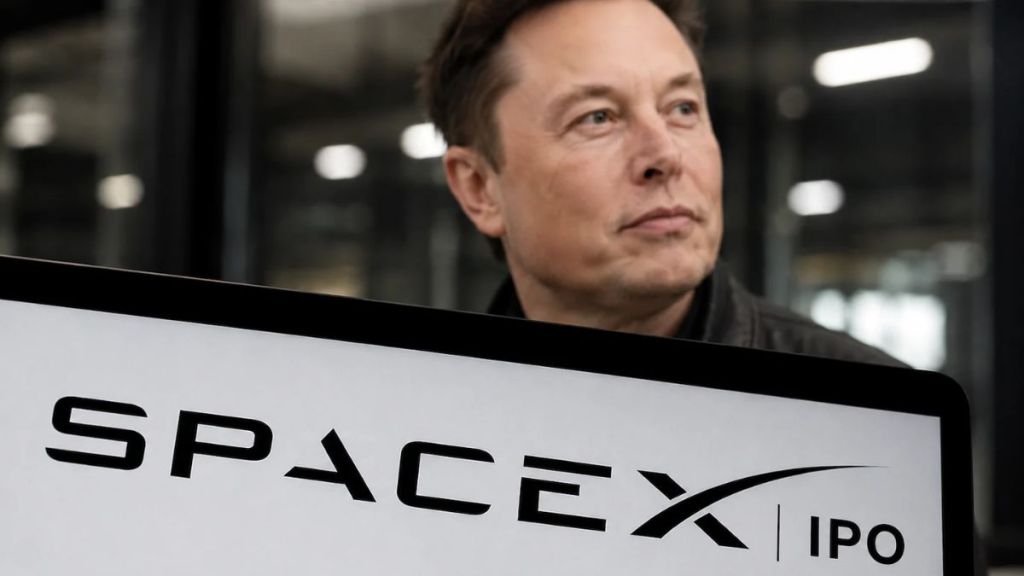

Elon Musk’s SpaceX is looking to raise about $40 billion to finance a major purchase of Nvidia chips as the rocket company expands its investment in artificial intelligence and data centres, according to the Financial Times.
The financing is expected to include about $10 billion in bank loans and another $30 billion in investment-grade debt, according to FT, citing sources familiar with the matter.
Apollo Global Management is expected to lead the deal and help sell the debt to a wide group of investors. Bond investment group Pimco is also among a small group of lenders that have been in talks to finance the transaction.
The deal is expected to close in 2027.
How will SpaceX finance one of Nvidia’s biggest chip deals?
The financing plan shows how much money is now being raised to build the infrastructure needed for the AI boom, including data centres, advanced chips and computing systems.
According to the Financial Times, SpaceX’s BBB credit rating, which is the second-lowest investment-grade rating, could make its debt available to insurance companies and pension funds. These investors generally have stricter limits on how much they can put into junk-rated debt.
No comments were immediately available from Apollo, Pimco, SpaceX or Nvidia on the reported financing plans.
The deal would also deepen the relationship between SpaceX and Nvidia at a time when Nvidia is facing growing competition from other chipmakers trying to challenge its lead in advanced AI semiconductors.
Musk has made clear that SpaceX plans to rely heavily on Nvidia’s technology.
“We’ve decided to build exclusively on Nvidia because we think the Vera Rubin architecture is the best architecture,” Musk said during SpaceX’s earnings call in August, referring to Nvidia’s latest AI platform.
“We think it’s the best AI computer, and we greatly value our close co-operation and partnership on many levels with Nvidia,” he said.
SpaceX debt faces investor concerns
SpaceX received an investment-grade credit rating soon after its $86 billion initial public offering in June.
The company then sold $25 billion of high-grade bonds less than two weeks later. But those bonds came under pressure in the following days as investors grew concerned about SpaceX’s rising debt and its heavy spending on new projects.
SpaceX bonds due in 2056 are now trading at about 85 cents on the dollar. Their yield is about 2.27 percentage points above comparable US Treasury yields, according to MarketAxess data.
Some investors have also been cautious about SpaceX debt because Musk has provided limited financial information about the company.
Investors who were previously approached about financing SpaceX’s multibillion-dollar Nvidia chip purchase said they received only a short two-page deal memo.
Apollo has become a major player in chip financing
Apollo has made lending to highly rated companies an important part of its $800 billion credit business. It has led multibillion-dollar financing deals for companies including Intel and Bayer.
Its life insurance and annuities arm, Athene, usually buys a large part of these debt offerings.
Apollo also led a $35 billion financing deal in June for chips made by Nvidia rival Broadcom. It was the biggest private credit transaction at the time.
The latest SpaceX financing would add to Apollo’s growing role in funding the huge spending needed to build AI infrastructure.
Nvidia is building its own financing network
Nvidia has also been working with major Wall Street firms to make it easier for companies to finance purchases of its expensive chips.
In August, Nvidia announced plans for a $500 billion funding platform with Apollo, BlackRock, Blackstone, Brookfield, Goldman Sachs and KKR.
The group plans to create pools of outside capital that can help finance Nvidia chip purchases and the wider construction of AI infrastructure. The goal is to lower borrowing costs for smaller customers that want to build AI data centres and computing capacity.
Nvidia could potentially guarantee or backstop as much as 25% of the value of the chips involved in the financing.
SpaceX’s planned $40 billion financing shows just how large the funding needs are becoming as companies race to secure Nvidia’s latest AI chips and build the data centres needed to support the next phase of the AI boom.