


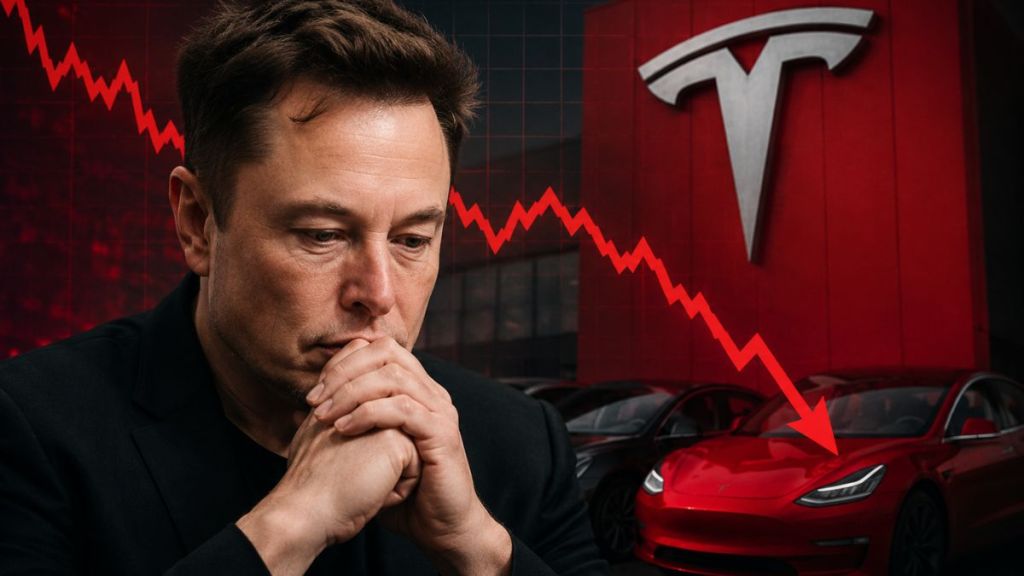

Elon Musk’s Tesla reported stronger-than-expected vehicle deliveries for the second quarter, but its shares still fell around 7% in Thursday trading. At 12:18 p.m. ET on July 2, Tesla shares were down 7.32% at $394.18, losing $31.12 in market value.
The electric vehicle maker delivered 480,126 vehicles during the April-June quarter, much higher than Wall Street’s expectation of about 406,600 vehicles. Tesla also produced 451,758 vehicles during the quarter. The company said deliveries rose 25% from a year ago and were up 34% compared with the first quarter of 2026. Most of Tesla’s deliveries came from its popular Model 3 sedan and Model Y SUV. The two models accounted for 467,762 deliveries, or about 97% of the total.
Why Tesla shares still fell
Regardless of the strong delivery numbers, Tesla’s stock dropped about 7%. The company’s shares have fallen after each of its last three quarterly delivery reports. Investors are looking beyond vehicle deliveries and are waiting for Tesla’s full second-quarter earnings report on July 22 to get a clearer picture of its profits and overall business performance.
According to CNBC, many investors are now more focused on Elon Musk’s long-term plans in artificial intelligence, self-driving technology and robotics than on vehicle sales alone. Tesla is spending heavily on projects such as its Cybercab robotaxi platform and Optimus humanoid robots. The company plans to invest more than $25 billion this year, nearly three times what it spent last year, and expanding manufacturing and developing AI and autonomous driving technologies.
Sales recovery faces challenges
Tesla is trying to recover after recording two straight years of declining annual vehicle sales. The slowdown was partly linked to a consumer backlash against CEO Elon Musk, the loss of a US federal tax credit for EVs, and rising competition from other automakers. Chinese companies such as BYD, Nio and Xiaomi have launched more affordable and technology-packed electric vehicles.
Tesla is also facing stronger competition from Hyundai Motor Group and Volkswagen in global markets. To boost demand, Tesla has introduced lower-cost versions of the Model 3 and Model Y and has expanded its Full Self-Driving (Supervised) system to some European markets. Higher fuel prices during the Iran conflict also encouraged more people in Europe to buy electric vehicles in the first half of the year. However, oil prices have since fallen back after a ceasefire and diplomatic efforts eased tensions.
In the US, buyers are increasingly choosing hybrid vehicles over fully electric cars, according to Dan Hearsch, managing director at AlixPartners. “We have a huge country, and people live far away from each other compared to Europe where the charging infrastructure is better and people don’t have to drive quite so far,” Hearsch told CNBC. Hearsch added that inflation, changing trade policies and rising costs of chips and other vehicle components could become the biggest challenges for US automakers in the second half of the year.
Energy business grows
Morningstar said Tesla’s vehicle sales continued to be led by its mass-market Model 3 and Model Y vehicles. The research firm also noted that Tesla deployed 13.5 gigawatt-hours of energy storage during the quarter. That was higher than both the previous quarter and the same period last year, but slightly below analysts’ expectations of 13.8 GWh. Investors are now waiting for Tesla’s full second-quarter results on July 22 for more details on the company’s profitability and business performance.
Disclaimer: This article provides factual analysis only and is not, and should not be construed as, an offer, solicitation, or recommendation to buy or sell securities. Investors must conduct their own independent due diligence and seek advice from a registered financial advisor in the respective jurisdiction.