


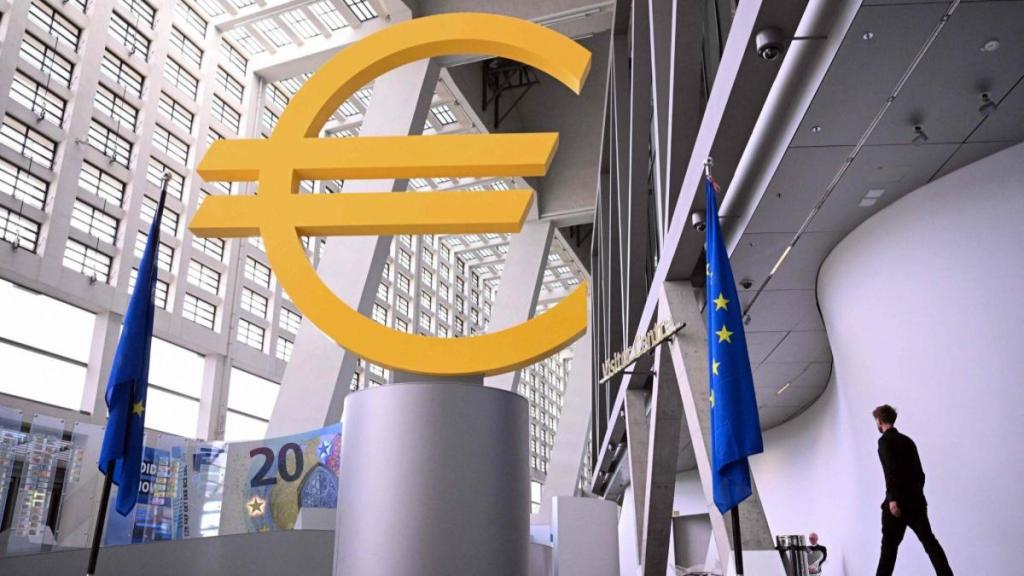

The European Central Bank delivered its second interest rate increase of the year on Thursday (September 10). It raised its benchmark deposit rate by 25 basis points to 2.50% as the Iran war fuelled inflation and renewed concerns over energy costs.
The move comes as renewed US-Iran attacks on military, shipping and energy assets since late August ended a month of relative calm. Oil prices have climbed back above $100 a barrel, increasing the risk of higher costs spreading across the euro zone, which relies on fuel imports.
Alongside the increase in the deposit rate from 2.25%, the ECB raised its main refinancing rate to 2.65% and marginal lending facility rate to 2.90%. All three changes take effect on September 16, according to its policy announcement.
The central bank warned that energy prices could rise further. Its latest projections put average annual inflation above its 2% target through 2028, with stronger-than-expected economic activity also contributing to persistent price pressures.
Inflation forecasts raised
The ECB’s latest staff forecasts put average headline inflation at 3% in 2026, 2.5% in 2027 and 2.1% in 2028. The forecast for this year was unchanged from June, while projections for the following two years were raised.
Inflation excluding energy and food is projected at 2.5% this year, 2.6% in 2027 and 2.3% in 2028, according to the central bank.
The ECB also raised its growth forecasts for 2026 and 2027, citing an economy that had held up better than expected. It now projects expansion of 0.9% this year, 1.4% next year and 1.5% in 2028.
However, it warned that inflation could exceed its projections and growth could fall short, depending on the scale and duration of the energy shock.
Energy drives price rise
Euro area inflation rose to an estimated 3.3% in August from 2.9% in July, according to a press release by the central bank.
Energy prices were 14.3% higher than a year earlier, compared with a 10.3% increase in July. Services inflation slowed to 3% from 3.3%, while price growth for non-energy industrial goods increased to 1.2% from 0.9%.
Core inflation, which excludes energy, food, alcohol and tobacco, eased to 2.4% from 2.5%. The figures suggest the latest acceleration in headline inflation was concentrated in energy.
Growth holds up
In her monetary policy statement in Berlin, ECB President Christine Lagarde said growth had been broad-based across countries and sectors in the second quarter. Manufacturing remained solid, government spending on defence and infrastructure was increasing and consumer confidence had recovered from low levels.
Unemployment remained unchanged at 6.4% in July. Wages had yet to show a significant response to the energy shock, according to the statement.
Nevertheless, the ECB expects higher energy costs to gradually feed into food prices and core inflation. It also identified further supply disruptions and an unusually cold winter, combined with low gas storage levels, as risks to gas prices.
Borrowing costs have already risen following the ECB’s June rate increase. Bank lending rates for companies reached 3.8% in June and July, compared with 3.6% in May, the statement read.
The Governing Council said future decisions would depend on incoming economic and financial data, underlying inflation and how strongly monetary policy was affecting the economy.