


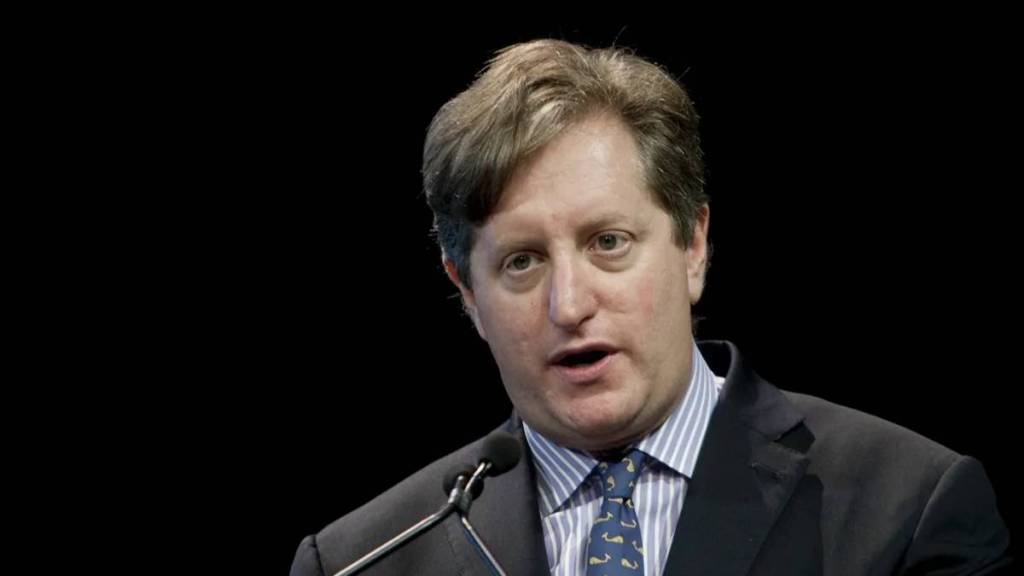

Steve Eisman is a renowned investor, best known for his accurate bet against the US housing market before the 2008 financial crisis. Michael Lewis chronicled that story in his 2010 book, ‘The Big Short,’ depicting how the United States housing bubble triggered the crisis. In the film adaptation, Steve Carell portrayed Eisman.
With over 20 years of experience, Eisman has held senior roles at Oppenheimer & Co. and FrontPoint Partners. He now hosts ‘The Real Eisman Playbook’ podcast, where he shares market insights, investment strategies, and conversations with leading voices in finance.
His latest in the series carries a warning. Eisman says in his podcast that some of the off-balance sheet financing in AI, done through special purpose vehicles, disturbs him.
He thought such deals had gone the way of the dodo bird after Enron and the Global Financial Crisis (GFC). Then came his admission: “I was wrong. It’s still happening and in size and boy do I feel foolish.”
So why does it worry him? Because it looks a lot like the GFC. Back then, banks used SIVs to keep pools of assets off their books and bypass leverage calculations and regulatory capital requirements. Now, the aim is to keep AI debt off the balance sheet so ratings agencies do not penalize the debt ratings. In both cases, the debt looks like it has vanished. It has not.
Let’s start with his current views on the market.
Two Numbers the Whole Market is Watching
Eisman calls this a tough market. In the podcast, he says, “the only two variables that matter right now are oil prices and the 10-year yield.” Neither is predictable, and both move the market.
He says, “War news flips like a pancake, and the 10-year keeps climbing.” Earlier, the 10-year declined below 5% for a short period of time, and the market rallied. The next day, strong economic data pushed it to a multi-year high of 5.10% plus, and the market declined.
For now, 5% looks like the Rubicon and a crucial level to watch. Eisman says, “Should the 10-year remain above 5%, a correction I think is probably imminent.”
Circular Financing Is Open. What Is Not?
Eisman has been critical of AI financing deals, and he sees a parallel to the GFC era. He acknowledges that many commentators have discussed the circular nature of AI financing.
Nvidia, for example, invests in or lends money to a company that then uses that cash to buy Nvidia chips. Eisman says, “it’s all out in the open” and easy to understand. Nvidia is funding its own growth out of its own magnificent cash flow.
That is not what worries him. He finds some off-balance sheet financing using special purpose vehicles disturbing. It is still happening, and in size.
His point is that a top-down view needs to be paired with bottom-up analysis of the accounting. He says, “This kind of financing is designed to obscure.”
Here’s why companies go through these manipulations, according to Eisman.
The goal is to get debt off the balance sheet so ratings agencies will not penalize the debt ratings. Ratings agencies can be myopic and often look only at debt on the balance sheet. Eisman says, “This works until everything goes sideways.”
How Shadow Banks Hid Risk Before 2008
But why does off-balance sheet financing matter? Because the GFC had a similar tale. Wall Street created the structured investment vehicle, or SIV.
SIVs were shadow banks, pools of investment assets kept off the balance sheets of major commercial banks to bypass leverage calculations and regulatory capital requirements. They played a major role in amplifying the 2007-2008 crisis.
Eisman says in his podcast, “The GFC gave birth to the concept of too big to fail.” His question is simple. “Are we there again? I certainly hope not.”
Costs are rising. Nvidia recently raised prices by 15%. It costs a lot to build an AI data center, and it takes a great deal of time.
The hyperscalers, Google, Amazon, Microsoft, Oracle, and Meta, used to be capital-light businesses. Still, this year they will spend something like $700 billion on AI capex, and their cash flow has disappeared. They are raising capital for the first time in decades, and a lot of debt.
Flooding balance sheets with debt destroys credit ratings, and bad ratings raise the cost of debt. That is why off-balance sheet financing is tempting. If some debt stays off the balance sheet, ratings agencies may give credit for it.
Meta’s Beignet Deal Fails the Smell Test
Last year, Meta dipped its toe into off-balance-sheet financing to fund a 27-billion data center in Louisiana. The debt is not on Meta’s balance sheet. Instead, a special purpose vehicle called Beignet Investor LLC was set up.
Meta technically owns only 20% of Beignet, with the rest owned by Blue Owl and PIMCO. Meta is building the data center, has promised to rent it from Beignet for 20 years, and bears the cost of any project delays and overruns. Still, the debt will not sit on Meta’s balance sheet.
Did the Auditor Flinch on Meta’s Beignet?
Perhaps with Arthur Andersen in mind, Ernst & Young, Meta’s auditor, was not totally comfortable with the deal. In Meta’s 2025 10-K, EY flagged it as a critical audit matter. Eisman read a long section aloud, where the SPV is called a variable interest entity, or VIE.
His takeaway is that “sometimes accounting language illuminates and sometimes it obscures. Here it obscures.”
Here is his plain translation, and he is clear it is his own slant. “EY is very nervous and not sure the VIE should be off balance sheet. It relied on the company’s description without doing real work of its own. After all, EY wants to get paid, and Meta is a big client.”
The VIE is small at $27 billion. Eisman warns, “You should expect many more such transactions in the future and not just at Meta.”
Is History About to Repeat?
The pattern is hard to miss. Enron used special purpose vehicles to move debt off its books. Banks used SIVs before the GFC. Now, with costs rising and credit ratings under pressure, AI companies find the same tools tempting.
Eisman says it is still early in the AI off-balance sheet story. The catch is the same as before. The trick works until everything goes sideways. Then the debt lands back on the balance sheet.
Disclaimer: This article is for informational purposes only and does not constitute investment advice. Views expressed are those of the speaker and are not recommendations. Please do your own due diligence and consult a licensed financial advisor before making any investment decisions.