


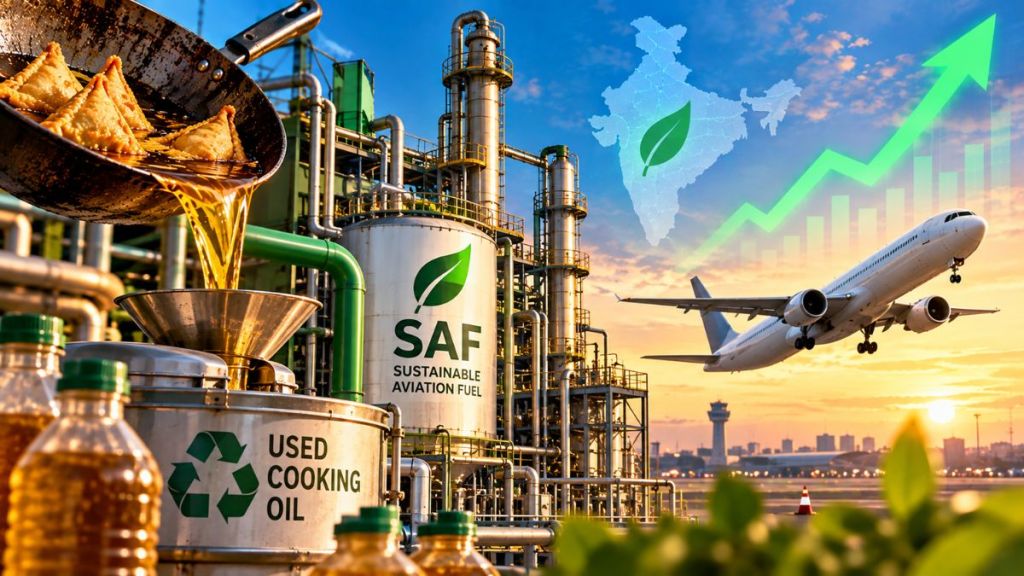

The oil used to fry your favourite samosa could one day help power an aircraft. What usually ends up as kitchen waste is emerging as a potential feedstock for sustainable aviation fuel (SAF), as India looks to cut aviation emissions and build alternatives to conventional jet fuel.
India’s push to produce sustainable aviation fuel (SAF) from used cooking oil (UCO) is opening up opportunities across oil refining, feedstock collection, biofuel technology and engineering. Financialexpress.com spoke with a stock market expert to find out which listed entities could be under the radar and benefit from the new initiative.
Key oil refinery developing sustainable aviation fuel ecosystem
Indian Oil Corporation, Bharat Petroleum Corporation, Hindustan Petroleum Corporation and Mangalore Refinery And Petrochemicals are developing SAF-related projects, while Engineers India, Praj Industries and Larsen & Toubro could benefit from technology, engineering and project execution orders.
However, analysts caution that the opportunity will take time to translate into meaningful earnings. Project commissioning, access to traceable feedstock, production costs and policy support will determine how quickly India’s SAF ambitions become a commercial reality.
“SAF is unlikely to be a material earnings driver for IOC, BPCL, HPCL or MRPL over the next 3-5 years, as mandated volumes remain small relative to their refining capacities,” said Arun Kailasan, Research Analyst at Geojit Investments Limited.
Yash Nandwani, Lead Research Analyst for the Oil and Gas sector at Nirmal Bang, similarly noted, “The opportunity is real, but is very small in earning terms for the listed O&G names.”
Nandwani estimated that India would need about 65,000 tonnes of SAF in 2028, rising to about 3.8 lakh tonnes by 2030. “I therefore see SAF primarily as a compliance and strategic positioning theme rather than a material near-term earnings driver,” he said.
Indian Oil Corporation: Broadest project pipeline among refiners
Indian Oil is among the most advanced domestic refiners in the SAF ecosystem, with projects spanning Panipat, a HEFA joint venture at Paradip and an alcohol-to-jet partnership with LanzaJet.
“IOC is best positioned, with projects spanning Panipat, Paradip and alcohol-to-jet technology that could give it a leading share of domestic SAF supply,” Kailasan said.
Nandwani noted that Indian Oil’s Panipat refinery was the first in India to receive ISCC CORSIA certification, in August 2025. The company has also approved a 100,000-tonne-a-year HEFA joint venture at Paradip, with an estimated cost of around Rs 1,060 crore.
According to Indian Oil’s Q1 FY2026-27 investor presentation, refinery throughput stood at around 1.92 crore tonnes during the quarter. This provides context for the scale of the company’s refining operations, although the contribution from SAF will depend on actual production, feedstock costs, margins and offtake arrangements.
The key milestones for the company are the commissioning of the Panipat facility, progress on the Paradip venture and approvals for the alcohol-to-jet project. Indian Oil’s ability to develop multiple production pathways could give it an advantage as the domestic market evolves.
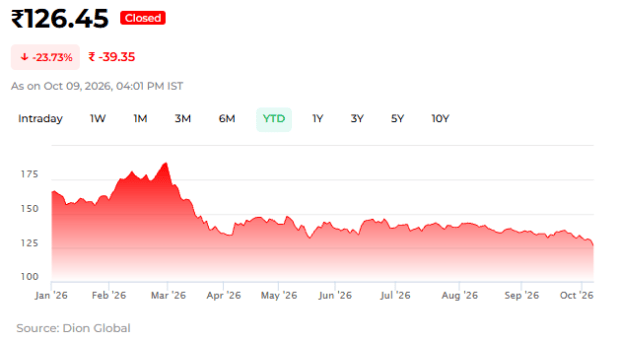
Indian Oil Corporation share price performance
Bharat Petroleum Corporation: Mumbai project in focus
BPCL is progressing with refinery-based SAF initiatives, with its Mumbai refinery among the projects to watch.
“BPCL is scaling through refinery-based SAF initiatives,” Kailasan said, while noting that production at the company’s Mumbai facility was a key milestone to monitor.
Nandwani said BPCL’s Mumbai refinery had received certification and that production was expected by the end of 2026. The timeline will be important in assessing whether the company can move from project development to sustained commercial production.
For BPCL, the near-term opportunity will depend on commissioning, feedstock availability and the ability to produce certified fuel at a commercially viable cost. Analysts do not expect SAF to become a material earnings driver for the major refiners over the next three to five years, given the relatively small volumes involved.
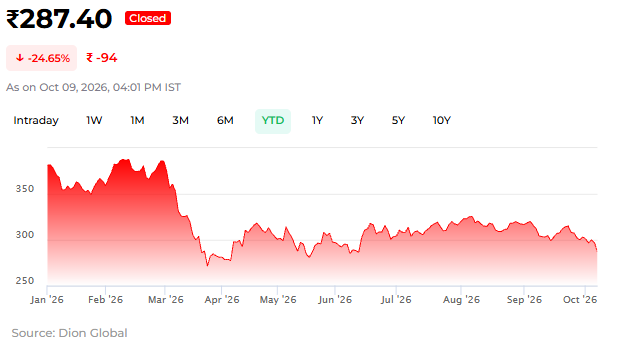
BPCL share price performance
Hindustan Petroleum Corporation: Visakh project and commissioning timeline
HPCL is also pursuing SAF development, with its planned Visakhapatnam project among the milestones investors should track.
Kailasan said HPCL remained focused on demonstration and early commercial production. The company’s progress will depend on project execution, feedstock procurement and the timing of commissioning.
“Investors should track SAF policy implementation, project commissioning, feedstock sourcing and airline offtake agreements to assess commercial adoption,” Kailasan said.
For HPCL, confirmation of commissioning schedules and progress towards sustained production will provide a clearer indication of the opportunity than project announcements alone. As with its peers, the scale of the financial contribution will depend on production volumes and economics.
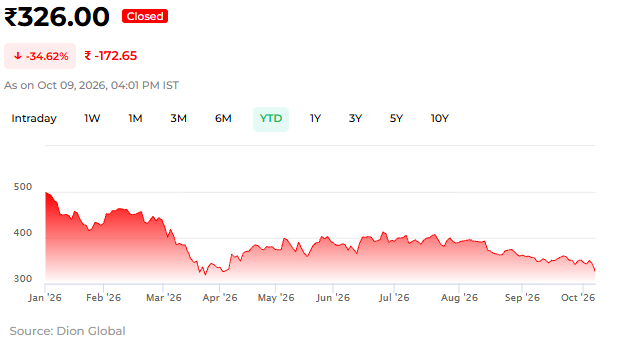
HPCL share price performance
Mangalore Refinery and Petrochemicals: UCO sourcing and bio-ATF plans
MRPL has a differentiated position in the SAF ecosystem through its focus on UCO procurement, certification and a dedicated bio-aviation turbine fuel (bio-ATF) plant.
“MRPL holds a differentiated position in India’s SAF ecosystem through its UCO-focused CORSIA certification, feedstock procurement efforts, dedicated bio-ATF plant and aviation fuel marketing infrastructure,” Kailasan said.
He added that early access to UCO could prove advantageous as feedstock collection remains a key industry bottleneck. MRPL’s Shell aviation-fuel partnership and planned Bengaluru airport ATF pipeline could also strengthen its route to market.
“However, MRPL’s advantage lies in execution readiness rather than scale, with IOC retaining a clear lead in SAF capacity, project pipeline and financial resources,” Kailasan said.
Nandwani highlighted MRPL’s proposed dedicated HEFA-based aviation-fuel plant and its efforts to secure feedstock. The company has issued a tender for around 35,000 tonnes of UCO and explored procurement contracts extending up to 15 years.
“However, the initial plant is relatively small at 20 kl/day, translating to an estimated 5–6 kt/yr,” Nandwani said. “Its impact on MRPL’s overall earnings is therefore likely to be limited, while technology and certification milestones remain key risks.”
MRPL’s Q1 FY2026-27 financial summary reported total income of Rs 38,325.08 crore and profit after tax of Rs 945.68 crore. These figures reflect the company’s overall business and are not SAF-specific. Investors will need to track progress on feedstock contracts, plant execution, certification and long-term offtake.
MRPL share price performance
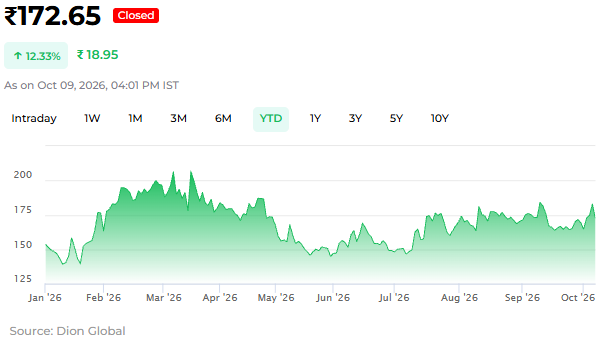
Engineers India: Engineering and HEFA technology opportunity
Engineers India could benefit as refiners move from SAF proposals and pilot projects to commercial facilities requiring design, engineering and execution services.
“As the commercialization partner for CSIR-IIP’s HEFA-based SAF technology and the executor of MRPL’s bio-ATF project, EIL is building valuable reference credentials in a nascent market,” Kailasan said.
He said the company could capture feasibility, design and project execution contracts as refiners expand their SAF capacity, while also monetising its technology platform. However, he cautioned that the business is unlikely to materially affect earnings in the near term.
Nandwani also identified Engineers India as a potential beneficiary of engineering and project-related orders, including the MRPL bio-ATF plant and refinery revamps.
The key monitorables are new project awards, the size of contracts and execution progress. A sustained flow of SAF-related orders would offer stronger evidence of commercial opportunity than the overall pipeline of proposed facilities.
EIL share price performance
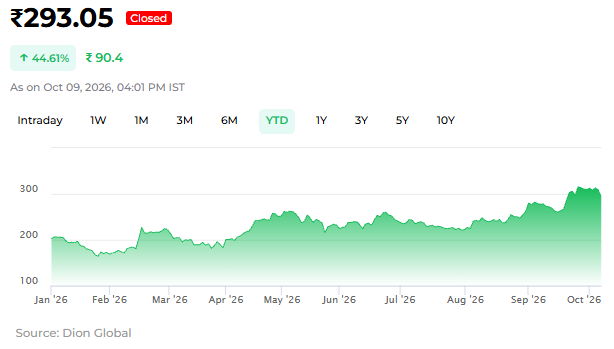
Praj Industries: Biofuel technology and equipment exposure
Praj Industries offers exposure through biofuel technology, equipment and its ethanol-to-jet capabilities.
“Among listed beneficiaries, Praj Industries stands out in technology and equipment, leveraging its ethanol-to-jet platform and strategic ties with IOC,” Kailasan said.
Nandwani also highlighted Praj’s potential, noting that the company could offer greater upside relative to its size if SAF-related orders scale up.
According to Praj Industries’ Q1 FY2026-27 investor presentation, quarterly order intake was Rs 1,000 crore and its order backlog stood at Rs 4,589 crore. Revenue for the quarter comprised 66% from bioenergy, 22% from engineering and 12% from high-purity solutions.
These figures relate to Praj’s overall business and should not be interpreted as SAF-specific orders or revenue. For investors, the important question is whether new SAF projects translate into identifiable orders for technology, equipment and engineering services.
Praj Industries share price performance
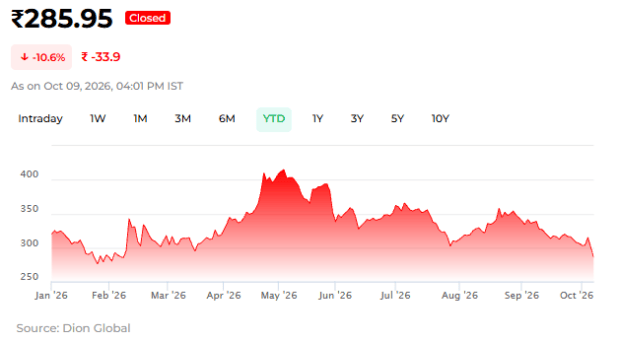
Larsen & Toubro: Potential for large EPC packages
L&T could participate in SAF development through engineering, procurement and construction (EPC) packages for refinery and hydroprocessing facilities.
Nandwani described L&T as “a credible bidder for large packages”, citing its experience in major refinery and hydroprocessing projects. He said Praj could offer greater upside relative to its size if SAF orders scale up, while L&T could compete for larger EPC assignments.
Nandwani cautioned that the absolute opportunity should be kept in perspective. “A 100 kt/yr SAF plant could cost around Rs10bn, depending on technology and project scope,” he said, equivalent to around Rs 1,000 crore in total project cost. The portion available to any individual contractor would depend on the project’s scope and the packages awarded.
According to L&T’s Q1 FY2026-27 earnings presentation dated July 28, 2026, the company reported order inflow of Rs 1,08,000 crore, revenue of Rs 67,900 crore and an order book of Rs 7,79,000 crore. These are company-wide figures, not SAF-specific orders.
Specific contract wins and their value will be the clearest indicators of whether SAF becomes a meaningful source of incremental work for L&T.
L&T share price performance
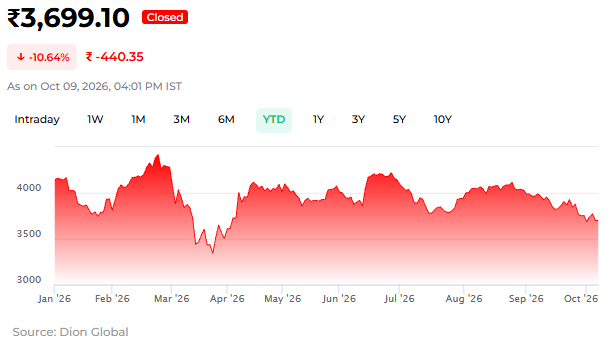
SAF beneficiaries: projects, technology and order visibility
| Stock | Core opportunity | Latest update |
| Indian Oil | SAF production and HEFA | Panipat facility; Paradip JV |
| BPCL | Refinery-based SAF | Mumbai production targeted by end-2026* |
| HPCL | SAF project development | Visakh project |
| MRPL | Bio-ATF and UCO procurement | 35,000-tonne UCO tender* |
| Engineers India | Engineering and technology | MRPL project execution |
| Praj Industries | Biofuel technology | Rs 4,589 crore order backlog |
| L&T | EPC contracts | Rs 7,79,000 crore order book |
Source: As reported by analysts. Indian Oil, Praj Industries and L&T figures are from Q1 FY2026-27 investor presentations or company updates. Order-book figures are company-wide, not SAF-specific.
Feedstock collection remains a major bottleneck
The availability of used cooking oil is central to the economics of UCO-based SAF. The challenge is not just the volume generated, but how much can be collected through organised channels, traced to its source and supplied at consistent quality.
“Feedstock collection and economics are the key bottlenecks for India’s UCO-to-SAF ecosystem,” Kailasan said. He estimated that India generates 18–26 lakh tonnes of UCO annually but formally collects only around 6%.
“Even with improved collection rates, UCO alone may not support long-term SAF demand growth, highlighting the need for alternative feedstocks and alcohol-to-jet pathways,” he said.
Nandwani similarly identified feedstock as the biggest bottleneck. “UCO collection remains fragmented and largely unorganised, making consistent volumes, traceability and quality assurance challenging,” he said. “Long-term procurement contracts and a reliable collection network will be essential.”
Nandwani identified private players including ECOIL, Byufuel and Advait Biofuel as participants in the supply chain. Kailasan also highlighted M11 Energy Transition and Byufuel as UCO aggregators with collection networks.
For refiners, the ability to secure reliable supplies could become a competitive advantage. But tenders and procurement plans will need to translate into consistent deliveries that meet traceability and quality requirements.
SAF economics and policy support will shape adoption
Production costs remain a hurdle for wider adoption. SAF can be significantly more expensive than conventional aviation turbine fuel, leaving questions around who will bear the premium and how policy support will be structured.
Kailasan said economics remain difficult because SAF costs roughly three times conventional ATF and policy support is still evolving. He also noted that certification and airport infrastructure add complexity, while HEFA technology is already commercially proven.
Nandwani said SAF can cost “2–4x as much as conventional jet fuel, depending on the production pathway and market conditions.” He added that the mechanism for allocating the premium among airlines, oil marketing companies, fuel producers and the government remains unclear.
“Regulatory certainty, technology readiness, certification and long-term offtake agreements will determine how quickly announced projects become commercially viable,” Nandwani said.
Government support could influence the pace of adoption.
Nandwani estimated that aggregate annual SAF earnings for the sector could reach only a few hundred crore rupees by 2030.
What investors should track over the next 12–24 months
The next phase of the opportunity will depend on whether announced projects move into commissioning, production and long-term supply contracts.
Kailasan said investors should track the Indian Oil’s Panipat unit’s progress, BPCL’s Mumbai facility, HPCL’s Visakh project and MRPL’s bio-ATF plant. He also highlighted approvals for Indian Oil’s Paradip HEFA venture, progress on its alcohol-to-jet project, CORSIA certification renewals, UCO procurement and blending mandates.
Nandwani also identified EPC order wins for Engineers India, L&T and Praj Industries, along with UCO procurement contracts, technology certification and long-term SAF offtake agreements, as key indicators of commercial progres
For now, SAF is more a long-term growth and compliance opportunity than a major earnings driver. Project commissioning, reliable UCO supplies and government support will determine which companies can turn the opportunity into a meaningful business.
Disclaimer: This article is based on analysts’ outlook and is for informational purposes only. The views and recommendations expressed are those of the respective brokerage firms and do not reflect the official policy or position of Financial Express. This should not be construed as an offer, solicitation, or recommendation to buy or sell securities. Investors must conduct their own independent due diligence and seek advice from a SEBI-registered financial advisor before making any investment decisions.