


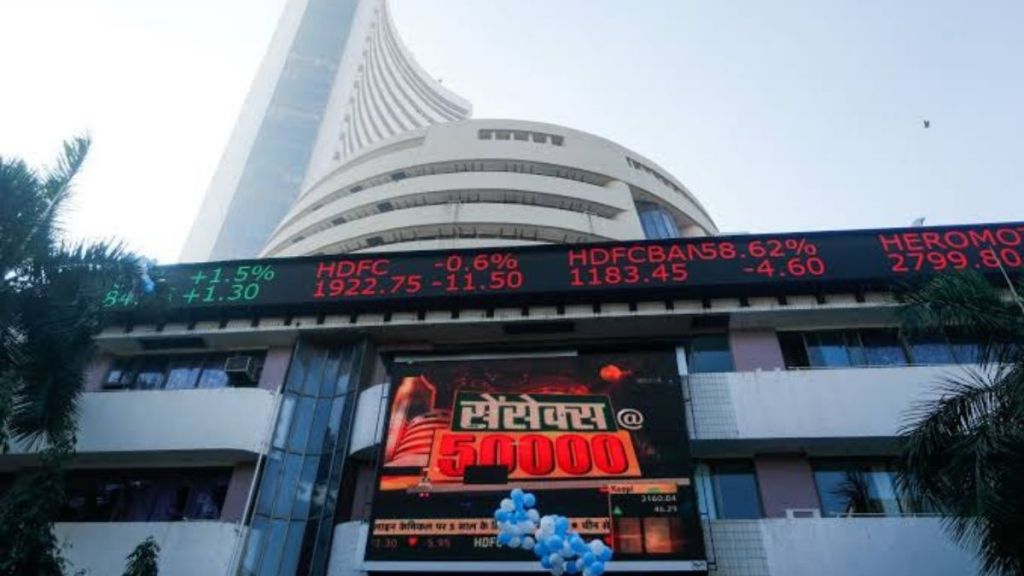

BSE’s entry into the Nifty 50 triggered a burst of activity in the closing auction on Tuesday, pushing NSE’s closing auction session (CAS) turnover to Rs 24,504 crore – the second-highest recorded by the exchange in a single session.
BSE was at the centre of the action as index funds, ETFs and other investors tracking the Nifty 50 rushed to rebalance their portfolios. As many as 19.52 million BSE shares worth Rs 6,247 crore changed hands during the closing auction, accounting for more than a quarter of NSE’s total CAS turnover.
The index inclusion also gave the BSE stock a lift. It ended 3.31% higher than its previous close, with nearly 1.77 percentage points of the day’s gain coming during the closing auction. The boost comes at a time when the stock, at around Rs 3,200 on the NSE, remains more than 27% below its all-time high of Rs 4,403 touched on May 26, 2026.
Market experts said BSE’s inclusion in the Nifty 50 would generate sizeable passive inflows, but cautioned that index-related buying alone would not determine the stock’s longer-term trajectory.
Alok Singh, CIO, Bank of India Mutual Fund, said BSE could see substantial inflows from ETFs tracking the Nifty 50 following its inclusion, but these may not be enough to materially alter the stock’s prospects.
He said capital had migrated away from BSE in the run-up to NSE’s listing, contributing to the decline in BSE’s share price, adding that NSE’s listing could help BSE’s trading volumes, though price discovery and liquidity continue to be stronger on NSE. BSE’s gains in derivatives market share, he said, were driven largely by the regulatory framework restricting exchanges to one expiry day – a factor that could change in the future.
Jay Vora, research analyst at Mirae Asset Sharekhan, said that while BSE remains nearly 30% below its all-time high, technical indicators suggest selling pressure is easing. A move above the Rs 3,299 and Rs 3,347 resistance levels could revive buying interest, while Rs 3,000-3,100 could provide strong support on the downside, he said.
BSE was not the only stock generating heavy auction volumes. Wipro, which moved out of the Nifty 50 into the Nifty Next 50, saw 130.17 million shares worth Rs 2,041 crore change hands during CAS as portfolios adjusted to the index reshuffle.
The closing auction itself turned unusually volatile as the index rejig coincided with the expiry of NSE’s monthly derivative contracts. At one point, the Nifty’s indicative closing level plunged 431 points in just two-and-a-half minutes, before recovering the entire fall during the remainder of the auction.
Chandan Taparia, head of derivatives at Motilal Oswal Financial Services, attributed the swings to a rare convergence of monthly expiry, rollover of derivative positions, index rebalancing and the usual volatility associated with the closing auction.
He said market participants had anticipated higher volatility because so many events were converging in the same session. The encouraging part, he added, was that despite the abrupt 431-point fall, the equilibrium price recovered the entire decline before the auction ended.