


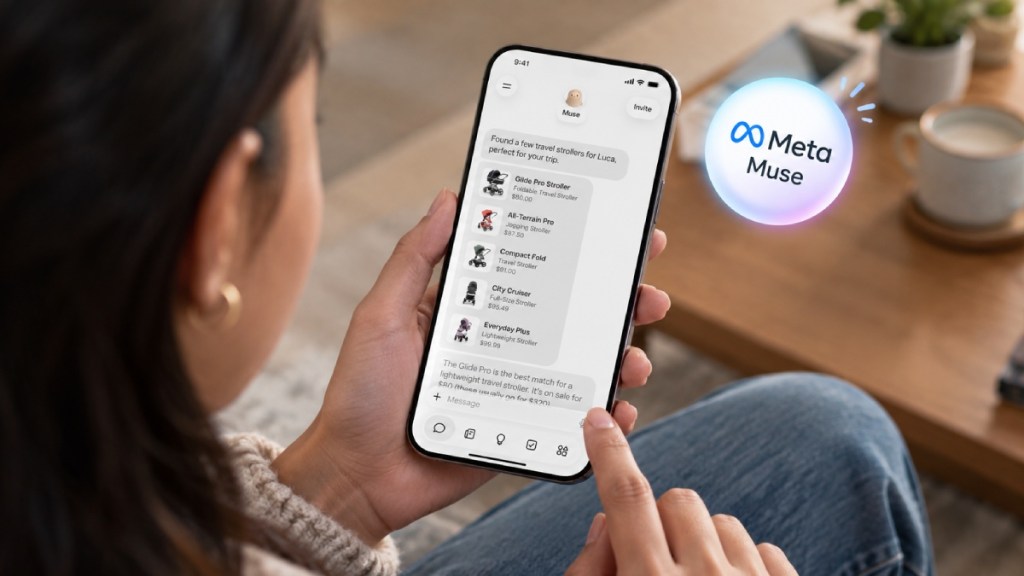

Meta has been testing a “human concierge” for its new personal AI assistant, Muse, in which human contractors quietly make some phone calls on behalf of users, according to internal company posts reviewed by Reuters.
The test was disclosed to Meta employees last week, shortly after the company publicly launched Muse’s phone-calling feature.
Muse is designed to carry out everyday tasks for users on its own. It can send emails, shop online and book travel. Its phone-calling feature allows users to ask the AI to call US businesses and speak to people on their behalf.
For example, a user can ask Muse to book a haircut, check whether a shop has a particular product in stock or call different contractors to get price quotes. But some Meta employees raised concerns after learning that humans could be involved in those calls.
Meta employees raise privacy concerns
Employees warned that human contractors could end up hearing sensitive information that users may have expected the AI system to handle.
One employee wrote in an internal post: “It’s baffling to me why we think this feature is worth the risk. We are one bug away from unnecessary information being leaked to human callers.”
Another employee said he had asked Muse to call his internet and cable provider to negotiate his bill. According to the employee, a transcript of the call showed that the human contractor handling the call made a racist reference.
A vice president in Meta’s Superintelligence Labs responded to the concerns and acknowledged that starting the test without clearly telling users about the human involvement “was a miss.”
She said Meta had “rolled back this feature” for now.
However, she also said the company was still working on improving AI phone calls, Reuters reported.
Meta was still “hillclimbing AI calling,” she wrote, saying some tests had shown that having humans make the calls could push the success rate to between 95% and 98%, compared with the “lower percentage of AI calling.”
She also apologised to the employee who reported the racist reference. She said the human agent involved would not work on any Meta projects going forward.
Why Meta is using humans behind the AI
The Muse test shows one of the problems tech companies face as they try to make AI agents perform tasks on their own.
AI systems may be able to make phone calls, but people on the other end of those calls do not always want to speak to an AI.
One Meta employee said he had tried using Muse to call his insurance company, but “they keep hanging up on Muse when they hear it is AI.”
Meta started testing Muse’s phone-calling ability with employees in August. It then slowly began making the feature available to users after the app was launched, according to the internal posts. To deal with problems with AI callers being rejected, Meta enabled the human concierge feature for half of its employees last week.
The feature was also called “human agent calls.”
The internal announcement said: “Muse is now able to hand requests to a trained agent, who places the call and works it through.”
Employees who did not want to be part of the test could join an opt-out group, according to the post.
Meta has tried this before
The idea of using people behind the scenes to make an AI assistant work is not completely new for Meta. About a decade ago, when the company was still called Facebook, it tested a digital assistant called “M” through Messenger.
Media reports later estimated that around 70% of the tasks handled by M were actually completed by humans. The Muse test similarly shows how much human work can sometimes sit behind AI systems that are presented as being able to work independently.
A Meta spokesperson said the response from employees to the human concierge test had been “overwhelmingly positive.”
The company said the purpose of the test was to “get feedback so we can implement safety and privacy protections and improve features before we release them publicly.”
“We’re working with merchants to continue improving this potential calling feature, and will only roll it out when it’s ready and with the proper disclosures,” Meta spokesperson Daniel Roberts said.
Muse has crossed 2.5 million downloads
According to data from market intelligence firm Sensor Tower, the app has been downloaded more than 2.5 million times since its release. It has also topped US app download charts during the two weeks after its debut.
Meta’s stock has risen more than 20% since the launch. That has added more than $200 billion to the company’s market value and pushed its shares to their highest level in more than seven months as of Monday’s close.
Shares fell 0.6% on Tuesday.
The human calls raise a bigger question about AI security
The human involvement also raises questions about one of the key selling points Meta highlighted when it launched Muse: security.
Meta told users that every Muse agent would have its own secure “virtual machine.” In simple terms, this is a separate computer in the cloud designed to keep a user’s session isolated.
The company also said sensitive information such as passwords would be kept in separate secure storage. Employees who criticised the human concierge test pointed to those protections in their internal feedback.
Their concern was that allowing human contractors to handle calls could weaken the privacy and security protections Meta had highlighted when promoting Muse.
For now, Meta has rolled back the human-call feature after the employee concerns. But the company has made clear that it is continuing to work on AI phone calls, with the aim of improving the system before a wider rollout.