


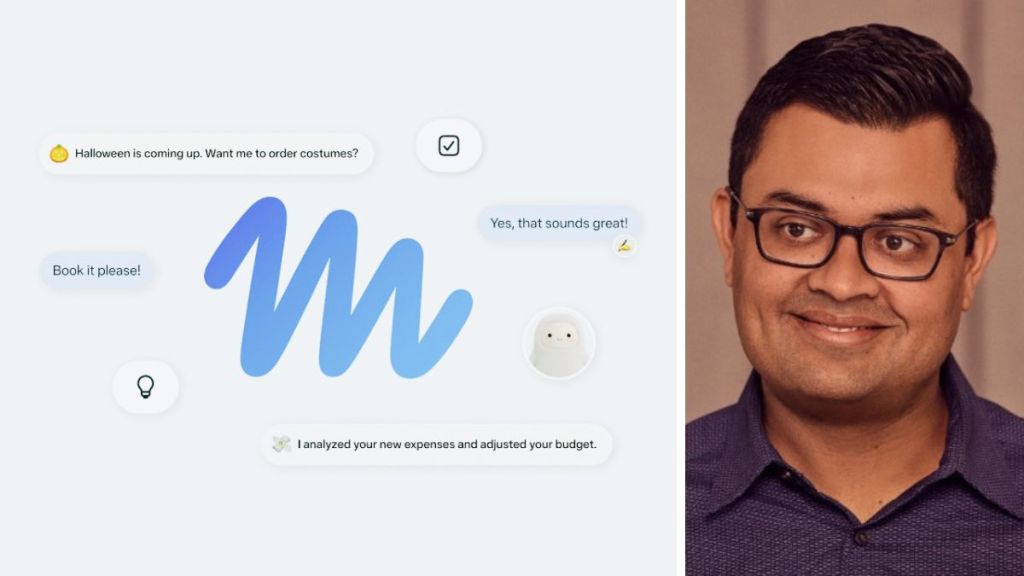

Even as Meta forays deeper into artificial intelligence (AI), the tech giant is pushing Muse as much more than a conventional chatbot. Meta’s latest AI assistant is designed to understand users’ context – their goals and accomplish tasks on their behalf, eventually extending beyond smartphones through its lineup of smartglasses.
At the recent Meta Connect 2026, Vishal Shah, Meta’s VP of AI Products, spoke to Financial Express about the company’s approach to building personal AI and striking a balance between autonomy and user control. Shah shared how Meta decides when Muse should act independently and when it should seek permission, including the safeguards built into its underlying infrastructure.
The Meta executive also explained the thinking behind Muse Spark 1.3, which was developed specifically for personal superintelligence and long-running agentic tasks. The conversation also touched on Meta’s vision for making personal AI accessible to everyone, the role of glasses, and what it will take to bring Muse to markets such as India.
Below are the edited excerpts from the conversation.
Q: Can you tell us about the early reception to Muse and the new features you’re announcing at Meta Connect 2026?
A: We’re very excited about the early reception to Muse. We launched the product a couple of weeks ago and continue to innovate, putting out new features almost every day. We’re announcing a few new things today. There’s an update to our Mac app that gives Muse the ability to drive and use your computer, which I think will help people automate a bunch of tasks. We’re also bringing voice and embodiment to Muse, so instead of just typing, you can talk back and forth and see your Muse’s character come to life using a new state-of-the-art embodiment model we’re launching as part of this announcement.
And perhaps the most exciting thing is that on glasses, your Muse will become the primary agent and AI. So you’re not just talking to a generic assistant; you’re talking to your Muse. This is just the start of a lot of really interesting product work for us as we create the next generation of AI products, which is not just something that can answer your questions but something that knows you, understands your goals and can help you with things that may be too tricky for you to handle on your own.
Q: Your perspective on user control and autonomy. When Muse can browse the web, connect apps and perform tasks while asking for approval for important actions, how do you decide what it should do on its own and when it should ask for approval?
A: The principle behind the product is that you, as the user, should always feel like you’re in control. There are certain actions we always ask for approval on. For example, if Muse is purchasing something for you or sending something on your behalf, those are critical actions, and it will always ask. There are other cases where Muse gets to know you and understands what you’re comfortable with. It starts off being more conservative, and as it understands what you’re looking for, it can become more flexible. You can always control whether it asks or acts on its own.
For example, when you connect your email, you can choose in the settings whether Muse can only read emails, read and write, or ask every time before doing something. We have very granular controls built not only into the app but also into the underlying secure virtual machine the computer Muse runs on in the cloud. It’s a fully integrated system. It’s not just the product on your phone; it’s also how the underlying computer works. We think an agent like this needs a new kind of computer, not just one you set up on your own. This level of safety, security and privacy needs to be built in from the beginning, and that’s how we designed it.
Q: As an extension to that, when we talk about autonomy and control, how do you strike a balance so that personalisation happens without becoming intrusive?
A: It’s about making people feel comfortable. If something does something you don’t expect, that’s surprising, and we want to avoid that. At the same time, if something asks you too frequently, that can feel annoying. So, I’d rather ask you more frequently at first, until you get comfortable. Then you can tell your Muse, “You can handle that for me. I don’t need you to ask.” I wouldn’t want people to be surprised, so the defaults will be more conservative. As people get more comfortable, they can open things up more, including the connectors. For example, when you connect Gmail, the default is read-only. If you want to extend that to read and write, you can do that. But the defaults are very important.
Q: Can you briefly talk about the Muse Spark 1.3 model? Without naming rivals, what improvements would you like to share with us?
A: It’s important to note, going back to the vertical integration point, that it’s the product, the underlying infrastructure and the model. Muse Spark 1.3 was specifically trained for personal superintelligence, meaning it was trained for the types of tasks people will use a product like Muse for, such as long-running agents that help you with a goal, or understanding something like a house project and knowing how to break it down among multiple subagents to get it done. It wasn’t designed to just maximise raw intelligence. It was designed to be most helpful in a product like this. It also happens to be good at other agentic tasks, such as coding.
Coding is important because, for personal superintelligence, Muse needs to be able to write code. If you’re connecting to software that doesn’t have a built-in connector, Muse can build that connector for you using Muse Spark to write the code. So it’s not coding for coding’s sake; it’s coding because it helps you use Muse.
Q: Meta has billions of users across its platforms, including WhatsApp, Instagram and Facebook. When it comes to building AI at that scale, how does your approach change when it comes to cost, speed, safety and personalisation? What’s the underlying philosophy here?
A: The most important philosophy is that we really believe personal superintelligence should be for everyone, and I think we’re uniquely taking that stance in the AI industry. That’s reflected in a series of decisions: how we integrate into our existing products, how we design the models and products, and even how we approach pricing. There’s a reason Muse has a very large free tier, as we really believe people should feel like they’re getting value from the product. If they use it a lot more, there can be a subscription or other business models on top of that over time. But the product has to feel approachable and easy.
A lot of AI products today start with a text box, and it’s up to you to decide how you want to use them. We designed Muse to understand you and your goals, so it’s always doing things in the background, even if you’re not explicitly asking it to. Otherwise, that puts a lot of the onus on you as the end user to figure out what you need. So it’s not just the model, the product, the pricing or the integrations. It’s all of those things coming together around the idea that this should be a technology we put into everyone’s hands.
Q: In the grander scheme, Meta is looking at personal superintelligence. Where are we with Muse right now, and what can we anticipate in the future?
A: I’d say we’re still very early, which is exciting because I think the product is being well received. People see it as a generational leap, but it’s still just the beginning. Some of the early use cases are around personal productivity, personal finance, and health and fitness, but you can imagine those becoming much deeper experiences. I also think there’s a way to connect what’s happening in the digital world to the physical world.
As we think about putting technology like this into a pair of glasses, it allows you to be out in the world, not just on your phone or a screen, and start to bridge the divide between what’s happening on your computer or phone and what’s actually happening in the world. Our hope is that it gives people more time to do the things they want to do, not just the things they have to do. That’s the hope as we continue to scale this.
Q: India is one of Meta’s largest markets and has many languages. As of now, Muse is limited to English. What needs to change for Muse to become genuinely useful across India, beyond English?
A: There are many things we need to do to ensure Muse works well in other markets. Part of it is language support, exactly as you mentioned. We also need to ensure we have the right connectors to the different products people use in different markets, as well as the ability to scale the product. This is a new product, and we’re still rolling it out, but our goal, given our history, is to take every product to the globe as quickly as we can. Of course, we have to get there, and it takes time to scale these things.
I’m very excited about the Indian market, obviously given my own background and family that lives there. But I also think it’s an incredible entrepreneurial market that really understands new technology, with lots of small businesses and people looking to build a new life and find new opportunities. I think products like this can help people bridge gaps they may not otherwise have been able to bridge on their own. So I think there may be even more opportunity in markets like India, and I’m quite excited to bring Muse there.
The author was at Meta’s headquarters in Menlo Park, California, at the invitation of Meta.