


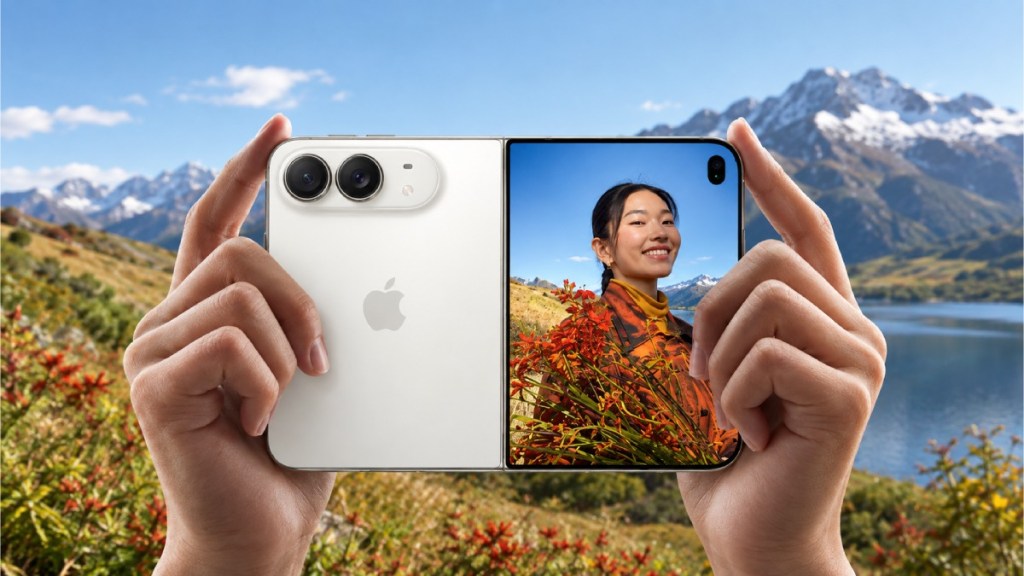

The iPhone Duo is currently the apple of the entire tech landscape’s eye. While it did not bring anything revolutionarily different than Samsung and Huawei’s foldables, the iPhone Duo had a few party tricks up its sleeve to get people talking. It got tech enthusiasts impressed with the folding-out animation, while the rest of the crowd was simply amazed by its price tag.
However, as the dust settles on the iPhone Duo’s high-profile reveal, a crucial question emerges – Is the iPhone Duo the point in history when people start to embrace the idea of a folding phone? Can the iPhone Duo pull foldable devices into mainstream adoption and initiate the phase-out of traditional slab phones?
Since we can’t look into the future, it was time to do some math – or talk to the people who are experts in reading and analysing the smartphone market.
Why the iPhone Duo commands attention
Apple’s strategy relies on entering mature markets to refine the underlying experience rather than inventing something new. The iPhone was a refinement of the earlier smartphone concept, and the same could be said for the iPod and iTunes, both of which refined the way we consume music.
Hence, while Samsung, Huawei, Motorola, and Google have iterated on flexible display phones for years, Apple’s late entry serves as a massive validation stamp for the entire segment. This could shift consumer focus away from hardware novelty toward everyday practical utility.
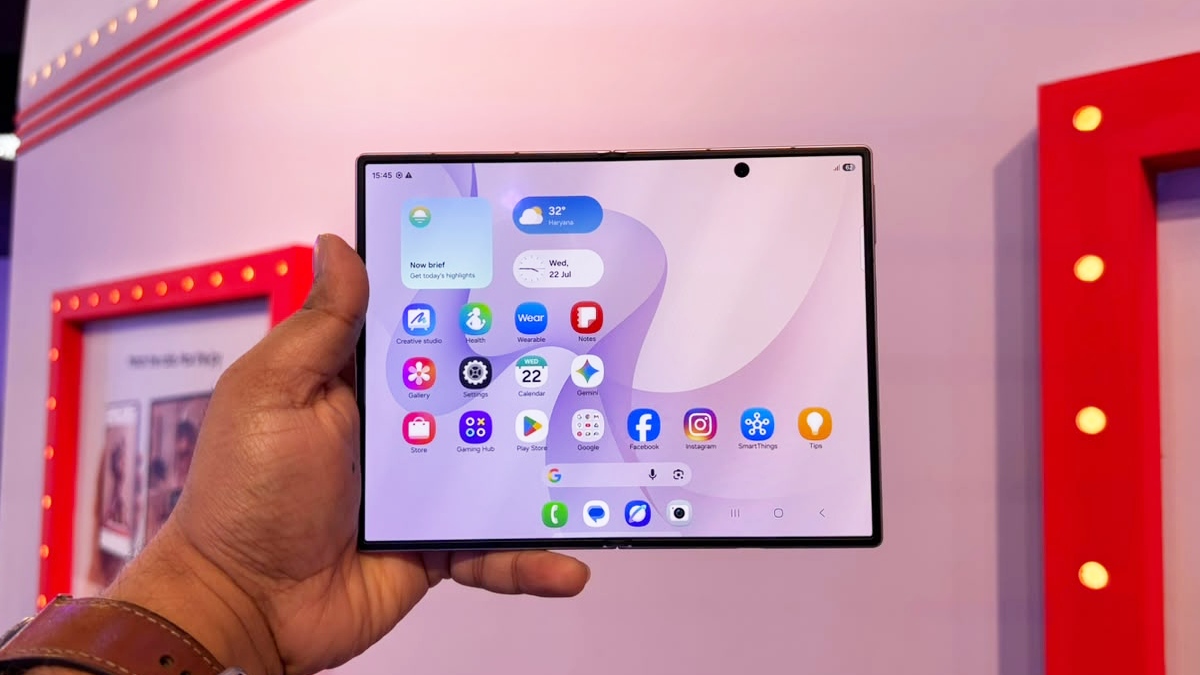
“Apple has been a late entrant to several major technology shifts, including foldables,” notes Prabhu Ram, VP-Industry Research Group at CyberMedia Research (CMR). In a conversation with Financial Express Digital, he went on to add, “But what is interesting about the iPhone Duo is that Apple has been able to shift the conversation from the novelty of the form factor to the consumer experience.”
By integrating iOS 27 across a dual-screen canvas – tackling side-by-side multitasking, app layouts, and hinge durability – Apple aims to eliminate the friction points that early adopters previously tolerated.
Ram points out that this tight alignment between software and design changes perception, stating, “The seamless integration of hardware and software could make foldables feel less like a new category and more like a natural evolution of the smartphone. That could significantly broaden the appeal of foldables over the next four years.”
Beyond software, Apple’s arrival in the foldable segment creates a ripple effect across the entire developer ecosystem, pushing third-party creators to build richer dual-screen apps.
“Duo has brought the spotlight to foldables and will help expand the category,” explains Tarun Pathak, Research Director at Counterpoint Research, while chipping in with his views. “Developer interest in foldables is set to grow, thereby improving the overall foldable user experience,” he added.
Market reality: An inflection point, not an overnight eclipse
Despite the spotlight on the iPhone Duo, current adoption figures reveal that foldable devices still remain a small fraction of the broader global smartphone market. Currently, foldables hold less than a 1% share of overall smartphones in India and around 2% globally. That’s barely enough compared to the share of slab phones.
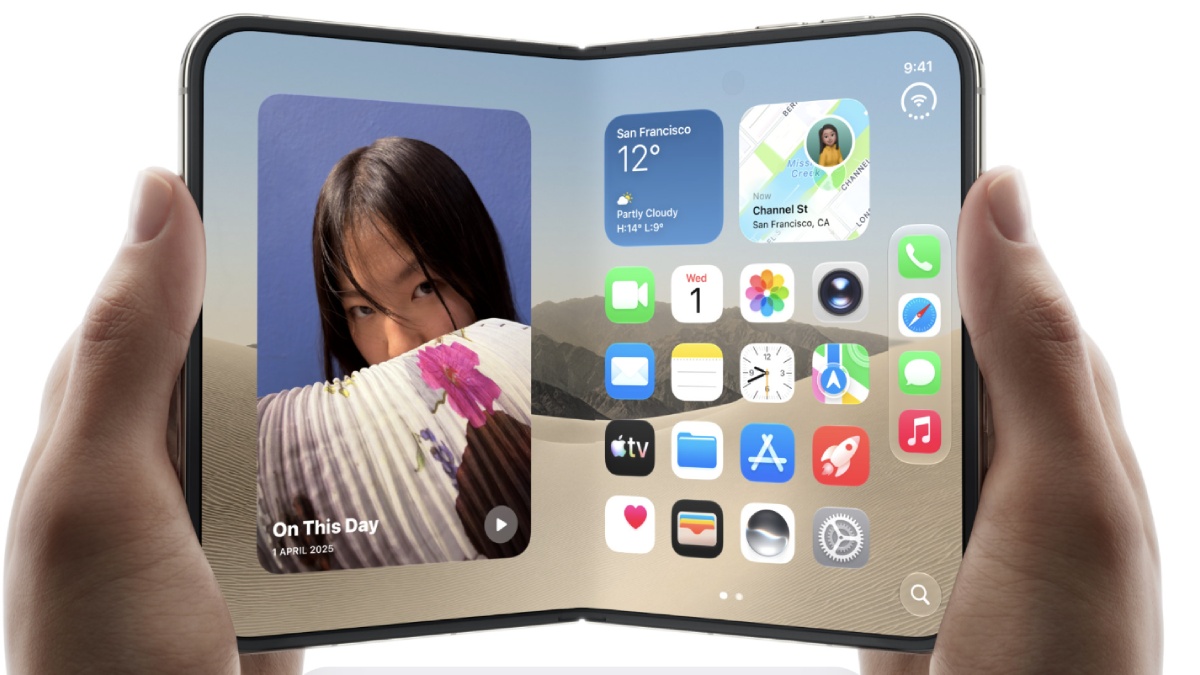
Rather than making traditional slab phones obsolete immediately, the iPhone Duo could end up as a long-term catalyst. “I do not see foldables immediately phasing out slab phones,” Ram emphasises, “but the iPhone Duo could be an important inflection point in taking foldables from a premium niche to a more mainstream smartphone form factor.” Hence, the future of premium flagships may see more foldable phones in the coming years. Samsung’s entire Galaxy Z series has been getting its own Galaxy Unpacked event for years, and three distinct models in 2026. Google, meanwhile, has been including the foldable Pixel in the mainstream series since 2025’s Pixel 10 Pro Fold.
The regional growth also reflects this gradual ramp-up. In India, the current foldable market stands at approximately 700,000 units per year in 2026 and is projected to reach 1–1.2 million units in 2027. Pathak states that while Apple will boost the category’s financial value, adoption will take time to spread to the broader public. “Duo will expand the market in value terms, though initial sales may fall below expectations due to high prices and a significant portion being purchased outside India,” he adds.
iPhone Duo spices up the ultra-premium barrier
The biggest obstacle preventing the iPhone Duo from replacing standard slab phones overnight remains its eye-watering cost.
Starting at $1,999 in the US and Rs 2,99,900 in India (scaling up to Rs 4,49,900 for the top-tier 2TB configuration), the Duo costs roughly four times the average price of a standard smartphone.
Because of this pricey entry barrier, mass-market adoption will remain out of reach for most consumers in the immediate future. “Since foldables cost four times the average price of a smartphone, adoption remains low and is likely to cater only to the ultra-premium segment for the next 3–4 years before reaching mass-market adoption (over 10% share),” Pathak adds.
For now, the iPhone Duo is just a halo product, i.e., one that validates foldables and sets the pace for future hardware. The classic slab phones, however, will continue to handle the heavy lifting for volume sales worldwide.