


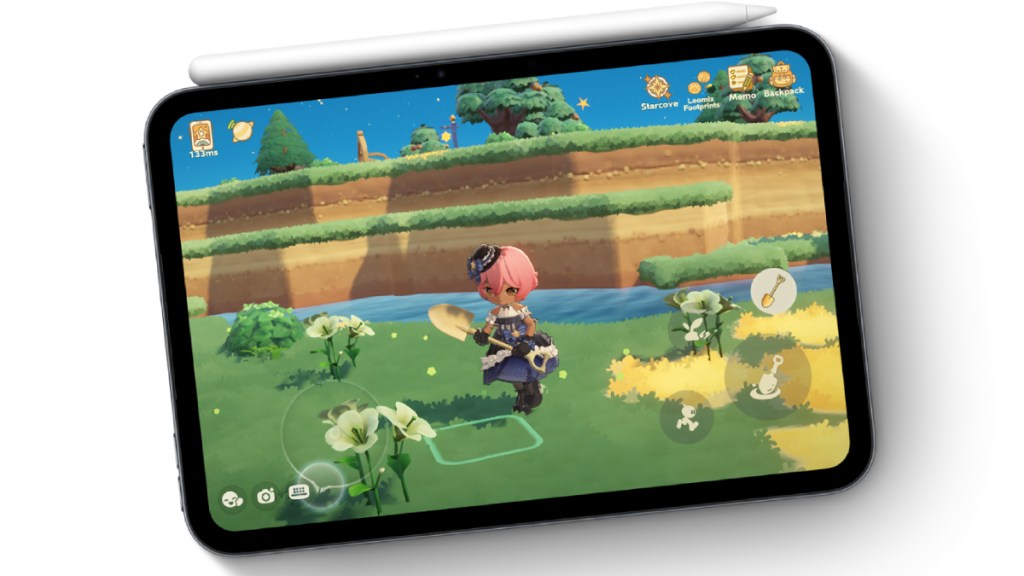

There’s a new iPad Mini in town and Apple has given it some serious upgrades. While the headline-worthy feature is said to be the new OLED display, Apple has added more to the mix. The new iPad Mini now features a 2-nanometer A20 Pro chip from the iPhone 18 Pro, an IP67 certification for water and dust resistance, and the celebrated 1,200-nit OLED display with reduced bezels. In a world where foldable smartphones are taking over compact tablets, the iPad Mini holds its ground as a high-spec compact tablet.
The pricing of the new iPad Mini is still reasonable for anyone seeking a compact tablet. Starting at Rs 82,900 in India and going past Rs 1.36 lakh for top-tier cellular variants, the new iPad Mini sits firmly in premium territory.
– The Wi-Fi lineup starts at Rs 82,900 for 128GB and goes up to Rs 94,900 for 256GB, and Rs 1,18,900 for 512GB.
– Those opting for Wi-Fi plus 5G Cellular connectivity will look at Rs 1,00,900 for 128GB, Rs 1,12,900 for 256GB, and Rs 1,36,900 for the top 512GB tier.
This price jump, paired with pro-tier features like optional nano-texture display glass and Wi-Fi 7, moves the small tablet away from casual e-reading and media consumption toward a niche set of power users.
So, who actually needs an ultra-compact, professional-grade tablet? We figured out the target audience for this iPad.
1. Field professionals and on-site engineers
With an IP67 rating for dust and water resistance, the new iPad Mini is designed to withstand harsh outdoor environments.
Hence, for civil engineers on construction sites, aviation crews in tight cockpits, field researchers, and emergency medical personnel, the iPad Mini feels more in line rather than carrying a full-sized 11-inch or 13-inch iPad Pro. The 8.5-inch footprint allows comfortable one-handed operation while providing enough computational performance to render complex 3D CAD models, run real-time telemetry, or manage field documentation, all courtesy of the new A20 Pro chip.
2. Outdoor creators and digital illustrators
For artists and creators, the iPad Mini’s display upgrades are designed to combat tricky environmental lighting. The 1,200-nit peak HDR brightness significantly improves outdoor legibility compared to older LCD panels, allowing creators to sketch in direct sunlight.
On the 256GB and 512GB storage variants, Apple offers an optional nano-texture glass — a matte anti-glare finish that reduces reflections while adding subtle tactile friction when drawing with the Apple Pencil Pro. Combined with P3 wide colour support and the deep contrast ratios of the OLED technology, it becomes a digital sketchbook for on-the-go photo grading and illustration.
3. Executive travellers and digital nomads
For frequent flyers and commuters, space inside a carry-on bag or small backpack comes at a premium. The iPad Mini OLED delivers full laptop-grade processing power via the A20 Pro chip and high-speed Wi-Fi 7 or 5G connectivity without taking up unnecessary room. Be it spreadsheets or 3D CAD renders, the iPad Mini has the power to deal with it easily.
The repositioning of the 12MP ultra-wide front camera to the landscape edge addresses a long-standing complaint for video calls. Executive users can now join meetings and utilise Center Stage while resting the tablet naturally on an airplane tray table in landscape orientation.
4. Mobile gamers and on-set media operators
The iPad Mini’s top-tier 512GB model features an additional CPU core alongside an upgraded GPU, turning the 8.5-inch tablet into a portable gaming device capable of handling hardware-accelerated ray tracing and demanding console-tier titles.
For video production crews, the compact size and accurate colour representation make the tablet ideal as a high-brightness camera monitor or director’s controller that clips easily onto gimbal rigs without throwing off calibration or adding weight.
So, who should skip the iPad Mini?
While the hardware upgrades are substantial, the iPad Mini OLED is not meant for every user. Budget-minded students and casual readers will find the price tag steep for simple web browsing, reading ebooks, or streaming video indoors. A standard 11-inch iPad or iPad Air offers a significantly larger screen area for multitasking at a much lower entry price.
Similarly, desk-bound productivity seekers who rely on split-screen apps, multi-window desktop management, or typing long documents with a dedicated keyboard case are still far better served by an iPad Air, iPad Pro, or MacBook Air. The iPad Mini is simply too small for these requirements.
Conclusion
Apple’s new iPad Mini OLED is no longer just a shrunk-down tablet. Instead, it is a specialised tool for users who view portability as an absolute requirement rather than a compromise. It isn’t going to appeal to someone seeking a simple large screen experience for casual usage or addressing professional workflows, but a certain class fo consumers will appreciate the compact size and the sheer performance capability of the device.