


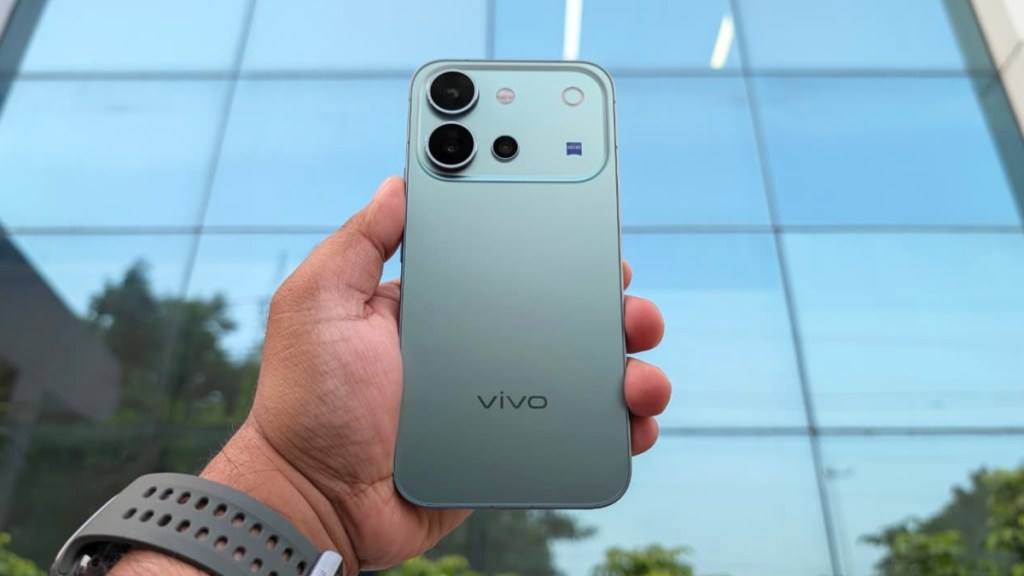

Smartphone prices have skyrocketed, and a brand like Vivo – which centres its products around the camera – has to work harder to justify its offerings, especially the midrange models. For this year, Vivo presents the Vivo V80 as its best attempt at doing a premium midrange phone. It resembles some of the more popular premium phones on sale today (eager eyes won’t need any hints), brings a set of capable cameras, and an overall package that appeals to buyers wanting a solid phone. The price is on the higher side, though – at Rs 62,999 for the base spec variant, the V80 is more expensive than the highly impressive Motorola Signature (a flagship in the true sense).
Vivo, however, has certain aspects to back the premium aspects of the V80 – it’s got a 144Hz AMOLED panel, a 50MP telephoto camera with ZEISS lenses, a massive battery and a pretty back panel. It also brings the brand’s new OriginOS 7 user interface based on the latest Android 17 codebase.
The package seems promising, and hence, we decided to find out if the Vivo V80 delivers on its promises in a highly crowded premium phone segment.
Design and Build
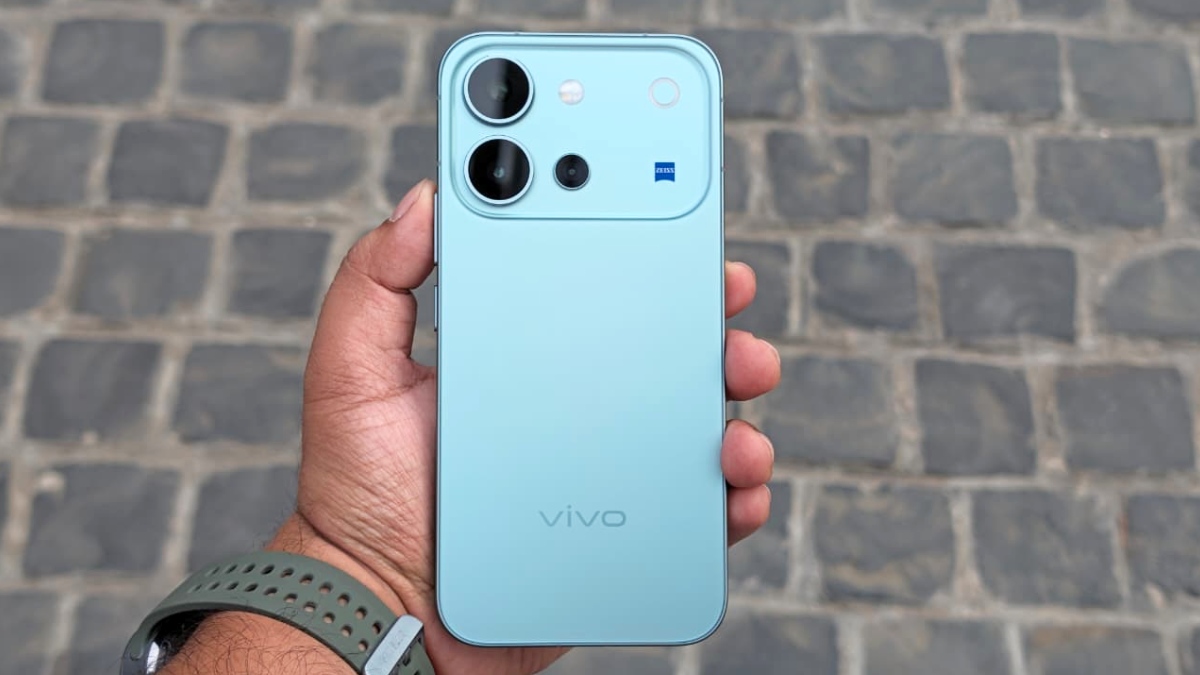
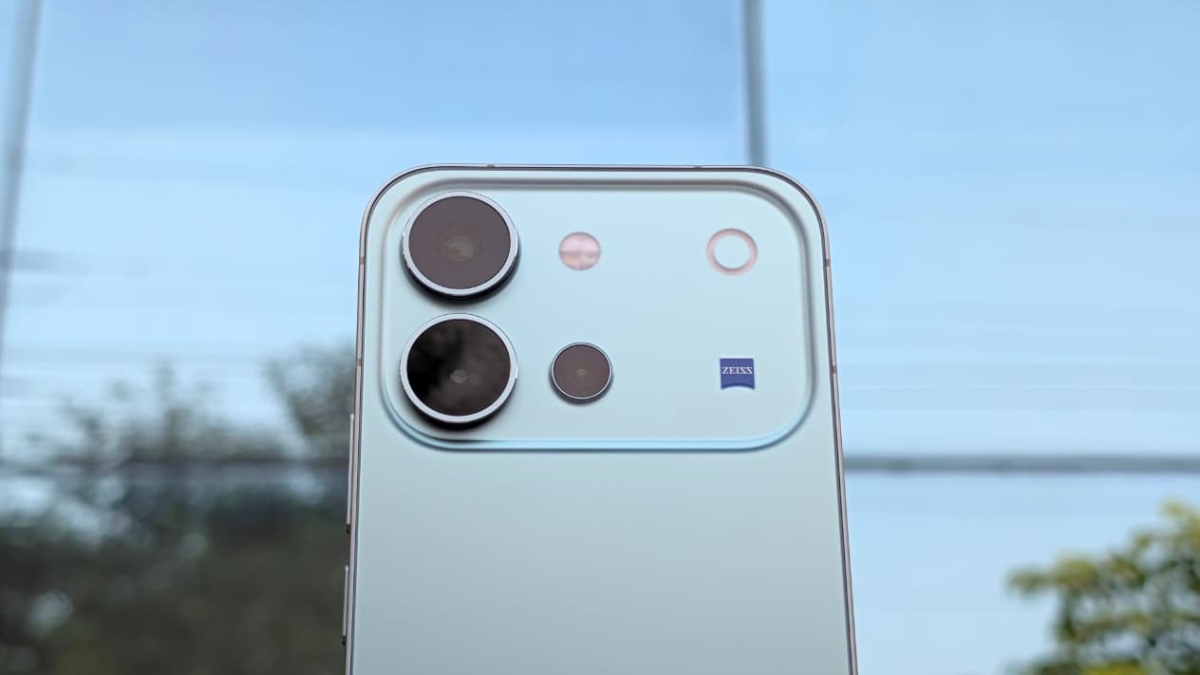
Over the years, Vivo’s V series phones have won me over with the design, and there’s nothing new to add with the V80 – this phone shines immediately in hand. Vivo has stuck to a compact form factor with gentle corner curves. At 203 grams, the phone feels dense and premium, but ergonomics remain top-tier. The Horizon Blue colourway we have looks beautiful, and the iPhone 18 Pro-inspired raised glass island adds to the phone’s presence.
It’s not just a pretty face – the V80 is backed by dual IP68 and IP69 ratings, offering best-in-class protection against water pressure and dust ingress.
Display
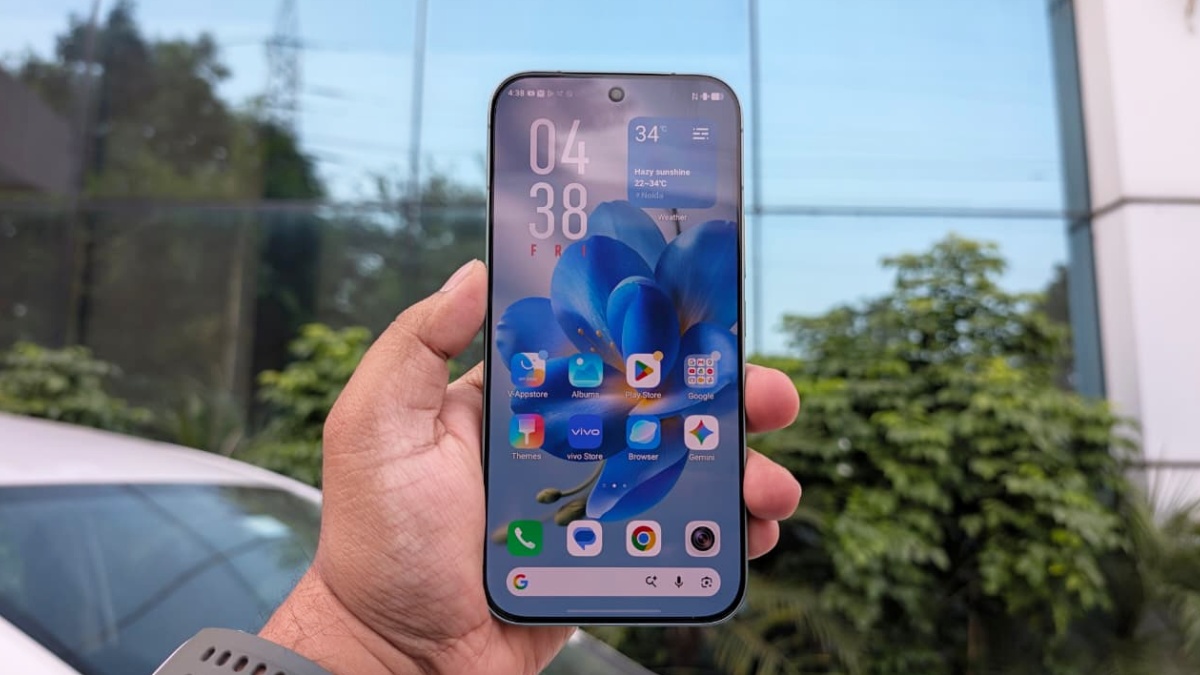
The V80 houses a nice 6.59-inch 1.5K AMOLED display with slim, symmetrical bezels. The upgrade from 120Hz to 144Hz brings liquid-smooth scrolling on paper, although the phone sticks to 120Hz most of the time to keep battery drain in check. The 5,000-nit peak local brightness allows for a punchy HDR content viewing experience, especially on platforms like Netflix and YouTube. The generally higher brightness also translates to easy legibility outdoors.
Cameras
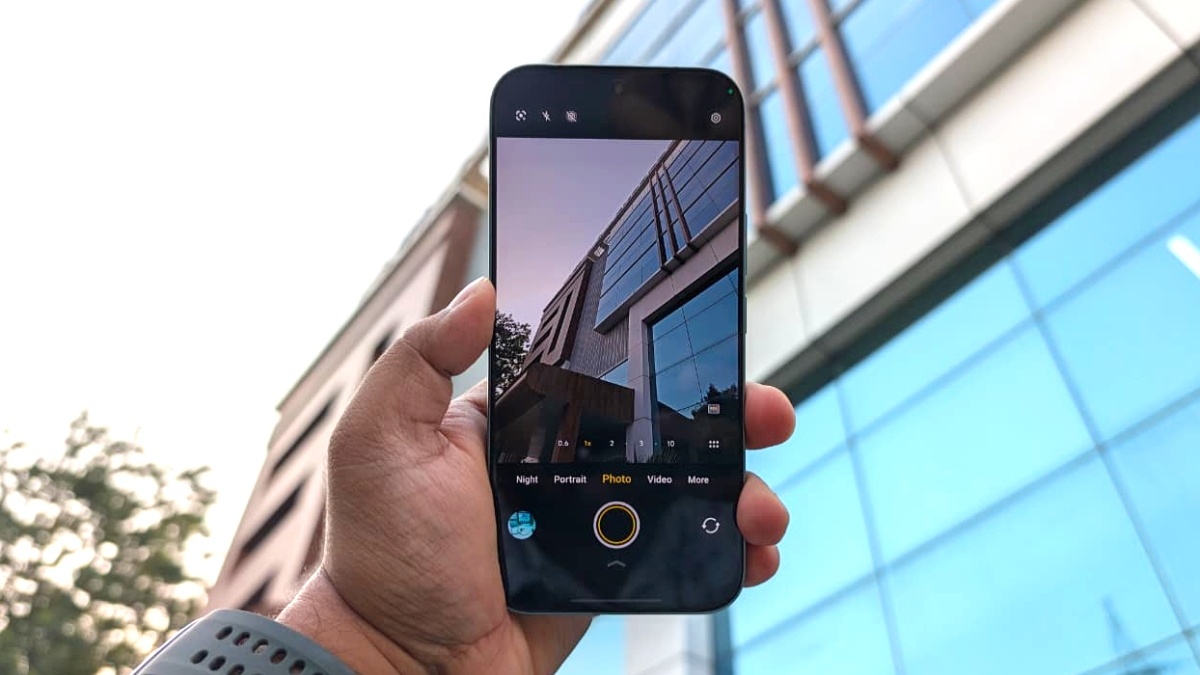
The Vivo V80 is built around its camera system, with Vivo focusing entirely on Zeiss filters. In my usage, the 50MP primary sensor and the 50MP 3x periscope telephoto lens deliver stellar results in daylight and low-light conditions (for a phone of its class). Images are punchy, reasonably sharp, and social-media-ready right out of the frame. Vivo’s ZEISS Natural mode offers a flatter profile to get closer to a natural lighting scenario, while default shooting modes focus on high contrast and vivid saturation. The 3x periscope shooter captures sharp portraits with clean background blur and natural subject separation.
The only compromise in this otherwise impressive setup is the 8MP ultrawide camera. It feels underpowered, capturing soft textures and oversharpened edges compared to the main sensor. Hence, when it comes to capturing landscapes on the wider lens, I’d recommend sticking to the main sensor for getting the most in quality. The selfie camera is possibly one of the best ones I have encountered in a phone of this class, impressing us with its skin tones and overall clarity.
Beyond the general photographic abilities, the V80’s multitude of imaging features in the camera app is mighty impressive. From portrait lighting to beautiful filters and even the fun AI Mode effects, there’s something for creators to play with, even though most of you may consider it a gimmick. The video recording performance has also been great for a phone of its class, especially in 4K 30fps mode – the footage in good lighting appears sharp, colour-balanced, and more well managed noise.
Performance, software and battery
Performance expectations from a V series phone have always been moderate, and since this is the vanilla V80, it performs like a midrange device at its best. In my usage, the V80 managed everyday navigation and social media browsing with ease, kudos to Vivo’s brilliant optimisation of the OriginOS 7 UI. Generic tasks, like social media browsing, texting, video streaming, image editing, and AI stuff feel normal.
However, the strictly midrange Snapdragon 7 Gen 4 paired with older-spec LPDDR4X RAM and UFS 3.1 storage standards restricts the heavy-lifting abilities while playing top-tier games or dealing with 4-5 heavy processing apps simultaneously. This phone is tuned for efficiency rather than heavy gaming or intense compute loads, and it shows as you use them daily.
The stereo speakers on the V80 are fairly loud and offer clean separation.
Where the V80 redeems itself is battery endurance. Similar to most midrange phones these days, the V80 gets a massive 7,200 mAh battery, which, under regular kind of workloads, manages to deliver over a day-and-a-half of stamina. The 90W wired charging comes in handy for quick top-ups of the battery – it takes around 30 minutes to fill up the battery from 20% to 70% juice.
Verdict: To buy or avoid?
The premium price tag on the Vivo V80 raises lots of questions at first glance, especially for those who want utmost value on every Rupee spent. Compared to the Motorola Signature, the V80 falls short in terms of specifications and overall performance credentials. However, out in the real world, the V80 has its own tricks to put a smile on your face as a user.
The camera is easily the sole reason why we’d recommend this phone. The main and telephoto cameras, with their 50MP sensors and Vivo’s algorithmic tuning, allow for versatile photographic and videographic abilities, thus making this a must-try for creators. Then there’s the fancy design theme that, despite its inspiration from some popular American phones, commands presence in a sea of similar-looking glass-and-metal slabs. It’s fairly resistant to water and dust, thus making it ready for our tough conditions.
The only concerns revolve around the midrange chip and the slower-spec storage, which makes me wonder how the phone handles everyday workloads after a few years, especially as Android apps get more feature-rich.
Who should buy it?
If you have a budget of under Rs 65,000 and seek a phone with great cameras and good battery life, the Vivo V80 is worth considering.