


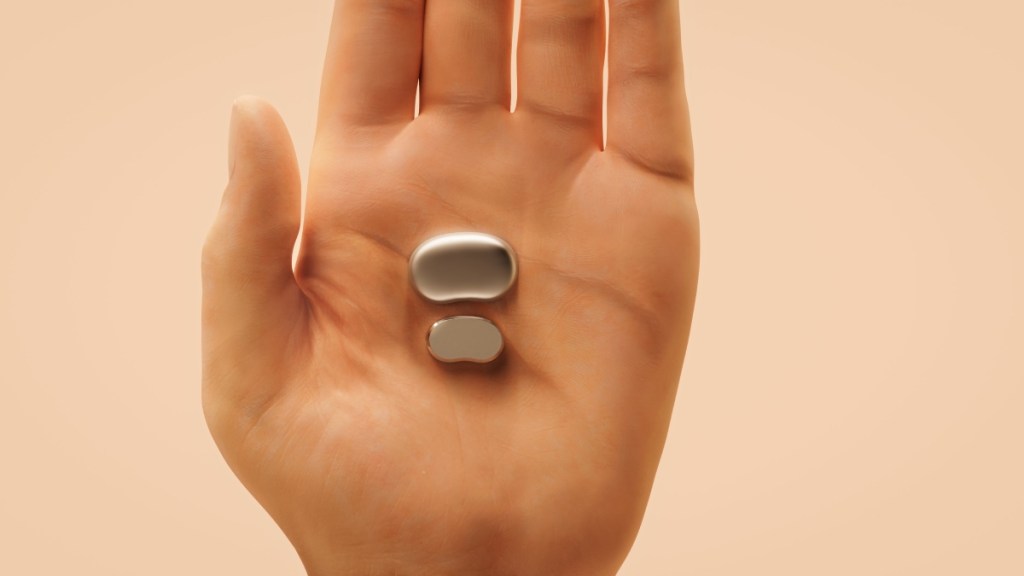

Zomato’s Deepinder Goyal has been hyping his entry into the wearable health space for over a year now with Temple – a head-worn wearable that’s interested in tracking fitness data without being on the wrist. In a consumer tech landscape crowded with smartwatches, fitness rings, and health bands, Temple wants to do the tracking bit differently, and without being a distracting element on your wrist.
So far, we have known little about the Temple device, with Goyal sharing information in bits and pieces. Now, there’s more on the table that you need to know, and this might just be a homegrown solution for millions of people eager to keep an eye on their health metrics.
Hence, based on Goyal’s recent social media episode about Temple, here is everything you need to know about the wearable health-tech device.
Temple: How it differs from everything else
Unlike conventional wearables that clip onto wristbands or slip onto fingers, Temple adheres directly to the skin near the user’s temple. Designed to continuously monitor blood flow to the brain (a metric Goyal calls Brain Flow), the device aims to initiate a new category in health monitoring.
Addressing a series of fundamental questions posed by an X (formerly Twitter) user, Goyal acknowledged that introducing a drastically new form factor naturally sparks scepticism.
“A device like Temple comes with a lot of wtfs,” Goyal remarked before walking potential buyers through how the head-mounted tracker behaves in real-world scenarios.
How Temple stays on
The primary concern for most users is simple: How does it stay attached?
| Feature | Details |
| Attachment method | Medical-grade, single-use adhesive “Grips” |
| Grip supply | Included unlimited with the purchase of the device |
| Wear duration | Recommended change every 2 to 3 days (max lifespan ~7 days) |
| Adaptation period | Takes roughly 5 minutes to get used to wearing |
Goyal explained that designing the medical-grade tape was just as complex as designing the hardware itself. The “super sticky” Grips are built to withstand intensive physical activity, meaning users can run, jump, and work out without the device shifting.
Beyond workouts, Goyal confirmed that Temple is built for everyday life, and most extreme environments:
Water and heat: Safe for showering, swimming, and saunas (with scuba diving being the sole depth-related exception).
Routine-friendly: Users can proceed with their normal skincare routines, wear makeup, or wash their faces without removing the device.
No snagging: Smooth, rounded edges prevent clothing from catching on the device during wardrobe changes.
While each Grip can technically last up to seven days, aligning with the device’s battery cycle, the company recommends swapping in a fresh Grip every two to three days for optimal hygiene and comfort. Reusing old Grips isn’t recommended as once its peeled off, a fresh tape must be applied.
Temple launch details and pricing
Pre-orders for Temple are expected to open as early as next week via an early-access application process on the official website.
Launch colourways: True Gold, Rose Gold, Black Mirror, Real Jade, Deep Blue, and Purple Funk.
Expected price: While official figures remain unconfirmed, Goyal previously hinted at a launch price near $1,000 (Rs 1,00,000).
The subscription and pricing model for Temple breaks down into two key components:
1. Hardware and software subscription
- Hardware Price: While official pricing will be confirmed at launch, Goyal has previously indicated a device price of approximately $1,000 (around Rs 80,000 to Rs 1,00,000).
- Bundled Software: The base indicative pricing is expected to include the software platform subscription required to access and process continuous “Brain Flow” and “Entropy” biological metrics via the app.
2. The “Grips” (Adhesive Tapes) model
- Unlimited Supply included: The hardware purchase price covers an unlimited supply of single-use adhesive Grips (the medical-grade tapes used to stick the device near the forehead).
- Usage Cycle: Each Grip is designed for single-use and can last up to 7 days (matching the device’s battery life), though the company recommends changing it every 2 to 3 days for hygiene and optimal adhesion.
- No extra subscription fee for Tapes: Goyal explicitly clarified on X that users will not have to pay extra recurring fees or subscribe separately for replacement tape packs — fresh Grips are bundled into the overall product purchase.
Scepticism and concerns around Temple
Temple’s core value proposition isn’t aesthetic – it’s neurological health. By offering continuous measurement of brain blood flow, the wearable seeks to unlock insights into cognitive health, focus, and stress patterns that traditional wrist sensors cannot reach.
However, the technology arrives under a cloud of scientific scrutiny. Industry observers and medical researchers have raised questions regarding the lack of peer-reviewed clinical studies supporting Temple’s underlying sensor claims. Goyal has previously shared internal research and pilot findings, but formal validation remains an open expectation among health-tech experts.