


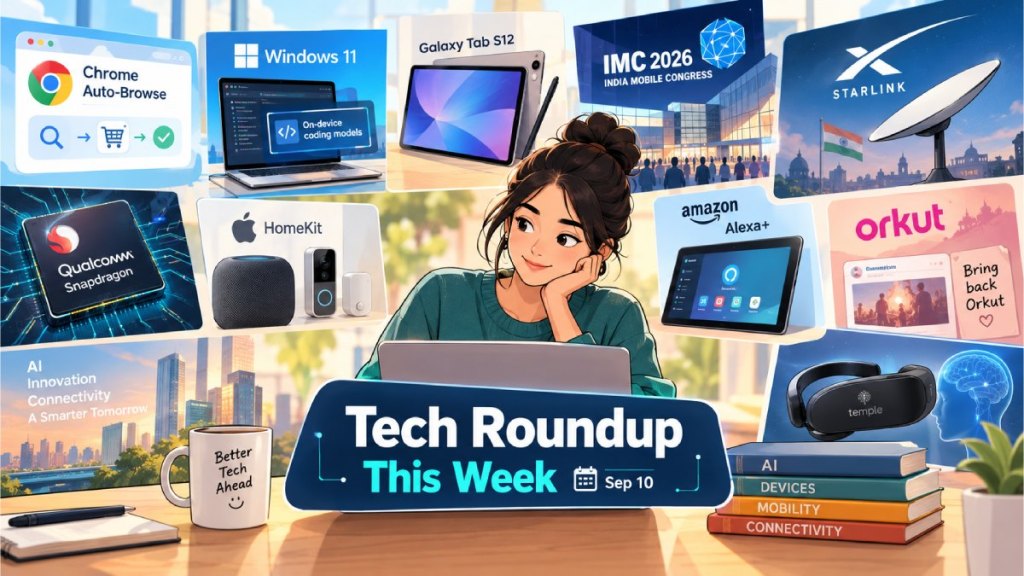

The week of October 5–9, 2026, has seen a lot of activity in the field of technology and AI. From Google’s Chrome browser taking over multi-step online transactions to Microsoft embedding offline coding models directly into Windows 11, major players are moving fast to curb cloud infrastructure overheads and lock down enterprise privacy.
Meanwhile, hardware launches like Samsung’s flagship Galaxy Tab S12, fresh efficiency-focused model drops from OpenAI and Anthropic, regulatory battles surrounding Starlink’s India rollout, and nostalgic revival of Orkut have been some of the highlights from this week.
Hence, without further ado, let’s take a quick look at everything the technology sector had to throw at us.
Google’s autonomous web execution to enterprise security
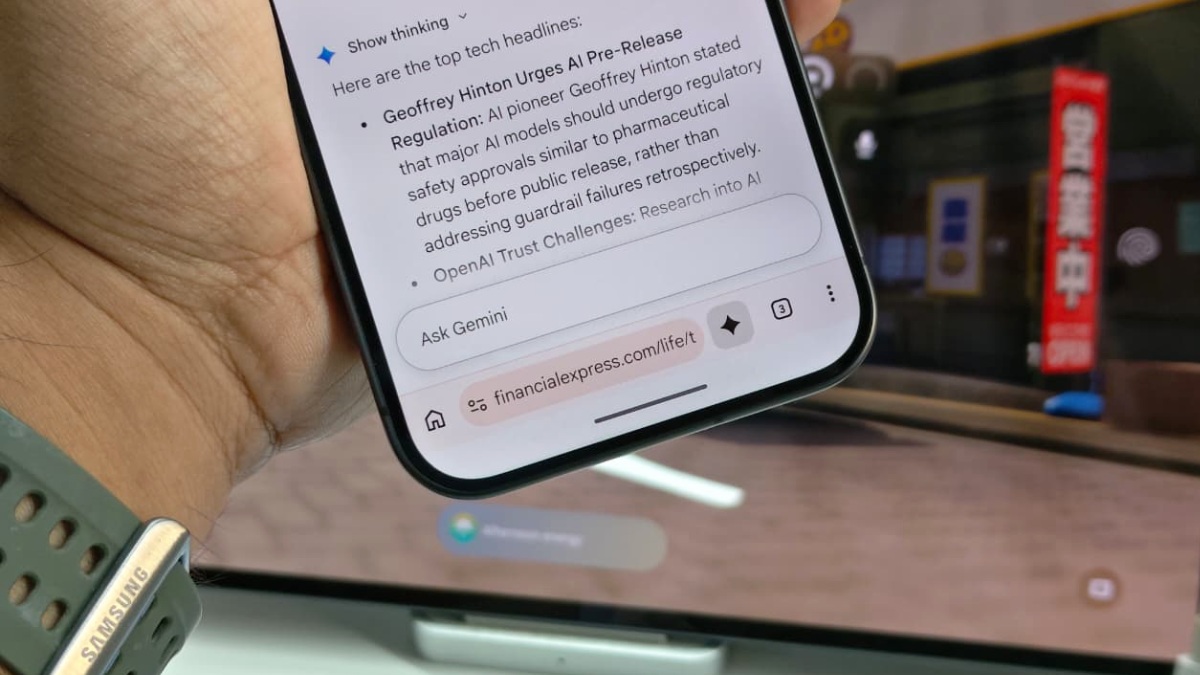
The most significant development occurred in the browser layer, where Google expanded its Gemini Auto-Browse capability in Chrome. Moving from plain text synthesis to multi-step transactional execution, the agent now autonomously handles web form submissions, e-commerce checkouts, and scheduling workflows.
Microsoft too shifted focus toward edge execution by rolling out on-device AI coding models for Windows developer environments. Operating offline via Copilot tools, local execution of tasks directly addresses enterprise concerns around third-party cloud latency, data sovereignty, and API telemetry costs.
All things AI
Anthropic launches Claude Haiku 5.5:
Anthropic rolled out Claude Haiku 5.5, delivering up to 90% lower API costs alongside dramatic performance jumps in subagent task processing and web/OS computer-use capabilities.
OpenAI ships GPT-6.1 Sol & ‘Dots’ agents:
OpenAI unveiled GPT-6.1 Sol – a cost-reduced variant matching high-end reasoning performance, alongside “Dots,” an always-on automated agent designed to run repeating workflows in the background.
Moonshot AI reaches $50bn valuation: Long-context AI pioneer Moonshot AI closed a funding round valuing the company at $50 billion, signalling sustained investor appetite for massive-context processing architectures ahead of a rumoured early 2027 initial public offering (IPO).
AI safety and account guardrails: OpenAI dismantled automated account clusters linked to covert foreign influence operations, while Anthropic revised Claude’s acceptable use policy to establish strict governance boundaries over automated, high-stakes civil decisions.
Gadgets, tech events and more
At the India Mobile Congress (IMC) 2026 in New Delhi and across consumer electronics channels, chipmakers and original equipment manufacturers (OEMs) signalled a push to monetise premium hardware via native, on-device AI processing and high-tier display hardware.
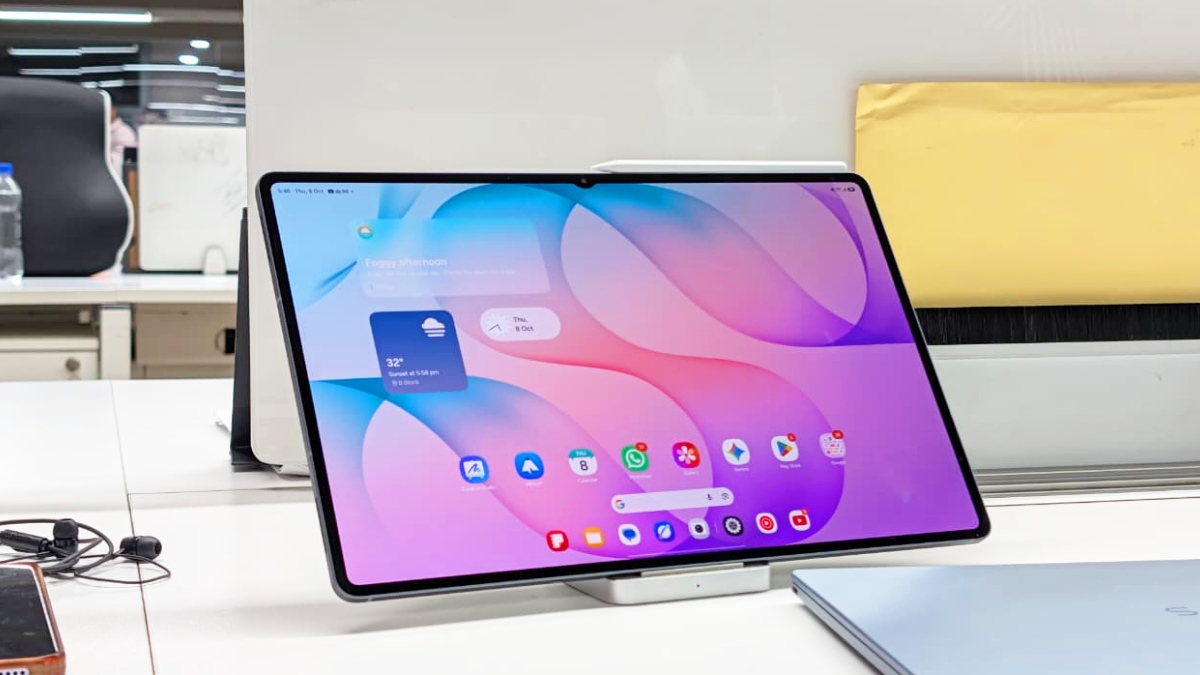
1. Samsung launches Galaxy Tab S12 series in India:
Samsung officially launched its flagship Galaxy Tab S12+ (starting at Rs 1,29,999) and Galaxy Tab S12 Ultra (starting at Rs 1,49,999). Hitting the stores on October 7, the devices feature 3nm MediaTek processors, integrated S Pen hardware, and deep Galaxy AI multi-tasking hooks. This could be a major push into high-end mobile productivity.
2. Starlink India deployment sparks controversy:
Elon Musk publicly accused domestic “oligarchs” of attempting to block Starlink’s commercial satellite internet launch in India. The Indian government rejected claims of discriminatory bias, emphasising that security checks, gateway approvals, and kill-switch sovereignty protocols apply uniformly across all satellite operators.
3. Qualcomm launches new mobile chips: Partnering with handset makers like Xiaomi, iQOO, and Motorola, Qualcomm showcased upcoming devices powered by the Snapdragon 8 Elite Extreme Gen 6. The platform is built around on dedicated NPUs designed to process complex multimodal models locally, lifting average selling prices (ASPs) for flagship hardware.
4. Apple and LG form strategic HomeKit alliance: Apple confirmed a strategic hardware partnership with LG to integrate native smart locks, doorbells, and climate controls directly into Apple Home. The initiative expands Apple’s smart home hardware footprint ahead of its mid-October “Welcome Home” event while opening up recurring services revenue streams.
5. Amazon drives ecosystem tablets via Alexa+:
Amazon introduced updated Android-based tablets equipped with Alexa+ AI engines and broader third-party app integration, aiming to cross-sell digital services and deepen user engagement within its consumer ecosystem.
6. Orkut founder wants to bring back Orkut:
Orkut Buyukkokten, founder of the iconic 2000s social network, posted an open letter and launched a global petition at orkut.com, surpassing 270,000 signatures across 115 countries. He called for an ad-free, authentic community platform to replace modern algorithmic feeds.
Zomato’s Deepinder Goyal reveals details on Temple

Zomato’s Deepinder Goyal previewed Temple, a luxury health-tech wearable targeted at continuous cerebral blood flow and non-invasive neurological monitoring. Expected to carry a price of around the Rs 1,00,000 mark, the device marks a milestone in the wearable tech space pushing consumers away from standard consumer fitness trackers.