


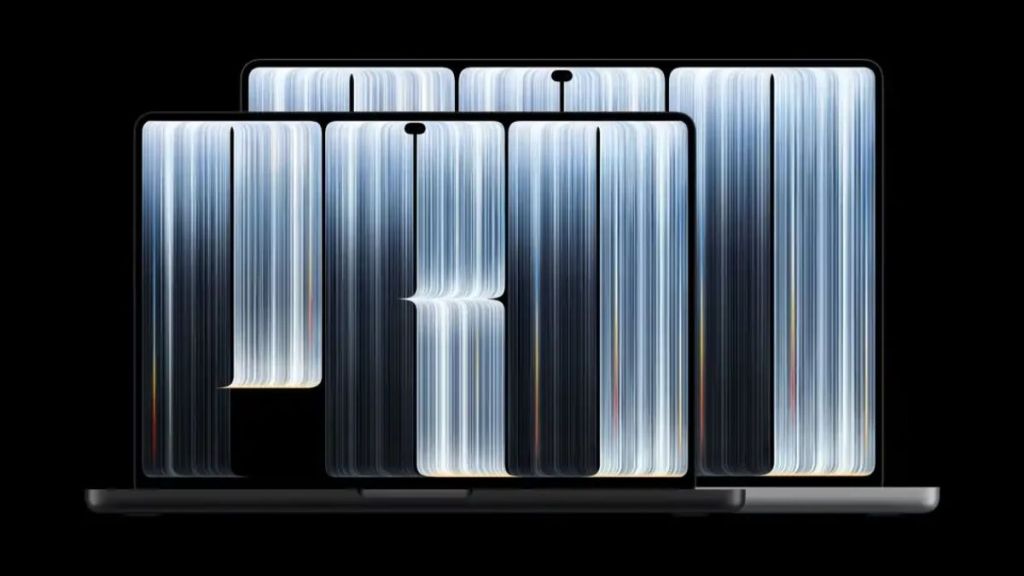

Back in 2010, Steve Jobs famously declared that touchscreens do not belong on laptops, calling vertical touch surfaces ergonomically terrible and claiming that after an extended period, your arm wants to fall off. For over a decade and a half, Apple treated that declaration as gospel. Come 2026, however, Cupertino has finally torn up the old script. Alongside the baseline 14-inch MacBook Pro powered by the standard M6 chip, Apple has unveiled the flagship MacBook Pro with PROLED XDR Display, officially ushering the Mac into a new era of direct interaction and visual performance.
While the standard 14-inch M6 machine starts at Rs 1,69,900, the high-end PROLED XDR model commands a steeper entry point at Rs 2,49,900 in India, scaling well beyond Rs 3,50,000 for top-tier configurations. Here are the five most significant advancements the MacBook Pro PROLED XDR brings over the baseline 14-inch M6 laptop. logo, illuminated via low-power micro-diffusers that prevent any backlight transmission onto the display itself.
Multi-Touch Interface is here
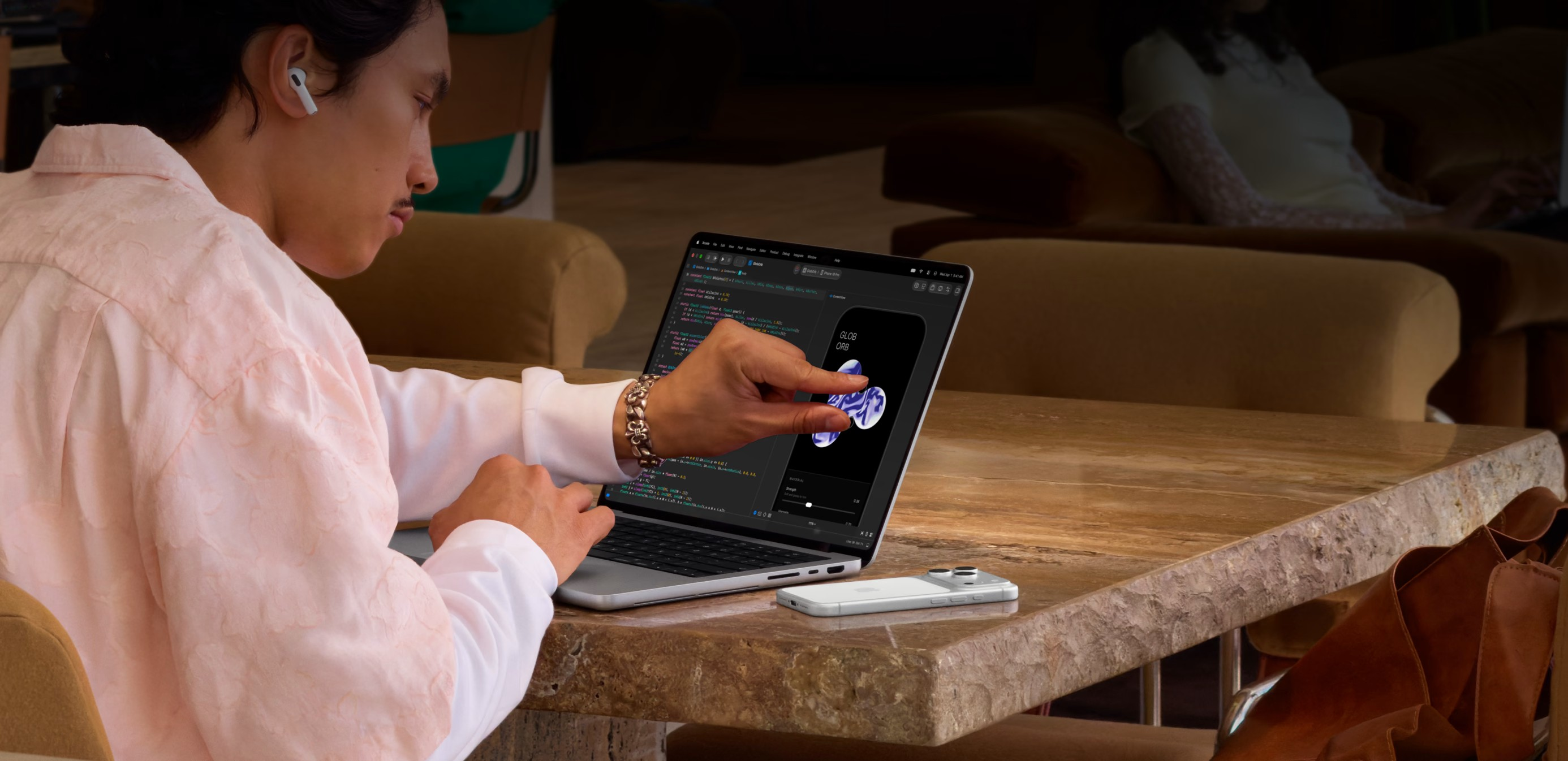
The most historic shift between the two machines is the input method. While the base 14-inch M6 remains strictly bound to the traditional trackpad and keyboard, the PROLED XDR model introduces full multi-touch integration into macOS.
Creative professionals can now pinch to zoom directly on high-resolution timelines, swipe through photo libraries, scrub video footage, and play software synthesizers straight on the glass. To resolve the arm fatigue and screen-wobble criticisms Jobs once raised, Apple engineered a dual-friction hinge with haptic feedback dampening, making on-screen taps feel rigid and grounded on a desk.
Tandem OLED PROLED XDR Screen eliminates blooming
The standard M6 14-inch model continues with the familiar Liquid Retina XDR mini-LED panel, which still struggles with subtle blooming around white text on pitch-black backgrounds. The PROLED XDR completely overhauls the visual experience by shifting to a dual-layer Tandem OLED stack.
With individual self-emissive pixels, contrast is virtually infinite, eliminating backlight bleed entirely. The display delivers 2,000 nits of peak brightness across both HDR and SDR content, alongside native support for both DCI-P3 and the wider Adobe RGB spectrum. For colorists and print designers working under calibrated studio conditions, it represents a substantial step forward from the standard panel.
The Dynamic Island replaces the static notch
Apple introduced the display notch to the Mac lineup in 2021, and while the base 14-inch M6 keeps that static cutout, the PROLED XDR version finally swaps it out for an interactive Dynamic Island.
Capitalizing on the new touch capability, the cutout morphs smoothly into a multifunctional hub. Users can tap the Island to manage background render queues, check system telemetry, control media playback, and view real-time Live Activities without cluttering their main workspace or menu bar.
Pro and Max Class Silicon with Thunderbolt 5
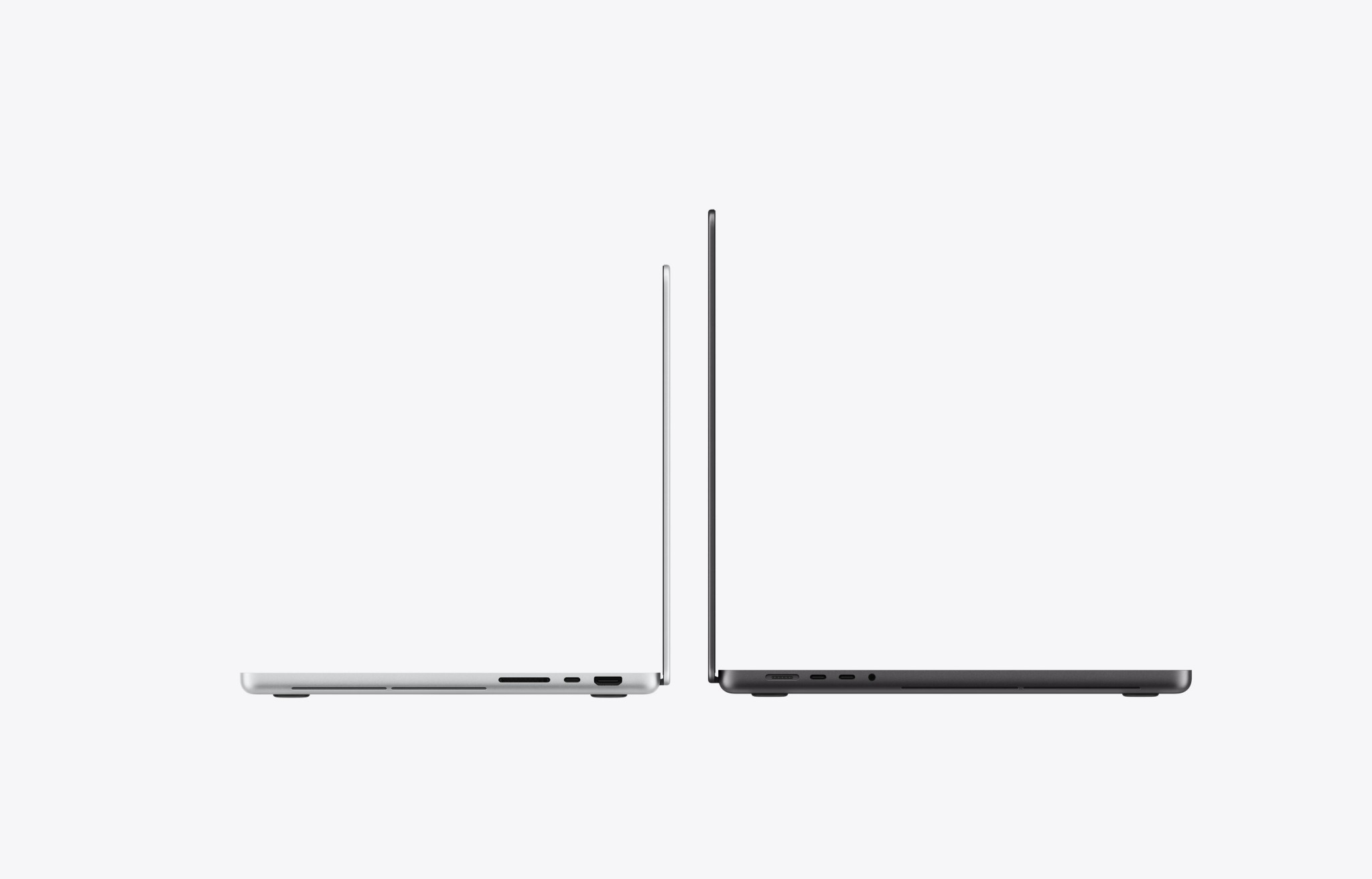
Under the hood, the base 14-inch laptop relies on the standard M6 die, which is tuned for everyday efficiency but caps out on memory bandwidth and external display support. The PROLED XDR edition steps up directly to M5 Pro and M5 Max silicon.
This unlocks memory ceilings of up to 128GB of unified memory and internal storage drives reaching 16TB, compared to the far tighter limits of the entry-level M6. Furthermore, the PROLED XDR comes equipped with three Thunderbolt 5 ports operating at speeds up to 120 Gbps, allowing professionals to drive up to four external high-resolution displays simultaneously.
Slimmer Titanium-Aluminum enclosure and the glowing Apple Logo
Despite the additional digitizer layers and active thermal demands of high-end silicon, Apple redesigned the physical housing of the PROLED XDR machine.
By integrating a lightweight titanium-aluminum alloy frame, the 14-inch PROLED XDR weighs roughly 1.38 kg, shaving significant mass compared to the denser mini-LED build of the base M6. The cooling layout has also been re-routed with rear venting that protects the OLED substrate while driving a six-speaker soundstage with deeper bass response.
In an affectionate nod to longtime Mac enthusiasts, Apple also brought back the illuminated rear logo, illuminated via low-power micro-diffusers that prevent any backlight transmission onto the display itself.