


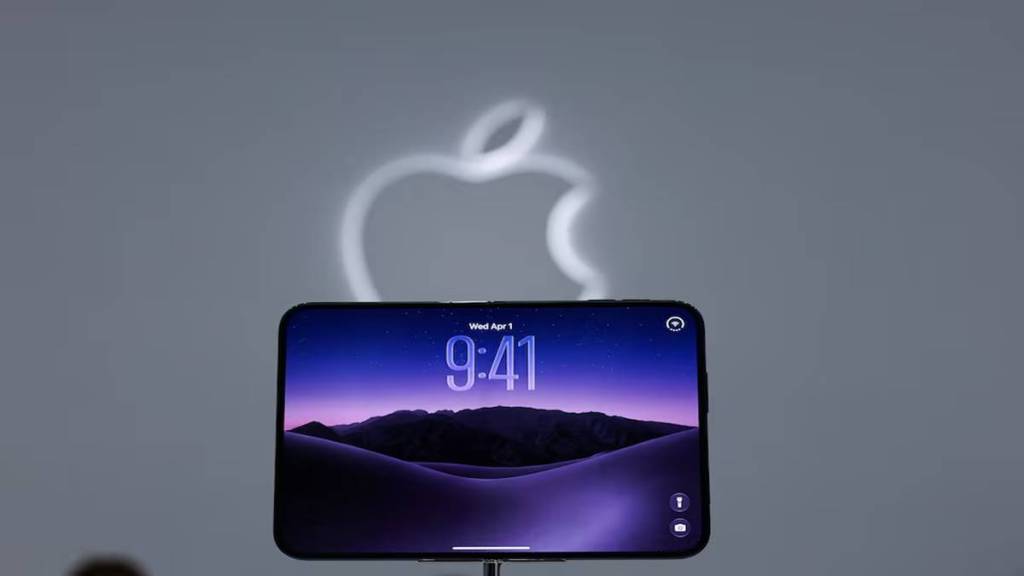

The Surface Duo was anything but a success. However, the chances are this Microsoft device from 2020 inspired Apple to finally start working on its own foldable device. The iPhone Duo, announced on Wednesday, has too many aspects that remind you of Redmond’s foldable flirtation beyond just the name. However, the chances are this new Apple phone, with the largest screen ever seen on an iPhone will lead this segment next year.
Despite patronage from giants like Samsung and Huawei, the foldable phone segment is still just the creamy layer of the Android ecosystem, accounting for roughly 2 per cent of all smartphones sold. Customer interest in the segment has been waning with research firm IDC saying global foldable shipments fell 15% YoY in the first half of 2026 — Huawei holds 50% of global foldable units and 55% of value in the second quarter of 2026.
Apple raises the foldable bar
However, all that could change now. “Apple entered the foldable market and, in one keynote, set the price and the standard every rival will now be measured against,” said Francisco Jeronimo, Vice-President, Devices, IDC after the event. This new “superior premium tier,” he said, will be a “direct test of whether Apple can use design, ecosystem integration and premium positioning to reshape a segment that has so far remained selective.”
Jeronimo calls the iPhone Duo more than an additional form factor. “It is Apple’s attempt to frame foldability as a complete premium experience rather than an experimental hardware feature,” he explained, listing how the device packs top-end components including a cutting-edge nano-texture display finish that reduces glare while also hiding the crease for users.
“The software proposition is just as important. iPhone Duo supports side-by-side applications, paired applications for repeated workflows, content movement between apps, use in different partially folded orientations and a redesigned standby experience,” he said, reasoning how all of these elements are “designed to make the larger internal display relevant to real tasks”. “Other vendors spent years teaching consumers what a foldable is. Apple’s opportunity is to teach hundreds of millions of iPhone users why they finally need one.”
Neil Shah, Vice-President of Research at Counterpoint Research, chips in that while the Duo is still just the first generation of Apple’s foldables, “it has hit all the right notes with respect to differentiation on both hardware and software engineering”. The developer ecosystem and iOS27 are completely aligned to develop unique foldable experiences which will be a big differentiation factor versus the Android camp, he added.
Interestingly, Apple sprung another surprise by pricing the iPhone Duo from $1,999 in the US, $500 below the $2,500 market expectation. This is still about 1.6 times higher than the $1,209 average selling price of the non-foldable iPhone. Jeronimo calls this a smart move, “reducing the barrier to adoption for high-value iPhone users while preserving a steep premium ladder”. “The device can therefore serve two strategic purposes: accelerate foldable unit growth and extend Apple’s premium mix.”
Price could limit India demand
However, it is a different story in India where the all inclusive price starts at Rs 2,99,900. “The iPhone Duo will expand the India foldable segment in terms of value but not volume initially. It won’t move the needle much, at least in the near-to-mid term because of the high pricing,” Shah said. “This difference is mainly because the Duo, at least for some time, will not be made in India and hence you also see additional full import duty on the imported CBU unit which makes it more expensive apart from GST and Chipflation.”
IDC forecasts worldwide foldable value to grow at a 20.6% CAGR between 2026 and 2030, though unit shipments only grow from 20.3 million in 2025 to 22.9 million in 2026. “The value growth rate materially exceeds unit growth, confirming that foldables remain a premium-value opportunity rather than a volume-led smartphone category,” Jeronimo said, calling this difference between unit and value growth the “core strategic point”. While foldables are forecast to rise from 2.2% of global smartphone units in 2026 to 3.1% in 2030, their revenue contribution is projected to grow up to 10.0%.
IDC forecasts approximately 10 million iPhone Duo units and $27 billion in revenue in the first 12 months after launch, making Apple the largest foldable vendor in 2027. In contrast, Android foldable unit sales are forecast to decline double-digit in 2026. Between 2026 and 2030, Apple is forecast to account for about 81% of net value added and 71% of net unit growth in the segment.
Jeronimo says this disparity between value and unit share signals Apple’s likely position: “it can capture a disproportionate share of category revenue by setting the premium reference point”. With smartphone sales and consumers’ upgrade cycles slowing across the globe, this might be the new ray of hope for Apple’s new CEO John Ternus. “Apple is on course to capture most of the foldable revenues. It has found the rare product where scarcity and profit rise together.”
The author is in California at the invitation of Apple.