The iPhone remains the undefeated champion of the mobile photography segment, raising the benchmark with every successive generation. However, it was the Google Pixel that challenged the supremacy of the iPhone’s cameras with its AI-powered photography – a stylised take on what phone cameras could do. Everyone loved the Pixel for taking irresistible portraits and astonishingly great low-light images, until the Pixel found itself beaten by every other brand as far as cameras are concerned. The one that takes the Pixel’s mantle in 2025 is Vivo’s X300, and it seems that Vivo is serious about drawing you to its showrooms.
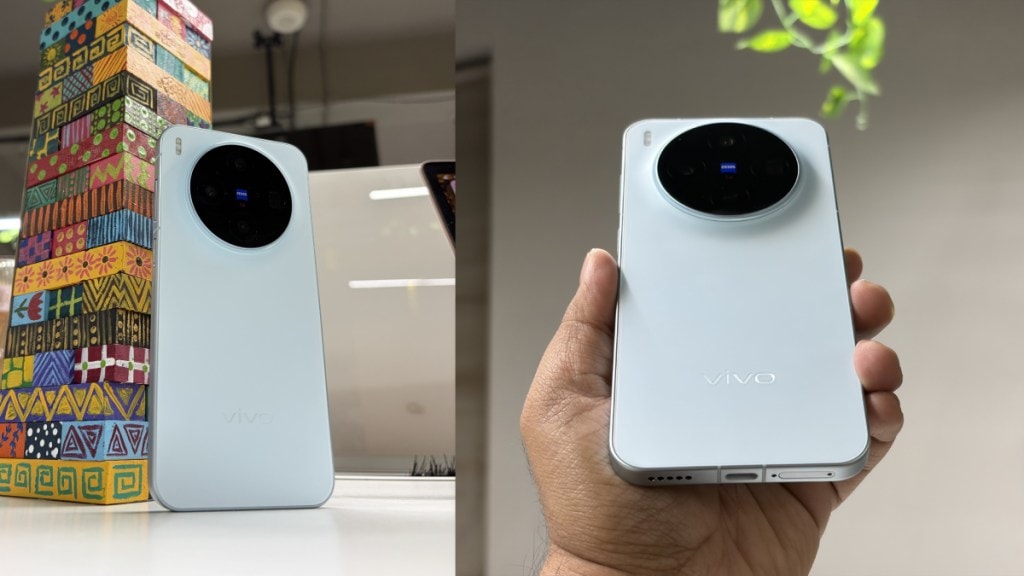
The X300 is pitched as Vivo’s ‘compact flagship’ but in reality, it is still a big and chunky phone, weighing 199 grams and 7.9 mm thick. Although Vivo’s marketing mandate may urge you to buy into its compactness and the beautiful rear panel, we think there are two other reasons why you should seriously consider the Vivo X300 over every other Android flagship, and, even the iPhone 17. Yes, it’s that good this year.
Vivo X300: The Pixel of this generation?
Quite possibly!
The Vivo X300’s party piece is its camera system. It isn’t as life-like as the iPhone 17’s camera system, but similar to Pixel phones of yesteryear, it has its own take on photography and videography. Maybe not so much for video recording, but it is hard to recommend anything in the premium phone market today that does photography as well and as tastefully as the Vivo X300.
The triple sensor setup, consisting of a 200MP main camera, a 50MP ultrawide shooter, and a 50MP telephoto shooter with 3x optical zoom, leaves us impressed with the way it shoots photos. In daylight, all three focal lengths ensure photos with a slightly scaled-up saturation (in Zeiss mode), incredible texture details, a wide dynamic range and supreme depth-of-field. As a result, you always get photos that look vibrant and life-like.
When it comes to low-light photography, the Vivo X300 adds a mood to the photos, managing a delicate balance of texture details, colour science, exposure management and noise suppression. The camera tends to soften human skin tones, even with beautification turned off, but the overall output is marvellous, almost 95 per cent of the time.








The same can be said for video recording, where you get to see slight artefacts and texture softening on subjects, but for good lighting conditions, the Vivo X300 always returns pleasing 4K and FHD footage.
For those concerned with selfies, the Vivo X300’s 50MP front camera hits the ball out of the park, delivering consistently sharp and colour-accurate photos in all lighting conditions.
OriginOS gives the Vivo X300 what it deserves
Another major reason why the Vivo X300 deserves your money is its software. The crude FunTouchOS is gone and in its place comes OriginOS, which Vivo says has been designed to befit its premium phones. Look beyond the marketing jargon and the ‘Liquid Glass’ aesthetics inspired by Apple’s iOS 26, OriginOS 6 is easily one of the nicest Android experiences you can have on a phone today. Unlike the jarring Oppo ColorOS, OnePlus OxygenOS, and Xiaomi HyperOS skins, Vivo’s OriginOS nails the aesthetics while making the user experience a lot more refined.
You still get your usual Vivo bloatware, but none of them are as intrusive as they used to be. The interface isn’t obnoxious and Vivo subtle tweaks, along with the ‘glass-like’ effect on the UI, have been done tastefully. There are no UI stutters and no abnormal UI management. The animations are smooth and the X300’s hardware seems to be running it with ease. The retention of utility tools from FunTouchOS makes this phone lovely to use.
If you are concerned about raw performance, the Vivo X300 features the MediaTek Dimensity 9500 chip – MediaTek’s equivalent of the Qualcomm Snapdragon 8 Elite Gen 5. Simply put, this is one of the best mobile chipsets in the market today and Vivo has optimised its software to take full advantage of the chip’s horsepower. Be it demanding games like CarX Street or managing up to 3 social media apps simultaneously, the X300 can handle workloads with ease.
What else is good with the Vivo X300
The Vivo X300 is unmistakably a pretty phone. I have huge respect for Vivo’s design team for opposing the trend of mimicking the iPhone’s design ethos and sticking to its original aesthetics. The large circular camera decor with a black glass piece and Zeiss branding makes you relate it to professional photography gear, like a DSLR camera. The fit and finish is top-notch, and the presence of IP68 and IP69 certifications ensures that it can survive dust, sweat, rain and everything else the Indian weather conditions can throw at it.
The display, despite being compact, offers an impressive experience. The X300 packs a 6.31-inch 1.5K resolution LTPO AMOLED display, witch a variable refresh rate of 1-120Hz. This panel offers vivid colours and sharp visuals, with peak outdoor brightness hitting up to 2,000 nits. Where there is a room for improvement, though, is the loudspeaker setup – it uses a single bottom-firing speaker paired with the earpiece, resulting in a decent but not particularly loud or rich sound experience.
Vivo X300 battery and charging
Despite its compact size, the X300 packs a rather capable 6,040mAh battery, which translates to excellent endurance for a handy phone. In our use case, the Vivo X300 lasts, leaving almost 50 per cent of charge for the second day. It isn’t as long-lasting as the OnePlus 15 but you don’t need to carry a power bank with you to get through a day. The presence of a 90W FlashCharge wired charging solution fills up the battery from 0 to 100 per cent charge in approximately 50 minutes. You also get support for wireless charging.
Vivo X300: Our verdict
When you consider the price tag of Rs 75,999, the Vivo X300 is competing with the iPhone 17 and other big guns like the OnePlus 15 and Google Pixel 10. And unlike its predecessors, it is easier to recommend over the competition.
As stated earlier, you buy the Vivo X300 for two reasons – its photography capabilities and its overall user experience. It does these two aspects better than any other premium Android phone, and to an extent, the iPhone 17 too. As far as the other key aspects are concerned, the X300 gets it right in design, display, and battery stamina. Hence, if you want to go premium in your smartphone endeavours and you want it to have the ‘x factor’, the Vivo X300 should be at the top of your consideration.