


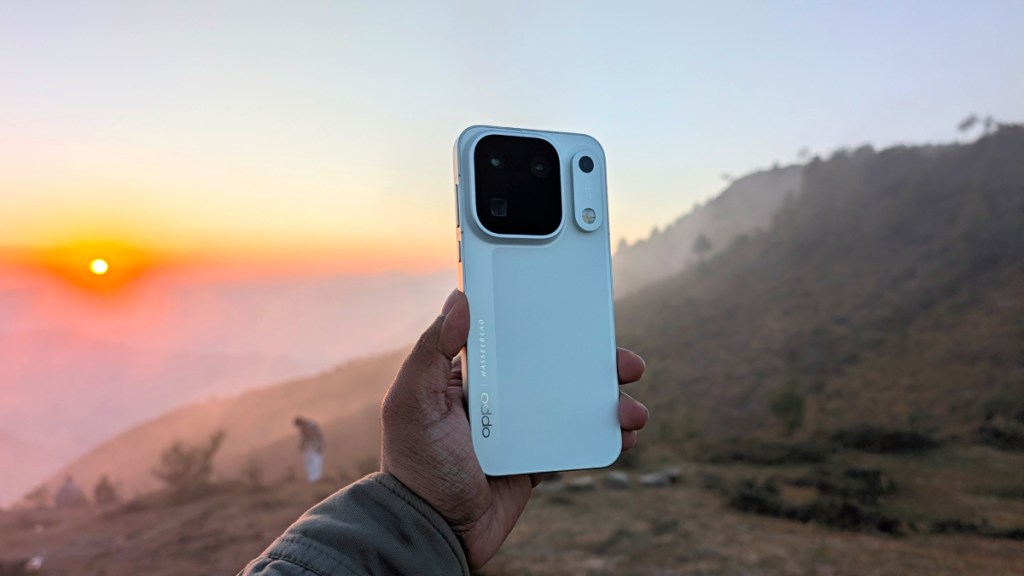

What is a photo? In an age when an AI chatbot is capable of creating new scenes, or altering existing photos to create moments that weren’t there before, this question holds a lot of relevance. For me, a photo defines a moment in my timeline that I want to document. For me, the photo needs to be as accurate as possible, expressing the emotions and feelings that were conveyed by the subjects – be it humans, animals, natural elements, scenery and anything that can convey a meaning.
Hence, a camera’s job is more crucial than ever to showcase everything my eyes see, and convey it in a way my mind wants to portray to the world. The utmost flagship phones of today flaunt great camera systems capable of surreal zoom performance and incredible night imaging – phones like the Google Pixel 11 Pro and Samsung Galaxy S26 Ultra have left us vastly impressed. Oppo’s Find X10 Pro Max promises a superior experience, and in reality, delivers possibly the best that mobile photography has to offer today.
The triple 200MP camera system isn’t a marketing gimmick! Oppo has worked behind the scenes with the team at Hasselblad and AI algorithms to make possible things that we haven’t seen in this space so far. The latest iPhone may have that variable aperture to flaunt, but Oppo’s imaging prowess is simply on a level that no other phone maker can match.
As a technology writer who writes reviews of gadgets, this is surprising for me on a personal level since I haven’t been a fan of Oppo’s implementation in the past. I have found their best phones lacking in major areas, including the camera performance and the overall user experience. The Find X10 Pro Max simply recalibrates my expectations from the brand.
Before we start, you must know what the Oppo Find X10 Pro Max costs, because it is quite expensive. It starts at Rs 1.9 lakh in India, which is by far the most expensive slab-style phone we have seen this year. The iPhone 18 Pro Max has some of its variants priced higher, and you have Samsung’s foldables as well as the iPhone Duo demanding more of your financial investment.
Let’s talk about the camera system
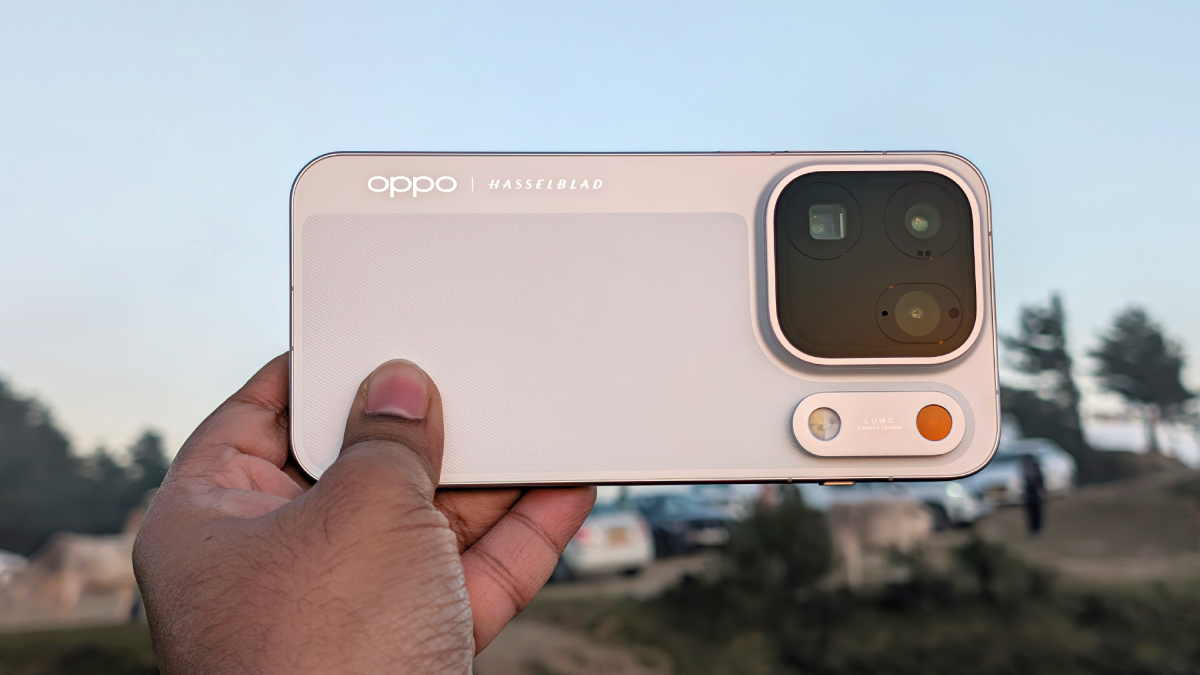
Most “pro” smartphones feature one spectacular main sensor paired with secondary lenses that usually drop off in quality. Oppo took a completely different approach – they made all three rear cameras 200 megapixels. These have high-end sensors that most previous-gen flagships had as their main sensor!
The main sensor (200MP): Co-developed with Samsung, this 1/1.28-inch ISOCELL HPC sensor with an f/1.5 aperture captures vast dynamic range and natural background blur.
The ultrawide (200MP): Powered by the Samsung ISOCELL HP5 (1/1.56-inch), it completely eliminates the fuzzy edges and soft detail typical of traditional ultrawides.
The 3x telephoto (200MP): Using the same HP5 sensor with optical stabilisation and a ultra-close 10cm minimum focal distance, it doubles as both a portrait camera and a macro lens.
This potent hardware is combined with the brand’s new LUMO imagine engine and Hasselblad’s colour tuning, both of which take care of the post processing. The Hasselblad bits are reserved for dedicated filters to adhere to a certain mood, while the LUMO engine is what does the load bearing.
In the standard auto settings, the Find X10 Pro Max’s camera simply nails it. The colour science, detailing, sharpness and all the crucial aspects are spot-on – you get what you see. As long as there’s sunlight, the phone’s camera system will get the mood right. Most of the sample images, which I shot in comparison with Google’s Pixel 11 Pro, showed that Oppo’s LUMO engine sticks to a slightly higher ISO range and plays around with the shutter speed as well as aperture levels to manage the exposure, colour tones and saturation. The phone takes photos in 26MP by default from the main camera.
It’s at night where the phone starts to show the limitations of this approach. A higher ISO setting ends up making the phone struggle to get the right colour tones at night, or in indoor low light conditions. For example, warm ambient tones of incandescent lamps don’t get captured exactly as the eye sees, and the same goes for sunset orange hues, where the colour tone is a bit off reality. The post processing tends to overcompensate for warm colours, which seems unnecessary at times. This might upset professional photographers seeking to capture the mood, but there are other aspects where the phone makes up for it – excellent exposure management, great sharpness, superb detailing, and noise suppression.
What’s interesting about the system is that it brings the same brilliance of the main camera to the other lenses. The ultrawide photos offer the same impressive tuning in colours, exposure, white balance and sharpness. The telephoto camera can optically zoom up to 3x magnification, which makes portraits look natural and exotic. However, I didn’t observe any dip in quality up to 10x magnification, as the photos appeared sharp, holding the same sort of colour science.
It’s beyond 10x when the photos start to blur the details. Oppo’s post processing takes care of it to an extent with AI upscaling, but you can observe the flatness as well as the “Artificial texturing” usually associated with upscaling. Still, you get photos that look amazing, even at 50x. Unless you are pixel peeping, the complaints related to image quality should be low.
It’s the same story with video performance, where the footage quality in 4K resolution at both 30 fps and 60 fps is remarkable. The colour balance and exposure management is well within the confines of what the eyes see, especially in daylight. I didn’t observe any artifacting, or texture mudding as well. It was in low light when the footage picks up grains and softens the details in the darker parts of the frame. That said, the footage quality looks brilliant and tends to capture the mood of the scene easily.
If the standard output isn’t to your liking, you can always rely on the filters as well as the manual “Master” mode to get the imaging of your taste. You can also consider the Hasselblad Hi-Res mode for getting higher resolution photos in the Hasselblad tuning. The Night mode sits within the “more” section of the menu and can manage astrophotography well, even with no tripod to help.
One of the camera gimmicks that I admired during my weekend outstation trip was the AI reframe feature. What this does is utilise the on-device AI model to analyse the scene and make the frame for you – you only need to click the shutter button. This comes in handy at times when there’s a lot happening in the scene and you seek a starting point to frame what’s visually appealing. It works quickly and, unlike the Camera Coach on the Pixel 11 Pro, it works quickly. I wish the AI also offered more options with framing and colour tuning.
As for the front camera, it works well for close range selfies as well as wider group shots. Compared to the main cameras, it tends to settle for slightly brighter exposures and a lot of post processing to keep the image as good looking as possible. It isn’t naturally accurate but I don’t mind flattering selfies that don’t overdo the “beautification”.
How is the rest of the phone
Unboxing the Find X10 Pro Max in its Lunar White colourway, the first thing that hit me wasn’t just the design — it’s the sheer physical density. Weighing in at 235g, this is a big and heavy phone. However, the phone feels well balanced in its weight and is comfortable to hold. Note that you will want to employ both of your hands to operate the phone.
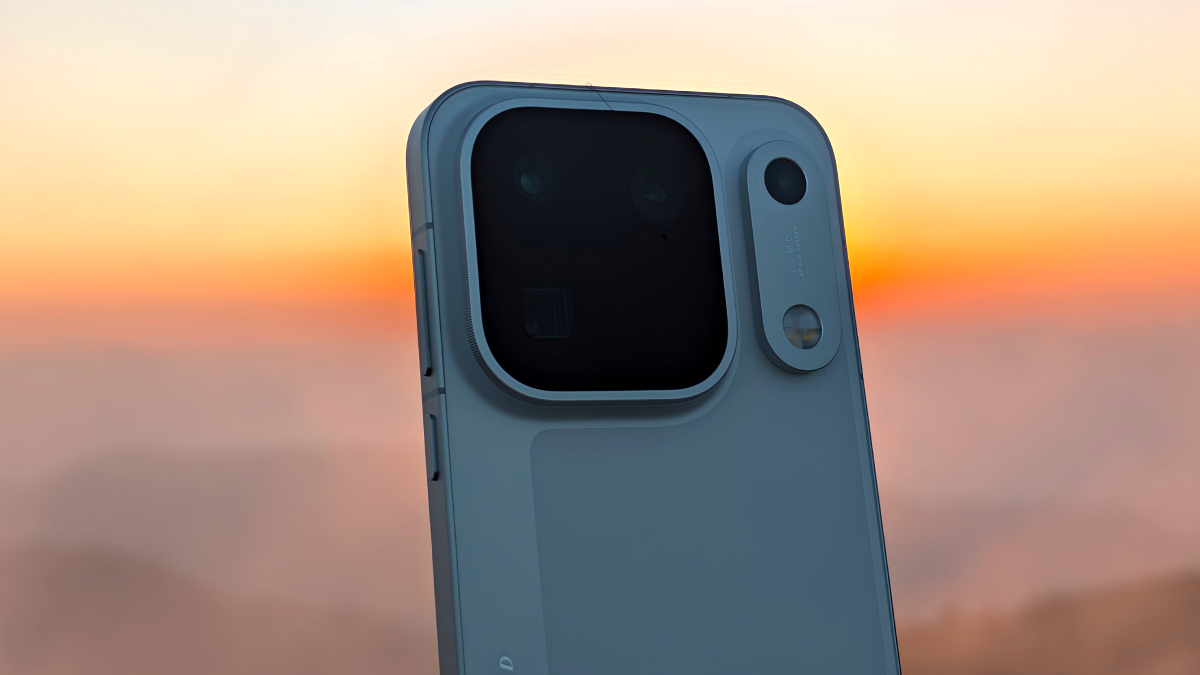
In the post iPhone 17 Pro Max era, phones have started to embrace a camera hump extending to the edges. Oppo’s design team didn’t shamelessly copy the iPhone and instead, chose to do a spin off of the idea with an elevated strip next to the squarish camera hump, holding a light sensor, the Led flash, and a LUMO branding. The ribbed pattern for the rest of the glass panel and the Oppo-Hasselbald logo make this a pretty looking phone.
Similar to most expensive phones, it comes with dual IP68 and IP69 certification, which means it should hold up well when exposed to nature’s abuse of dust, grime, sweat and water.
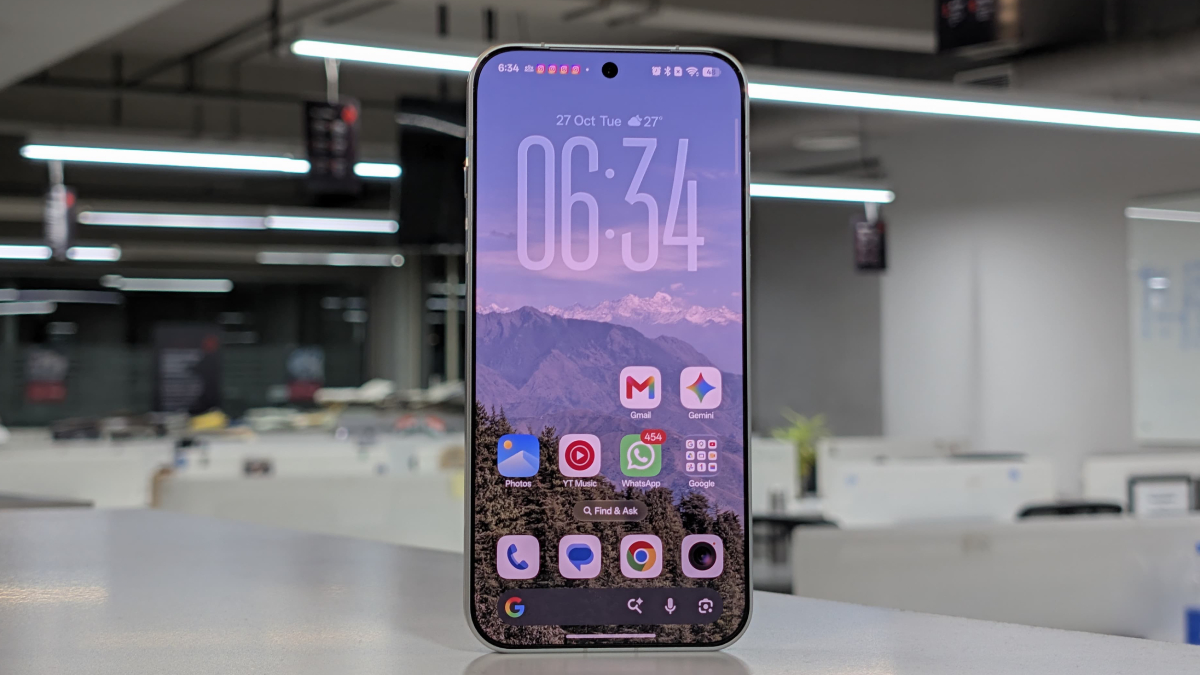
Flip it over, and the 6.82-inch QHD+ AMOLED display comes to life. Scrolling through menus at 144Hz feels noticeably smoother than standard 120Hz panels. Colours pop with vibrant contrast under harsh outdoor sunlight, making outdoor composition effortless. Oppo’s new ColorOS 17 interface, based on Android 17, delivers a well-polished user experience. I am not a fan of the cluttered visual elements and pre-loaded first-party app overdose, but it can’t be denied that ColorOS 17 is a pretty and pleasant software to use once you set it up according to your liking. Oppo promises up to 6 years of OS updates, which is lower than what Google and Samsung promise for their phones.
As far as the performance is concerned, the Find X10 Pro Max performs just as well as an expensive phone is expected to – fast and smooth. Under the hood, the MediaTek Dimensity 9600 Pro paired with 12GB LPDDR5X RAM and 512GB UFS 4.1 storage handles high-frame-rate gaming and 8K video rendering without noticeable thermal throttling or frame drops. Most Android apps and games you find today on the Play Store can’t take advantage of the processor’s might. If you are into running emulator-based PC games on your phone, you might appreciate the performance overhead of the Dimensity 9600 Pro.
For everything else, this MediaTek processor is just an overkill.
Excellent battery life
Another surprise on the Find X10 Pro Max is its battery endurance. In an age where silicon carbon technology ahs made it possible to squeeze more capacity in slim battery casings, Oppo managed to pack an enormous 8,000 mAh battery inside.
While most flagships struggle past a single day of heavy use, the Find X10 Pro Max operates like a phone with its own built-in power bank. Under demanding workloads, i.e., continuous 4K video recording, high-brightness navigation, and gaming, it easily spans up to two days on a single charge. The power loss at idle is higher than usual but Oppo could address it with a future software update.
Filling that giant 8,000 mAh battery takes slightly longer due to the 80W SuperVOOC charging speed cap. During my testing, it took just over a year to fill up the battery from 10-100% in just over an hour. It’s a fair trade-off to protect long-term battery health while delivering decently quick charging.
Verdict: Is this the best phone you can buy?
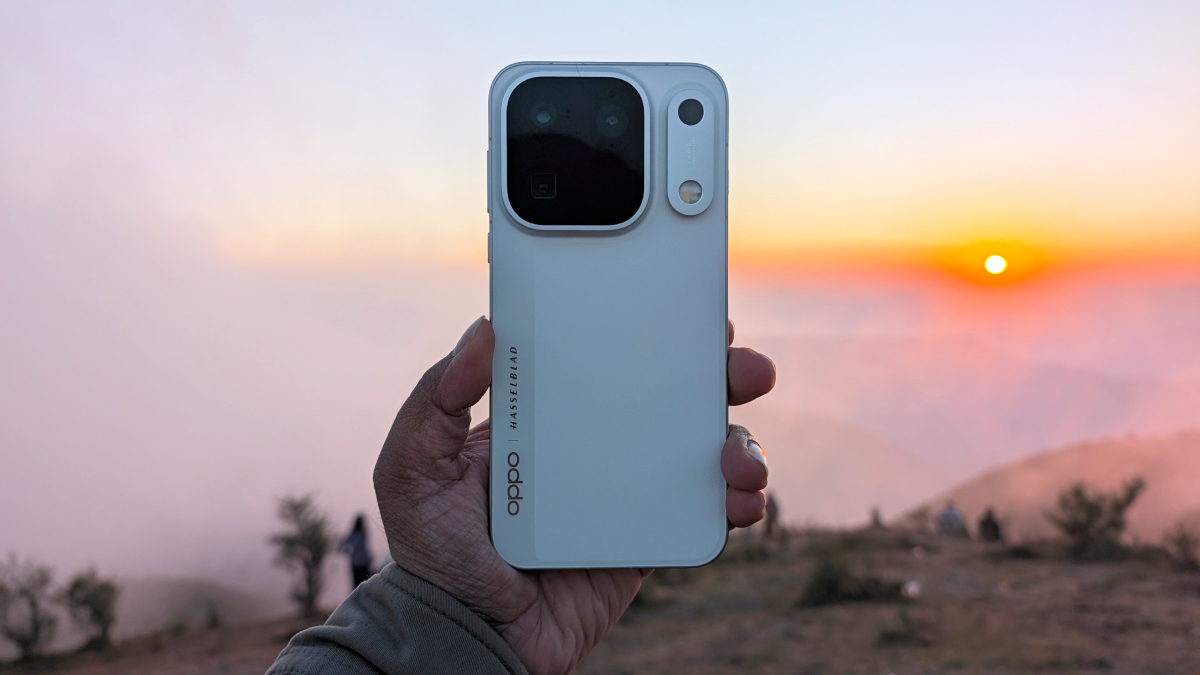
At an official Indian price of Rs 199,999, the Oppo Find X10 Pro Max is a serious investment for a mobile phone, especially for one that doesn’t fold. This isn’t a device that you buy just because you want a fancy expensive phone for scrolling Instagram and texting your friends. While the core phone elements are peak smartphone experience in the Android universe, it is the camera system that demands dedication. You buy a Find X10 Pro Max because you seek an uncompromised photography and videography experience.
Hence, it is necessary to take a look at the pros and cons here.
Where it dominates
– No camera weak links. The triple 200MP system across primary, wide, and optical zoom lenses makes it one of the most versatile cameras you can have in your pocket. It aces the imaging and videography bits.
– Unmatched battery endurance: An 8,000 mAh capacity battery that leaves all traditional competitors its price segment behind.
– Impenetrable build quality! With Dual IP68 and IP69 certification, this should be a solid phone to carry around.
Where it demands compromise
– It’s astronomical cost! At Rs 2 lakhs, it crosses into luxury territory alongside premium foldables.
– At 235g, it is a substantially hefty phone.
Oppo has crafted one of the most complete Android devices ever brought to market, and if you are serious about photography and have Rs 2 lakh lying around, the Oppo Find X10 Pro Max is worth considering.