


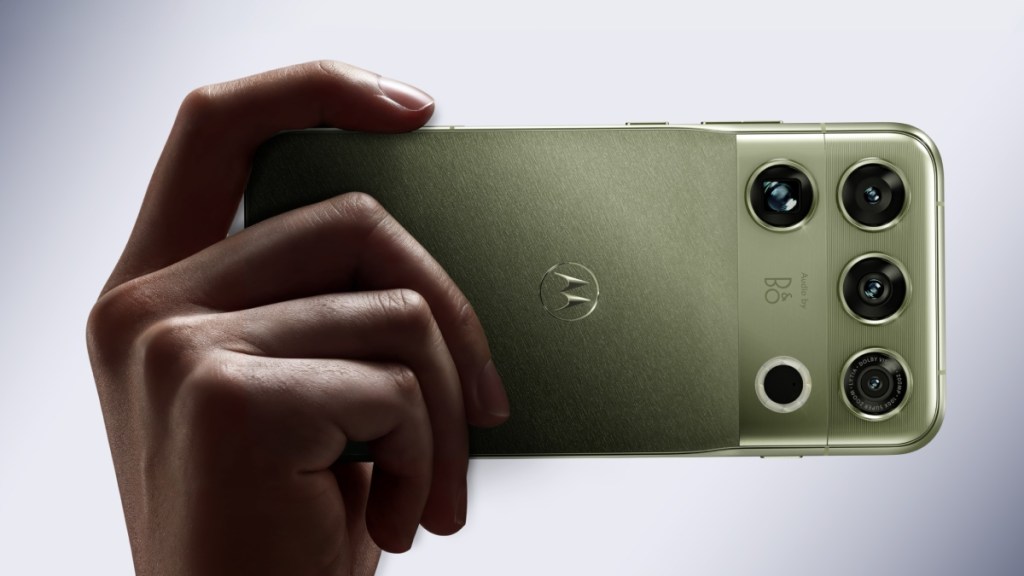

At Qualcomm’s annual Snapdragon Summit 2026, Motorola unveiled the Signature 27 as its proper flagship phone in many years. Unlike the previous Signature, and the Razr models, the Signature 27 is Motorola’s fully beefed-up flagship, debuting Qualcomm’s Snapdragon 8 Elite Extreme Gen 6 chipset. The phone also confirms that Motorola will stick around with the Signature nameplate for its ultra-premium phones, reserving the Edge lineup for the midrange segment.
Targeted at Apple’s upcoming iPhone 18 Pro, Motorola’s latest offering pairs Qualcomm’s high-end silicon with advanced thermal engineering, deeply integrated Google AI models, and an ambitious optical setup to capture market share in the premium tier.
What does Signature 27 offer
The Signature 27 serves as a launchpad for Qualcomm’s next-generation processing platform, the Snapdragon 8 Elite Extreme Gen 6.
Processor: Powered by the new Snapdragon 8 Elite Extreme Gen 6 Mobile Platform, the chipset integrates dedicated on-device AI engines, camera compute pipelines, low-latency processing, and a six-antenna array designed to accelerate cloud AI data transfers.
ArcticMesh thermal management: To ensure sustained performance during heavy workloads, Motorola designed a cooling assembly 40% larger than its predecessor. The multi-layer architecture incorporates a 3D vapour chamber, liquid metal interface materials, copper mesh heat spreaders, and diamond-infused thermal gel.
Software and AI integration: Backed by a 7-year OS upgrade commitment, the device integrates Google Gemini for workflow automation. It utilises Gemini Omni to automatically edit user clips, photos, and prompts into video assets, alongside Google Lyria for on-device soundtrack generation.
New design and audio partnership: With a new contoured aluminium chassis, a ceramic/brushed aluminum camera housing, and dual speakers tuned under an “Audio by Bang & Olufsen” partnership, the Signature 27 goes high on branding. It will come in two PANTONE-certified colour finishes – Coal Smoke (with a textured “Tactical Weave” finish) and Capulet Olive (with a soft textile-style feel).
Camera architecture: 200MP zoom is the hero
In a bid to challenge existing flagship imaging standards, Motorola has centred its camera setup around high-resolution optical zoom.
The primary hardware feature is a 200MP periscope telephoto sensor optimised for long-range photography and architectural detail. The extreme resolution allows for aggressive digital cropping and detail retention without relying solely on software interpolation. Coupled with the new ISP onboard the chipset, the Signature 27 could feature a compelling photography package, especially for those who need a strong telephoto lens.
Accompanying the zoom lens is a 50MP Sony LYTIA 910 primary sensor. On the software side, Motorola’s Video Enhancement Engine provides real-time scene analysis and tone mapping. For physical stabilisation, the system features hardware optical image stabilisation (OIS) offering 3.5 degrees of shake compensation, integrated directly with Qualcomm’s electronic stabilisation suite.
How does Motorola’s Signature 27 stack up against Apple’s iPhone 18 Pro
| Motorola Signature 27 | Apple iPhone 18 Pro | |
| Processor Platform | Snapdragon 8 Elite Extreme Gen 6 | Apple A20 Pro |
| Telephoto Optics | 200MP Periscope Telephoto | 48MP Periscope |
| Main Camera Sensor | 50MP Sony LYTIA 910 | 48MP Fusion Camera |
| Thermal Dissipation | ArcticMesh (3D Vapour Chamber + Liquid Metal) | Vapour Chamber |
| Acoustic Calibration | Partner-Tuned (Bang & Olufsen) | Proprietary Spatial Audio Array |
| On-Device AI Engine | Google Gemini Omni + Google Lyria | Apple Intelligence Suite |
| Lifecycle Support | 7 Years OS Upgrades | Multi-year iOS Support (~6–7 Years) |
While Motorola has yet to reveal all the specs and features of the Signature 27, here are some core takeaways when comparing it with the iPhone 18 Pro.
– Apple continues to rely heavily on computational photography and standard 48MP sensor arrays. Motorola’s inclusion of a 200MP telephoto sensor provides significantly higher raw data density for cropping and post-processing flexibility.
– The ArcticMesh architecture, combining liquid metal and diamond gel, is designed to mitigate thermal throttling during prolonged high-demand AI and graphical workloads compared to standard passive cooling setups on the iPhone 18 Pro.
– While Apple Intelligence focuses on system-level automation and text editing based on Apple Intelligence and Siri AI, Motorola utilises Google’s Gemini Omni and Lyria algorithms to enable multi-modal video editing and audio generation natively on the handset.