


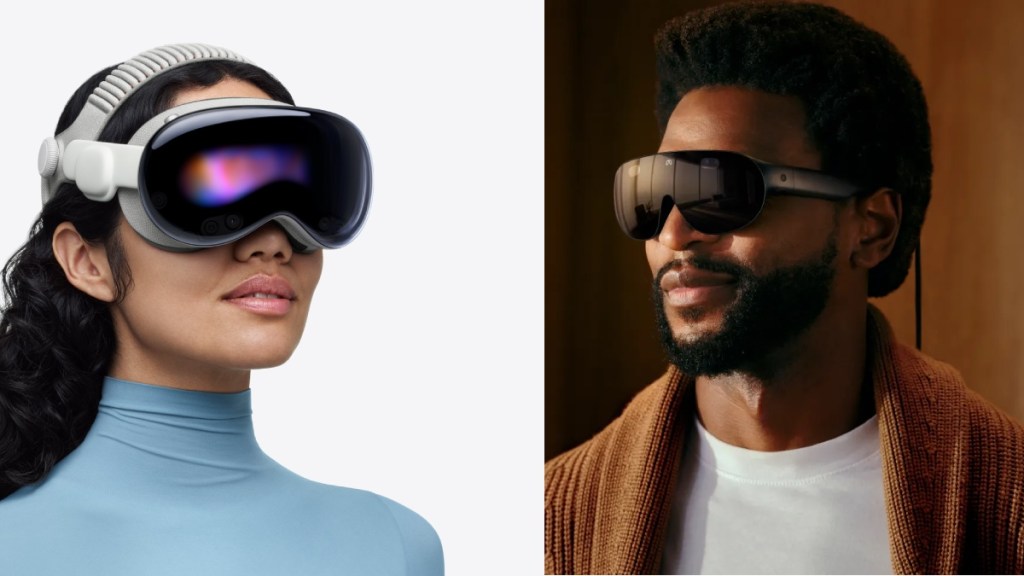

Meta has taken a direct swing at Apple. At its annual Meta Connect conference, Chief Executive Mark Zuckerberg unveiled the Meta VR Glasses — a $1,299 (approximately Rs 1.24 lakh) device designed to bring personal entertainment, desktop computing, and gaming into a glass-like frame weighing roughly 100 grams.
Scheduled for a release in Spring 2027, the headset does away with the heavy, ski-goggle design we have seen on Apple’s Vision Pro and instead chooses to settle for an ultra-light spectacle design. Meta adopts this design by offloading its processor, battery, and storage to an external, pocketable tethered “puck” (approximately 300 grams).
Also, with a more accessible price of $1,299, Meta is directly challenging Apple’s $3,699 Vision Pro.
So, how do Meta’s new VR Glasses compare to Apple’s high-end spatial computer? We find out with a quick spec-sheet-based comparison.
Meta VR Glasses vs Apple Vision Pro: Specs at a glance
| Meta VR Glasses | Apple Vision Pro | |
| Price | $1,299 | $3,699 |
| Headset weight | ~100g (5x lighter than Quest 3) | ~600–650g |
| Form factor | Open-sided spectacle frame | Sealed ski-goggle enclosure |
| Compute Architecture | Offloaded to pocket puck (Qualcomm Snapdragon Reality Elite) | On-device M2 + R1 dual-chip system |
| Display technology | 5K Micro-OLED (37 PPD) | Dual Micro-OLED (4K per eye, ~34 PPD) |
| Field of view | 70-degree Horizontal | ~100-degree Horizontal |
| Input / control | Eye tracking, hand gestures, Quest Touch controllers | Eye tracking, hand gestures |
| Battery life | Up to 3 hours (45W fast charge via puck) | ~2 to 2.5 hours (via external battery) |
Hardware and ergonomics: Where Meta differs from Apple
The contrast in design philosophies between these headsets from Meta and Apple highlights the different approaches.
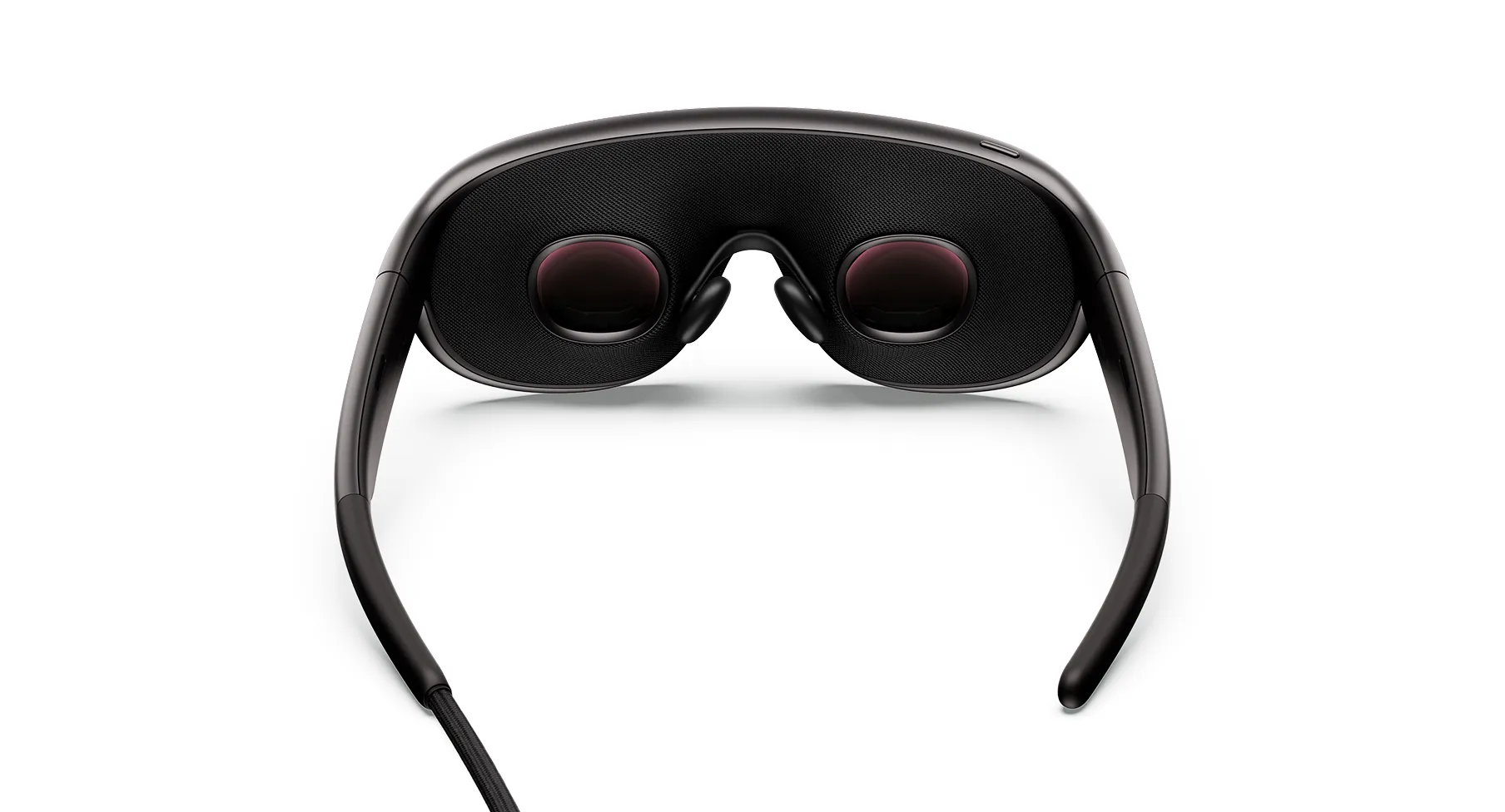
Meta’s smart design architecture: Meta achieves its approximately 100-gram weight by stripping out high-heat components from the head-worn device. The core elements like processor, battery, and cellular connectivity live inside a pocketable tethered puck about the size of a smartphone. The frame itself features flexible titanium temples, adjustable nose pads, and an open-peripheral layout that relies on natural vision around the micro-OLED lenses rather than relying entirely on video pass-through feeds.
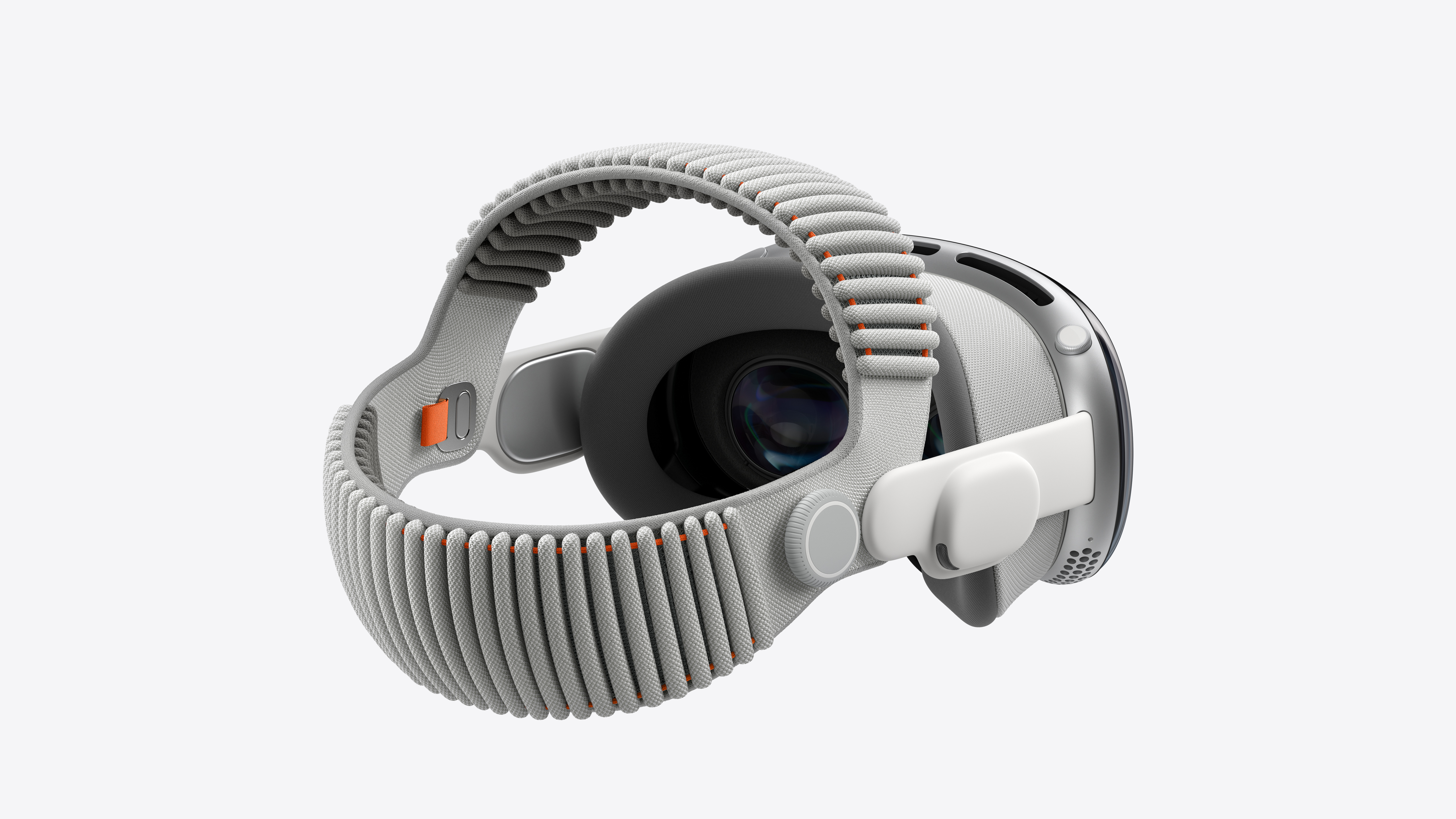
Apple’s all-in-one solution: The Apple Vision Pro packages its M2 and R1 dual-chip architecture, cooling fans, and glass enclosure directly onto the wearer’s face, relying on an external battery pack solely for power. While built with premium materials like laminated glass, anodized aluminium, and a 3D-knit headband, the resulting 600+ gram weight places significant pressure on the cheeks and forehead during extended use. Hence, Apple has to use a headband-like
Meta vs Apple: The portable cinema experience
Meta is heavily positioning its VR Glasses as a primary media consumption device.
Meta’s approach: The headset features a 5K micro-OLED panel with 37 pixels per degree, Dolby Vision support, and integrated spatial audio with Dolby Atmos. Meta announced it is the first IMAX Enhanced-certified VR device, enabling users to watch movies in IMAX’s expanded aspect ratio. Partnerships with Disney and Marvel bring 3D streaming (including titles like Avengers: Infinity War) via the new Disney Immersive Cinema app.
Vs. Vision Pro: Apple’s Vision Pro remains the gold standard for immersion due to its wider 100-degree field of view and deep integration with Apple TV+ 3D movies. However, Meta’s open-sided design and 100-gram frame mean users can watch an entire three-hour movie without facial fatigue or feeling completely isolated from their physical surroundings.
Meta vs Apple: The multi-display workspace
Both devices aim to replace traditional desk PC setups with floating, virtual multi-monitor arrays, but they take different approaches to ergonomics.
Meta’s approach: The VR Glasses connect wirelessly or via USB-C to Mac or Windows PCs, letting users extend their desktop into private, floating virtual displays. A key software feature enables users to turn any flat table or desk into a virtual surface keyboard and touchpad. The lightweight build and open sides allow wearers to look down at real-world phones or notebooks without relying entirely on video pass-through feeds.
Vs. Vision Pro: Apple offers seamless ultra-high-resolution Mac Virtual Display integration within the macOS ecosystem. While Vision Pro’s higher FOV provides a more sprawling desktop setup, it entirely relies on video pass-through to show the reality beyond you.
Meta vs Apple: Interactive gaming ecosystem
Gaming represents one of the major strategic divides between the two tech giants.
Meta’s approach: Meta’s VR Glasses rely on a decade of VR gaming development. At launch, the device supports over 75 hand-gesture-controlled titles, offers full access to the existing Meta Quest catalog, supports Touch Plus physical controllers for traditional VR games, and integrates Xbox Cloud Gaming.
Vs. Vision Pro: Apple’s Vision Pro relies heavily on hand-tracking and iPad app ports. While it supports standard Bluetooth gamepads for flat Apple Arcade games, its lack of dedicated motion controllers has restricted developer support for rich, active 6DoF gaming titles.
Earliest conclusion
Meta’s $1,299 VR Glasses aren’t trying to beat Apple on raw computing power or total field-of-view. Instead, Meta is betting that everyday consumers prefer comfort, portability, and value over absolute specs. Zuckerberg’s team is able to do that by offloading compute power to a pocket puck, thus delivering a lightweight form factor that makes spatial cinema, virtual workspaces, and gaming practical for extended daily use.
As for Apple’s headset, it is squarely aimed at professionals seeking a 3D real-time space to get work done. Future generations of the Apple Vision Pro could lose the excess weight and make it practical for everyday users to wear.