


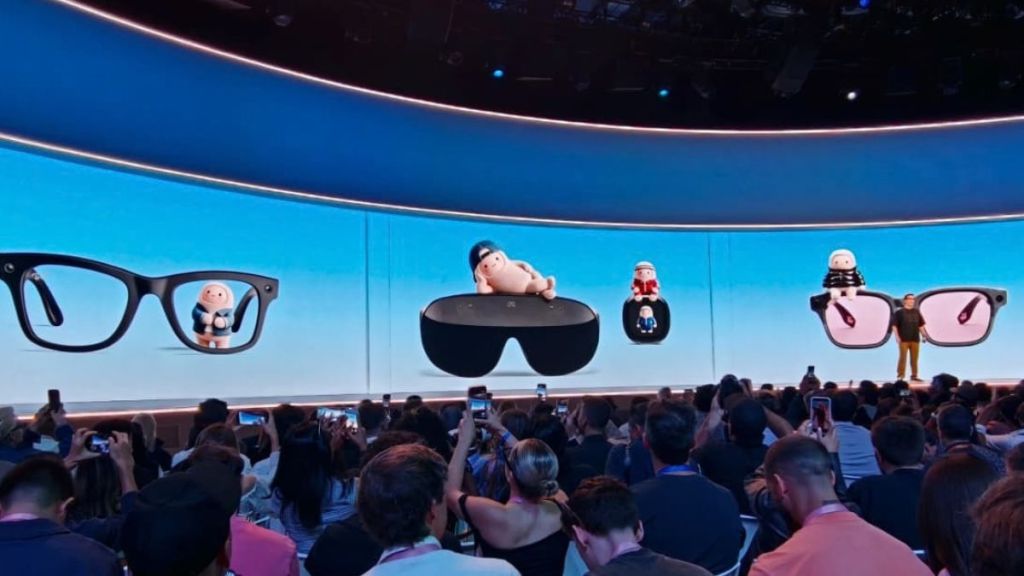

Meta on Wednesday, September 23, unveiled its latest lineup of AI-powered glasses at Meta Connect 2026 in Menlo Park, California, alongside new virtual reality glasses and the Muse Charm AI device. The company said it plans to offer more than 100 AI glasses across Ray-Ban, Oakley and Meta Glasses by the end of the year.
A major focus was Muse, Meta’s personal AI agent designed to do more than answer questions. Powered by the company’s Muse Spark model and running on Muse Secure VM, it can interact with websites and connected services to perform tasks such as sending emails, booking travel, filling forms and making purchases.
Meta is bringing Muse to its AI glasses, allowing users to activate the AI assistant hands-free. The company says users will be able to ask Muse to guide workouts, log meals, get nutrition information, book appointments, check flight prices and identify products they see. Muse is currently available in the US.
The glasses are also getting features including Dolby Atmos Capture, Dynamic Photo, Landscape Crop Mode and Private Processing. Dolby Atmos Capture will allow users to record video with 360-degree spatial sound, while Dynamic Photo captures multiple frames and lets Meta AI suggest the best one. Private Processing is designed to provide AI features without Meta accessing the user’s data.
Meta also showcased hearing enhancement for adults with perceived mild to moderate hearing loss. The FDA-cleared software can be set up at home without a clinic visit or prescription. It will launch in the US later this year on select glasses and cost $149.99 as an add-on, or be available through a Meta subscription.
Ray-Ban Meta Gen 3 and Audio
Ray-Ban Meta Gen 3 starts at $449 and offers up to nine hours of battery life, a 12MP camera capable of 3K Ultra HD video, a six-microphone array and a customisable action button for Meta AI. It also comes in new Zena and Aviator styles. Meta also introduced Ray-Ban Meta Audio, its first camera-free AI glasses. They weigh 43 grams, offer up to 12 hours of use and come in Clubmaster and Burbank styles. Pre-orders start at $349, with shipping from October 13.
Meanwhile, Meta Ray-Ban Display is expanding to the UK, Canada, France, Italy and Germany. New features include cycling and public-transit navigation, hologram video calls, photo editing, a more powerful calendar and phone notifications on the glasses. The glasses continue to start at $799 in the US.
Meta VR Glasses
Meta also unveiled its new Meta VR Glasses, designed to bring VR, spatial computing, gaming and cinematic experiences into a glasses-sized device. Weighing about 100 grams, the glasses use a 5K micro-OLED display, Dolby Vision and Dolby Atmos, while computing, battery and storage are housed in a separate pocket-sized puck connected by a tether. Users can control the experience using eye movements and hand gestures without controllers. Meta VR Glasses will support immersive movies, live sports, multi-screen workspaces and gaming. They are scheduled to launch in spring 2027 at $1,299.99.
Meanwhile, in a surprise announcement, Zuckerberg also introduced Muse Charm, a small device designed specifically for interacting with the Muse AI assistant. The CEO described it as a pocket-sized device combining Muse with a real-time voice model, offering another way to access the AI without a phone or glasses. The company said it plans to share more details later this year. The company has not yet announced a price or full specifications for the Muse Charm. Zuckerberg said that the company is working towards introducing the device around the holiday season in December.