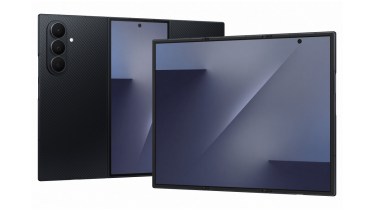
After revealing the Galaxy Fold as the first foldable phone in 2019, Samsung has taken another leap towards the next stage of the foldable market. Weeks before 2025 ends, Samsung has taken the wraps off the Galaxy Z TriFold – Samsung’s first phone with two hinges and two screens but divided into three segments (hence TriFold). Similar to the original Galaxy Fold, the Galaxy Z TriFold will first be released in the US and South Korea, before Samsung considers selling it in other markets.
Samsung says that the Galaxy Z TriFold will make its market debut in South Korea on December 12. The brand is yet to reveal the price of the device, but considering how this is the first of its kind, it would be anything but accessible, especially considering how the current generation Samsung Galaxy Z Fold 7 has inched closer to $2,000 price tag. The device’s launch in the US market is scheduled to follow in the first quarter of 2026 but Samsung isn’t bringing it to other markets yet.

Samsung Galaxy Z TriFold: How is it different from Galaxy Z Fold 7
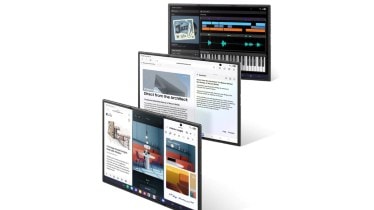
The Galaxy Z TriFold features a massive 10-inch diagonal inner screen with a high resolution of 2160 x 1584 pixels and an adaptive refresh rate ranging from 1Hz to 120Hz. This massive screen real estate is designed for multitasking and productivity. The Z TriFold is the first Samsung device to operate the DeX environment in a standalone mode, without needing an external monitor.
This allows users to run three vertically aligned apps simultaneously on the inner screen. The external screen, or the cover display, is a 6.5-inch, 1080p screen with a 21:9 aspect ratio, similar to Samsung’s current generation of Z Fold devices.

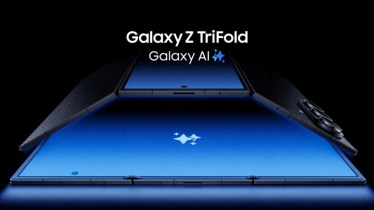
The Galaxy Z TriFold adopts an inward-folding design, where the side panels fold over the center panel to protect the main screen. This is unlike the Huawei triple foldable phone, where a ‘Z-style’ foldable mechanism has been implemented. The device integrates advanced engineering to manage the complexity of three panels. Samsung is utilising a titanium-based Armour FlexHinge with two different-sized hinges that work with a dual-rail framework, claiming a smoother and more stable fold despite the variable weight of the panels.
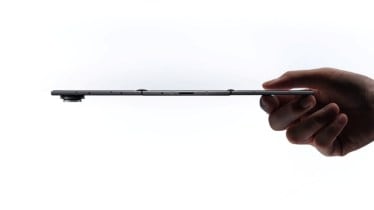
The device consists of three panels of varying thickness, with the center panel being the thickest at 4.2mm (housing the USB-C port) and the thinnest at 3.9mm (with the physical SIM tray). Despite the construction complexity, the Galaxy Z TriFold features a ceramic-glass fibre-reinforced polymer back panel and carries an IP48 rating, making it fully water-resistant, though not dust-tight. The device measures 12.9mm thick when folded.
What about the specs on the Samsung Galaxy Z TriFold?
Powering the Galaxy Z TriFold is a previous-generation Snapdragon 8 Elite for Galaxy chipset coupled with 16GB of RAM, which should ensure top-tier performance.
In the camera department, the device features a powerful triple-rear camera system, which includes a 200MP main wide-angle lens, a 12MP ultrawide shooter, and a 10MP telephoto lens. There are two 10MP selfie cameras housed on both the cover screen and the inner screen.
The device is equipped with a total battery capacity of 5,600mAh, with the power source distributed across both screens. Notably, Samsung has removed the traditional stylus support that was present in earlier Z Fold models.
Although Samsung remains silent on the price, you can expect the Galaxy Z TriFold to command a premium, with prices starting well above $2,000.