


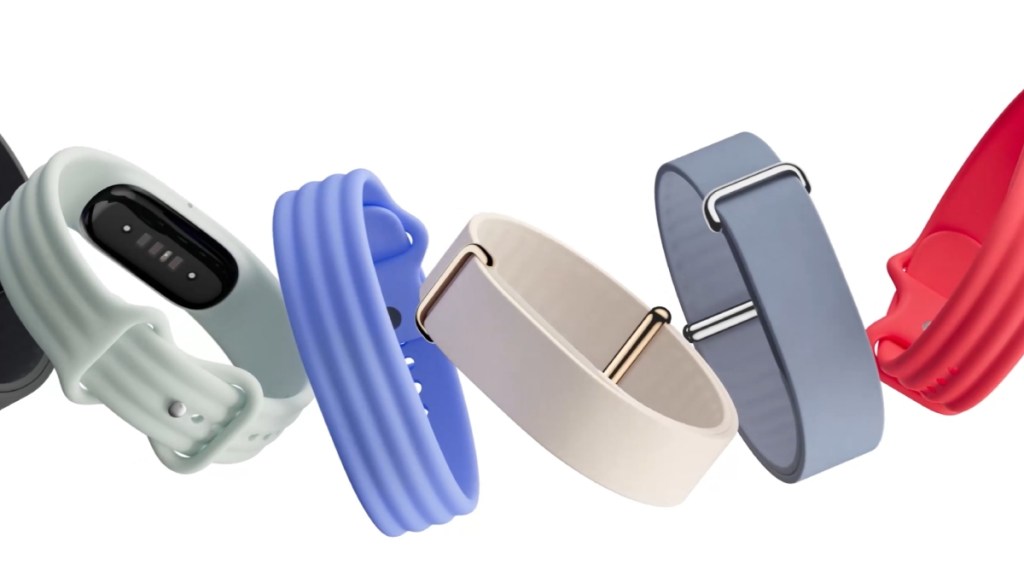

Is the Google Fitbit Air worth buying in India – a market that’s obsessed with flashy tech? Indians love the idea of a smartwatch with the nicest and largest screens and premium material, and the most features imaginable in a wearable. The Fitbit Air, however, is all about doing health and fitness tracking differently. It is a screenless, pebble-like tracker weighing just 12 grams, and promises “invisible health tech” that tracks metrics passively without digital notifications, screen glare, or constant distractions.
At Rs 13,999, the Fitbit Air occupies a unique, screenless niche – that too at a price. So, does it have any chance against more affordable or similarly priced wearables, like the Samsung Galaxy Fit 3 (Rs 4,999) and the Amazfit Bip 6 (Rs 8,999), both of which pack bright colour displays and extensive feature sets for significantly less money?
While we are yet to get our hands on the Fitbit Air, here’s what the spec sheet and Google’s press brief suggest.
The value proposition: How it compares
To see where the Fitbit Air sits in the Indian market, we compared it directly against leading display-based budget trackers.
| Google Fitbit Air | Samsung Galaxy Fit 3 | Amazfit Bip 6 | |
| India Price | Rs 13,999 | Rs 4,999 | Rs 8,999 |
| Form Factor | Screenless lightweight pebble (12g) | 1.6-inch AMOLED display, Aluminium case | 1.97 inch 2,000-nit AMOLED, Aluminium frame |
| Display and Calling | None (Silent tracker) | Bright AMOLED, Notifications (No calls) | Large AMOLED, Bluetooth Calling and Texting |
| Battery Life | ~7 days (Fast charges 1 day in 5 mins) | ~13 days | Up to 14 days |
| Sensors & Health | PPG, SpO2, HRV, FDA-cleared AFib | PPG, SpO2, HR, Fall Detection, Barometer | BioTracker 6.0 PPG, SpO2, Sleep, Stress |
| GPS Tracking | Connected GPS (Requires Phone) | Connected GPS | Built-in GPS & Free Offline Maps |
| Ecosystem & AI | Google Health App + Gemini Health Coach | Samsung Health ecosystem | Zepp OS 4.5 & Zepp Flow AI |
The case for buying the Fitbit Air in India
The Fitbit Air, at first glance, seems like a feature-less wearable that may not have much to offer as compared to the rest of the competition. However, the Fitbit Air isn’t trying to be a smartwatch.
1. Comfort and zero “screen fatigue”
At a mere 12 grams, the Fitbit Air is designed to disappear on your wrist. For users in India who prefer wearing traditional mechanical watches, or for those who find bright smartwatch screens glowing in bed disruptive to sleep, the Air offers zero screen clutter and total distraction-free monitoring. You wear it and forget it, unlike the other fitness trackers.
2. Clinical-grade sensor accuracy and AFib alerts
Budget trackers under Rs 10,000 often prioritise display size, watch faces, and calling capability over sensor engineering. The Fitbit Air uses Google’s clinical-grade optics, delivering highly accurate PPG heart rate data, continuous Heart Rate Variability (HRV), and FDA-cleared background Atrial Fibrillation (AFib) monitoring. Note that these are metrics that carry true health diagnostic value.
3. Rapid top-up charging
Taking off a wearable for hours to charge its battery interrupts the data, affecting the overall insights and output, especially when it comes to sleep tracking. Google’s 5-minute fast charge delivers a full day’s battery, letting you top it up while taking a quick shower, thus not missing out on night-time sleep logs.
4. AI-powered Google Health Coach
This is where the Fitbit Air shines. Rather than just providing raw bar charts like the competition, Google integrates its Gemini-backed AI Health Coach via the Google Health app. Buyers in India receive a 3-month trial of Google Health Premium, which translates sleep logs, workout stats, and recovery data into conversational recommendations and personalised guidance. Hence, your Fitbit Air ends up being more than just a health tracker – it uses AI to guide you on your workouts and improve your health metrics.
Where the Fitbit Air loses out
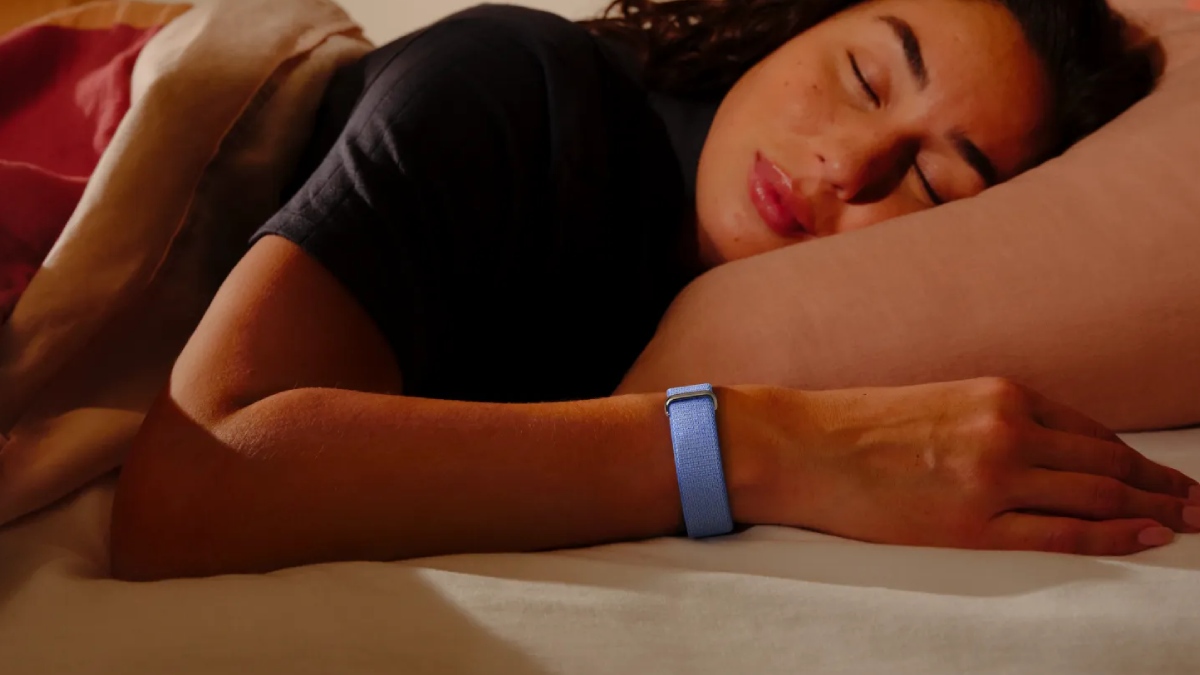
The Fitbit Air is designed to be a minimalist tracker rather than a multi-purpose wearable like its competition. Hence, despite paying a premium, you tend to lose out on certain commonly accepted features.
Checking time and notifications: Both the Samsung Galaxy Fit 3 and Amazfit Bip 6 feature vibrant AMOLED displays. You can instantly check your heart rate mid-run, view incoming notifications, or simply check the time—something the Fitbit Air cannot do without pulling out your phone.
Built-in GPS for outdoor workout tracking: The Amazfit Bip 6 comes equipped with built-in multi-system GPS and downloadable offline map support. If you go for outdoor runs or rides without carrying your smartphone along, the Bip 6 routes you accurately, whereas the Fitbit Air requires a connected phone for location mapping.
Calling from the wrist: At Rs 8,999, the Amazfit Bip 6 includes a built-in speaker and microphone for taking phone calls directly on your wrist, a feature widely sought after by Indian consumers.
Price-to-Feature Ratio: At Rs 4,999, the Galaxy Fit 3 offers fall detection, emergency SOS, daily activity coaching, and seamless integration with Samsung smartphones for roughly one-third the price of the Fitbit Air. The Amazfit Bip 6 offers even more for a much lesser price.
Conclusion: Who should consider the Fitbit Air
Google’s Fitbit Air is not built for someone looking for a traditional wrist-based smartwatch.
Fitbit Air is great if…: you want a stealthy, screen-free tracker focused strictly on sleep recovery, continuous heart health monitoring, and precision data without digital distractions. It should be ideal for health-conscious users inside the Android/Google ecosystem who want medical-grade insights, with AI adding more value to your fitness journey.
Don’t get the Fitbit Air if…: you want maximum features and utility for your money. If you need a wrist display to tell time, handle calls, read notification previews, or track outdoor runs without your phone, budget AMOLED trackers like the Samsung Galaxy Fit 3 or Amazfit Bip 6 offer far better daily value.