



After a relentless wait, Google has finally launched the Fitbit Air in India. The Fitbit Air has been long sought after by fitness enthusiasts looking for a distraction-free way to track their health metrics. The release comes a month after Google released its Pixel series devices in India, including the Pixel Watch 5 — the brand’s flagship health and fitness tracking device.
Unlike the modern smartwatches of today, the Fitbit Air wants to address the digital distraction on wrists. The Air is essentially a minimalist and screenless fitness tracker designed for users who want continuous health monitoring without needing a screen.
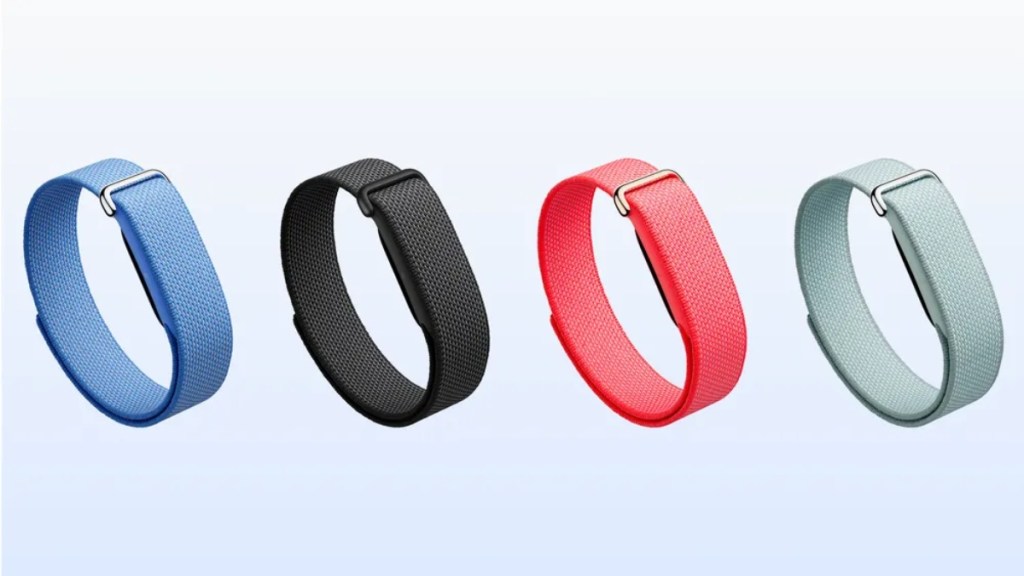
In India, the Fitbit Air is priced at Rs 13,999, and is available in multiple strap styles as well as colours.
Google Fitbit Air: What it offers
At its core, the Fitbit Air is designed around a tiny, ultra-lightweight central “pebble” that houses Google’s high-fidelity health sensor suite. By deliberately removing a display, Google aims to tackle two common consumer concerns – wearable fatigue and screen overload.
Google says that the screenless design allows users to live fully in the moment during workouts, social settings, or sleep, while still capturing key biometrics in the background. This includes:
Continuous heart and rhythm tracking: 24/7 heart rate monitoring paired with heart rhythm assessment featuring Atrial Fibrillation (Afib) alerts.
Comprehensive recovery metrics: Automated tracking of blood oxygen levels (SpO2), resting heart rate, and heart rate variability (HRV).
Unobtrusive sleep insights: Designed to be lightweight enough for zero-friction night wear, tracking sleep duration and light, deep, and REM stages.
Since the Fitbit Air lacks a power-hungry display, the device boasts up to seven days of battery life on a single charge. For quick top-ups, Google says that its fast-charging capability delivers a full day’s worth of power in five minutes.
Fitbit Air and its integration with Google Health Coach
Instead of relying on buttons or wrist taps/gestures, all interaction on the Fitbit Air happens through the companion Google Health app on a paired smartphone (compatible with Android 11+ and iOS 16.4+).
The tracker works in tandem with the Google Health Coach – an AI-driven personal wellness system. Beyond standard auto-detection for common exercises, users can log workouts through unconventional methods, such as clicking a photo of gym equipment or a circuit training routine written on a whiteboard, which the app interprets and logs automatically.
| Key Feature | Specification / Detail |
| Form Factor | Screenless lightweight pebble |
| Battery Life | Up to 7 days (5-min fast charge for 24h use) |
| Key Sensors | 24/7 Heart Rate, Afib Rhythm Monitor, SpO2, HRV |
| Compatibility | Android 11+, iOS 16.4+ via Google Health App |
| Price | Rs 13,999 (Includes 3-month Google Health Premium trial) |
| Release Date | October 2, 2026 |
Fitbit Air market availability in India
While the Air may lack a screen, Google lets you match the device to your fashion by allowing the central pebble to pop out easily, which eventually allows users to swap band styles based on activity.
Performance Loop: Breathable, micro-adjustable band made from recycled materials (included in the box).
Active Band: Sweatproof silicone with a ribbed texture built for high-intensity training.
Elevated Modern Band: A sleek, bracelet-style metal/leather option suited for formal or casual wear.
The Fitbit Air goes on sale in India on October 2, 2026, via the Google Store and authorised retail partners. It launches in four colourways — Obsidian, Berry, Lavender, and Fog.
As part of the launch offer, the Air also offers a three-month trial of Google Health Premium out of the box (also bundled for Google AI Pro and Ultra subscribers at no extra cost).
How Fitbit Air differs from smartwatches
The lack of a screen is not the only difference between the Fitbit Air and a smartwatch. But let’s start with that characteristic before moving on to other aspects.
Screenless fitness vs on-wrist smartness overdose
Devices like Google’s Pixel Watch 5 and Galaxy Watch 9 run full-fledged operating systems (Wear OS) capable of answering calls, handling wrist-based Gemini AI interactions, controlling smart home devices, and rendering rich notification tiles. This concept is aimed at making smartness more accessible on the move.
On the other hand, the Fitbit Air offers no screen or any associated notifications. Hence, zero distraction – this gadget simply sits on your wrist and keeps an eye on your fitness metrics. All data flows passively to the Google Health app on your phone. You collect deep wellness data without being constantly interrupted by messages or app prompts.
Battery life: Days vs hours
With proper smartwatches, the power demands of bright 3,000-nit displays and high-performance processors (like the Snapdragon Wear Elite on the Galaxy Watch 9) mean that daily or near-daily charging makes it impossible to track health metrics consistently all through the day.
With the Fitbit Air, you don’t need to care about the battery life as it lasts up to a full week on a single charge. A brief 5-minute fast charge yields 24 hours of usage, which means you rarely have to take it off.
Weight and ergonomics
While sleek, glass-and-metal smartwatches can feel bulky when sleeping or during aggressive athletic training, the Fitbit Air weighs just 12 grams total with the strap. Its slim profile makes it virtually unnoticeable in bed, thus helping with higher-quality, uninterrupted sleep metric tracking.
Ecosystem independence
Smartwatches like the Apple Watch SE and Series 11 are locked strictly to iPhones, whereas the Pixel Watch 5 and Galaxy Watch 9 require Android.
Meanwhile, the Fitbit Air works seamlessly across both Android and iOS devices, thereby making it a flexible entry point regardless of which smartphone ecosystem you use.