


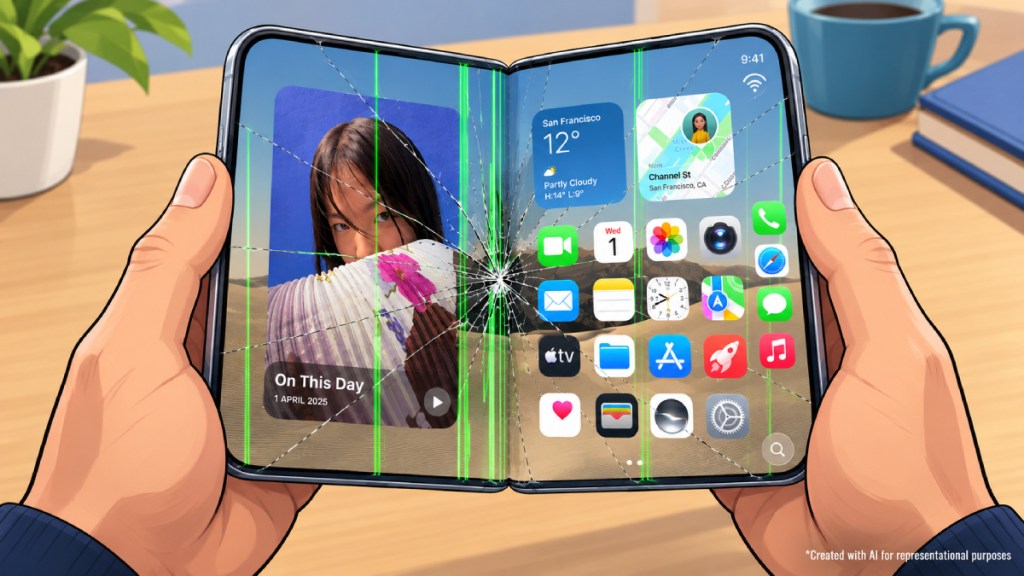

The iPhone Duo has hit the market like a storm, quite literally. What was meant to be Apple’s boldest leap into dual-display mobile hardware has quickly become one of its most scrutinised product launches in recent times, reviving memories of Apple’s infamous ‘Bend gate’ (iPhone 6 structural deformity) and ‘Battery gate’ (performance throttling on older phones with iOS 10.2.1 update without notifying).
Just weeks after the unveiling of the iPhone Duo, social media platforms, tech forums, and customer support boards have been flooded with reports from early buyers claiming that the device’s inner screens are cracking, spiderwebbing, or failing along the central hinge mechanism without any obvious external impact.
The incident is reminiscent of the early years of the foldable phones from Samsung, Huawei and other big Android-based phone brands, where new customers witnessed screen damage in the earlier generations. The first generation Samsung Galaxy Fold witnessed screen damage reports as buyers mistakenly tore off the protective layer on the foldable display.
While many in the tech communities classified it as “DuoGate”, Apple has issued an official statement to address consumer panic and outline its resolution path for affected customers.
The iPhone Duo screen crack controversy: How it began
The controversy gathered steam as users took to Reddit, X, and YouTube to share images of hairline fractures running vertically down the display joint on their brand new iPhone Duo phones.
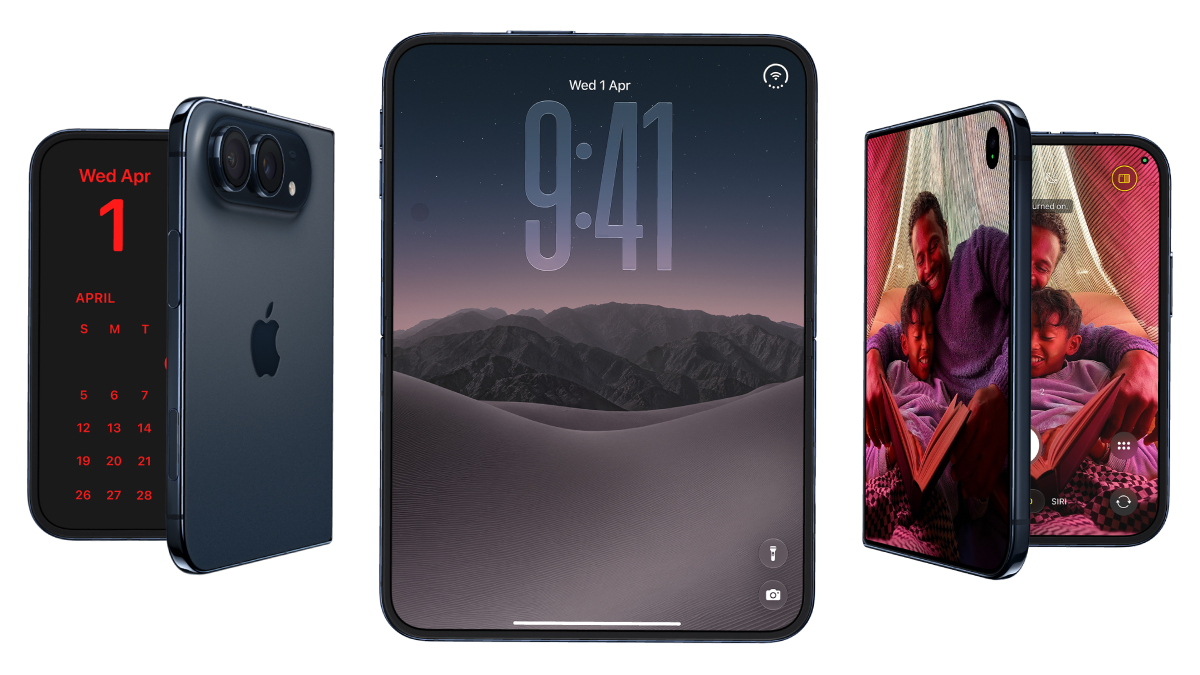
Unlike traditional smartphones with single rigid glass panels, the iPhone Duo relies on an ultra-thin glass layer integrated with a dual-pivot hinge system designed to sit completely flush when unfolded. However, users report that after normal daily operations like opening, closing, and carrying the phone in pockets, the flexible panel displays visible stress lines.
“I opened my phone on day four, heard a faint popping sound, and immediately noticed a hairline crack straight down the crease,” wrote one affected user on the Apple Support Community forums. “I haven’t dropped it once,” they added.
Teardowns by independent repair experts suggest the issue may emerge from localised stress concentrations. Minor debris entering the hinge enclosure or slight pressure variances between structural components could be forcing the ultra-thin glass layer beyond its mechanical tolerance during folding cycles.
Apple assures replacements
Following the mushrooming incidents of “Duo Gate” complaints, Apple officially broke its silence on the matter by confirming that it is addressing display issues on affected hardware.
“We are aware of an issue impacting the inner display on a small number of iPhone Duo units,” an Apple representative told CNBC. “If users experience issues with their iPhone Duo display, they should contact AppleCare for a replacement,” it added.
Hence, for those consumers currently stuck with an iPhone Duo with a broken screen, here’s what you need to know:
Direct replacement: Apple is urging impacted customers to AppleCare for replacement units rather than forcing customers to settle for prolonged repair delays.
Easier claims: By acknowledging the issue, Apple has simplified the process for users to claim replacements without needing to prove the failure was non-accidental.
Ongoing engineering evaluation: Technical teams at Apple continue to evaluate returned damaged units to assess whether manufacturing variances in early production batches contributed to the stress points, which led to damage.
Expert’s take: Not a “hinge-gate”
Financial Express Online reached out to Tarun Pathak, Research Director at Counterpoint Research, to know their take on the issue and whether it will affect the desire for the iPhone Duo after the initial hype.
“Obviously, this could be possible because of certain few units that were part of the manufacturing line… This is a small sample set that is appearing as of now, and obviously Apple is replacing it as we speak,” says Pathak.
“We do not like calling it a ‘hinge gate’ or anything as of now, but we are looking at this situation to see how it reacts after those units are back in the hands of consumers. It’s too early to tell whether this is a larger issue or a smaller issue. Looking at the statement, it appears to be a very small batch of manufacturing numbers,” he added.
Pathak further noted that the issue highlights the broader engineering challenges facing the entire foldable industry.
“This gives us a larger trend that manufacturing foldables is extremely difficult, especially because there are so many components that go into it. Masking that mechanical engine is so difficult for a lot of these brands. That is why we sometimes see higher unit failure rates in foldables. But the category will continue to develop and grow in coming times as the supply chain becomes even more mature,” says Pathak.
Addressing consumer adoption and market position, Pathak added, “Initial adoption of Duo continues to be driven by an excellent form factor, the bigger screen value proposition, and a differentiating experience, which will make loyal Apple users and early adopters of technology go for it—especially those who have been waiting for an Apple foldable form factor for a long time. Overall, we believe that the iPhone Duo is set to expand India’s foldable segment by value rather than volume initially and bring the spotlight on the foldable segment.”
For current iPhone Duo owners experiencing display anomalies or hairline fractures, Apple recommends reaching out to AppleCare support immediately to arrange for a replacement unit.