


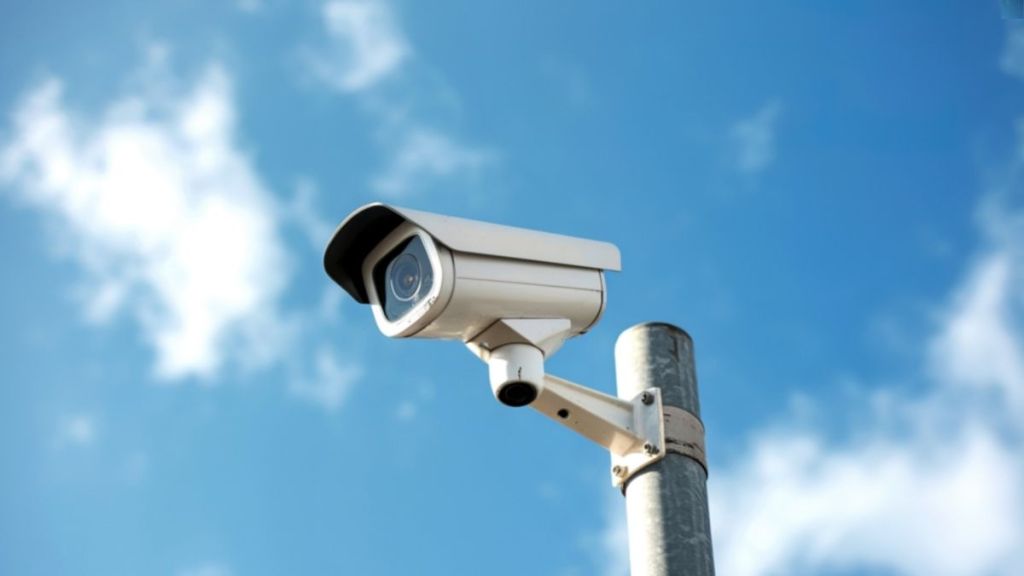

India sells nearly 50 million CCTV cameras a year, but only around 5% have any form of intelligence, according to Staqu Technologies. The rest mostly do what CCTV has always done – record footage and wait for someone to go looking for it.
That is beginning to change. A clutch of deeptech startups is adding an intelligence layer to cameras already installed in factories, restaurants, hospitals, shops and public spaces. Using video analytics, computer vision and edge computing, these systems can identify people, objects and events, generate alerts and make footage searchable. In effect, they are turning CCTV from a passive recording system into a source of operational intelligence, without necessarily requiring companies to replace their existing cameras.
The most immediate applications are not necessarily about catching criminals. Consider a restaurant kitchen. Cameras can be used to check whether staff are following hygiene procedures, wearing protective equipment or adhering to standard operating processes. NthEye Technologies is also using video analytics to detect pests such as rats and cockroaches during off-hours.
For a restaurant chain with hundreds of outlets, this can be more useful than another security feed. Bengaluru-based BLUE is working across about 500 sites and 4,000 cameras, including deployments involving Britannia, Haldiram’s and CPRL, the McDonald’s licencee for north and east India. “The primary driver is usually audit cost rather than security,” says Kunal Kislay, CEO, BLUE. Instead of managers visiting a sample of outlets, video can be used to check processes across the network. The company says this has increased audit coverage from a handful of locations each month to 100% of sites every day.
The use case looks different on a factory floor. A camera can flag whether workers are wearing the required safety gear. If a production line stops, footage can be searched to establish what happened. BLUE claims an investigation that once took around four hours of tape review can take about five minutes.
For companies with many plants, warehouses or outlets, the real benefit is being able to search footage from different locations without sending someone there. A retailer can track queues and customer movement, while a logistics company can see how long vehicles spend at a loading dock. Hospitals can also use cameras to monitor queues and patient movement. The cameras are already in place. The new technology simply makes the footage more useful.
The public-safety applications are more high-profile. At the Sammakka-Saralamma Jatara, a major tribal religious gathering in Telangana popularly known as the Medaram Jatara, more than 13 million pilgrims attended over four days earlier this year. NthEye deployed its video intelligence platform across 15 CCTV feeds at crowd choke points, with edge-GPU infrastructure at the police command and control centre.
The system was used for crowd monitoring, behavioural threat detection, face matching against more than 10,000 previous offender records and suspect-location mapping. It processed more than 100 faces per frame every second, or nearly 5 million face scans an hour, and generated more than 70 real-time alerts. “Existing infrastructure is entirely passive,” says Venkat Ramana, CEO, NthEye. The aim, he says, is to turn that passive infrastructure into “proactive decision intelligence”.
Staqu is taking a similar approach with its JARVIS platform. It is deployed across 11 state governments and more than 70 prisons, according to the company. At Bengaluru’s M Chinnaswamy Stadium, Staqu says the system helped identify 21 stolen phones in under 48 hours using reverse facial recognition.
But the more interesting question for businesses may be what happens when they want to find something that was never configured as an alert in the first place. Traditional video analytics is largely rule-driven. Tell the system to look for a person entering a restricted area and it can flag the event. Ask it months later to find every instance of that behaviour across hundreds of cameras, and the task becomes much harder.
That is the next step for some of these startups: making video searchable by meaning rather than simply by camera, date or time. BLUE is trying to do this by creating a semantic layer over video. Instead of treating footage simply as a file, its system creates a record of people, objects, actions, movement and context.
“Video remains the only enterprise data type without an index,” says Kislay. An operations manager could therefore search for a person entering a cold-storage area outside working hours without first knowing which camera or time period to examine. BLUE says its approach can reduce storage requirements by around 80%, while historical queries can be answered in about five seconds.
The shift, therefore, is not simply from cameras that record to cameras that send alerts. It is from video that has to be watched to video that can be searched, understood and used to answer operational questions. That changes who inside a company may care about the technology. The buyer may be the COO, plant head or retail manager, and not just the security chief.
“The biggest shift is the movement of video analytics from a purely security function towards an operational intelligence layer,” says Atul Rai, CEO and co-founder, Staqu Technologies. For businesses, that could make the next phase of CCTV less about installing more cameras and more about making sense of the millions already in place. The hardware may stay the same; what changes is what the camera can do with what it sees.