


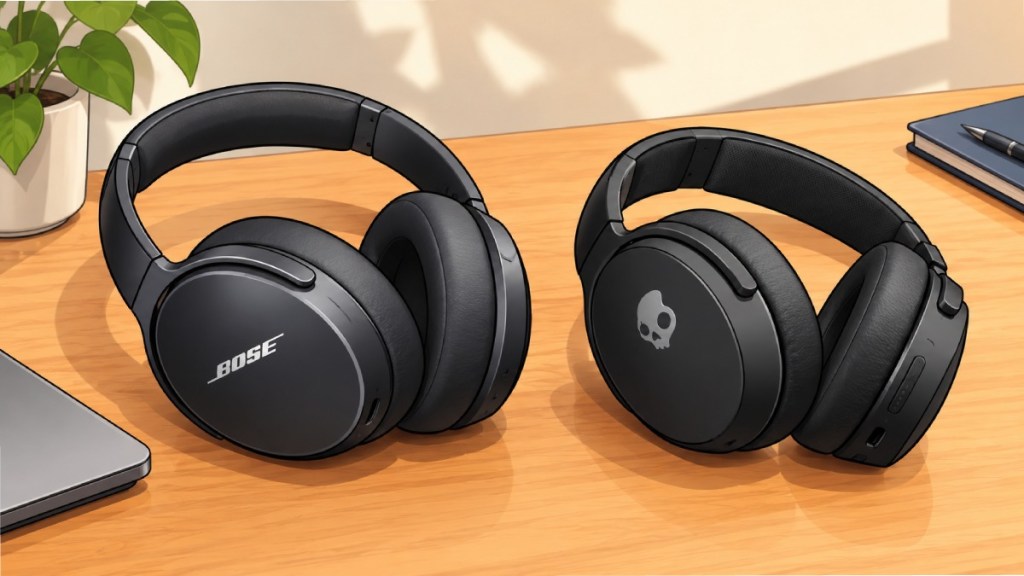

Bose buying Skullcandy was a move that not many audiophiles saw coming. Both these brands have competed in the audio gear segment, serving to different consumer categories in the headphone space. The deal, however, seems like an arrangement similar to the one between Apple and Beats.
The deal, which transfers Skullcandy from private equity firm Mill Road Capital into Bose’s Premium Consumer Audio portfolio, joins two wildly different corners of the headphone world. The financial terms remain undisclosed, but Skullcandy will retain its Park City, Utah headquarters and operate as an independent sub-brand under Bose.
For Bose, which is famous for products suited to quiet executive cabins and high-end living room systems, acquiring Skullcandy offers direct entry to action-sports culture, younger buyers, and a distinct design aesthetic.
For Skullcandy, the acquisition marks a dramatic turnaround as they can get access to Bose’s deep engineering labs and global supply chain.
The deal between these two brands didn’t happen out of the blue, as they recently collaborated on products like the Skullcandy Crusher 1080 ANC headphones and Method 360 ANC earbuds, combining Skullcandy’s signature haptic bass with Bose’s active noise cancellation and spatial audio processing.
While the business gains for both brands will likely help each other address new customers, what could it mean for you – the buyers?
Bose-Skullcandy deal: What it means for buyers?
While the deal details are yet to be furnished properly, here are some possibilities that could bless customers of either brands.
1. Better sound at budget price points
Skullcandy built its fame on vibrant designs and low price points, but its lower-end gear sometimes suffered from inconsistent acoustic tuning. Under Bose’s ownership, we can expect future budget and mid-tier Skullcandy models to receive direct acoustic hardware and digital signal processing (DSP) upgrades. Skullcandy products could benefit from tighter response curves, clearer voice pickups, and better battery optimisation without paying full flagship prices.
2. Bose’s noise cancellation goes mainstream
Bose has pioneered consumer active noise cancellation (ANC), but usually keeps its flagship technology locked behind premium price tags. Skullcandy’s specialty lies in the entry-to-mid tier segment. Hence, there is a possibility that Bose could integrate its QuietControl ANC algorithms directly into Skullcandy’s premium lineup, thus offering buyers near-flagship ANC in durable, entry-level earbuds and gym headphones.
3. Distinct target audiences stay intact
Based on what has been revealed, Bose explicitly plans to keep Skullcandy distinct rather than absorbing it or rebranding its catalog. The core Bose QuietComfort lineup will remain the premium choice for commuters, professionals, and audiophiles. Meanwhile, Skullcandy will continue targeting athletes, skaters, and casual listeners wanting punchy haptic bass, rugged builds, and vibrant styling at lower price points.
4. Extended warranty and software support
One major pain point with budget audio brands is short-lived app support and firmware updates. By shifting into Bose’s hardware infrastructure, Skullcandy’s companion apps and long-term device software could gain much-needed stability and longer support life cycles.