



By Sonam Raina
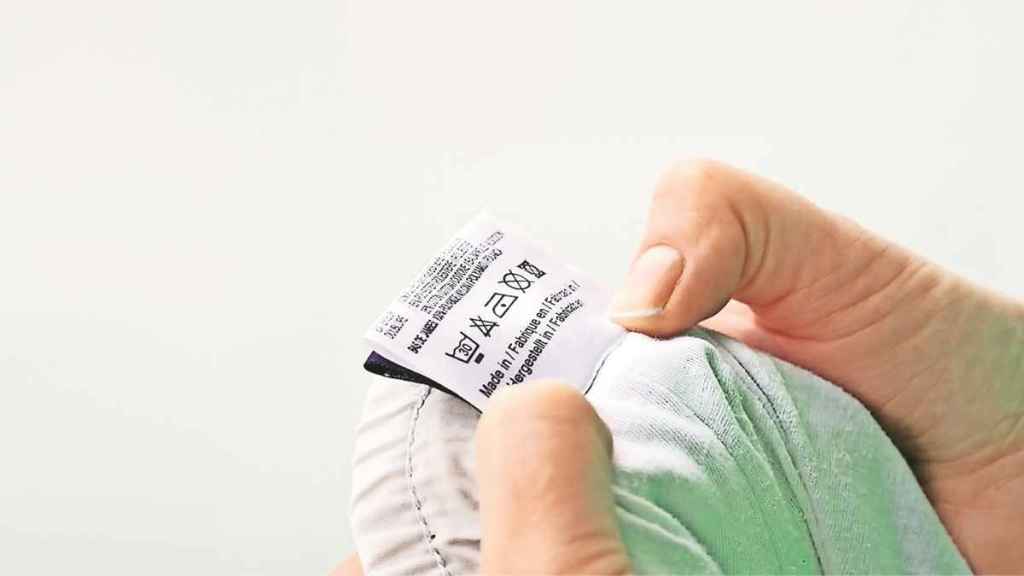
There is something deeply satisfying about cutting away a brand new shirt’s labels. The fabric is fresh, the lines are clean, and there’s nothing to irritate your skin, but as you take scissors to that white flappy fabric, you might be discarding the only clue to your shirt’s real journey – its origins, its makers, and the trail it has left and will leave across the planet.
Did you know that textiles are one of the world’s most polluting industries, responsible for nearly 20% of global industrial wastewater? To picture this, imagine that one out of every five litres of polluted water comes from the fashion industry. And make no mistake, this pollution makes its way into our clothes: a study by Toxics Link found harmful chemicals in 60% of baby clothes in India, including hormone-disrupting nonoxylones or NPEs.
So, is there anything that you can do as a consumer to save your health and the environment? Labels, those white tags with tiny text, are one of the few tools consumers currently have to make safer choices, whether it’s avoiding toxic dyes and formaldehyde, choosing organic cotton, or supporting fair labour.
This story explains what the labels mean, what they guarantee, and where they fall short.
Safe clothing made in India for both local and foreign consumption may bear one or more of these seven prominent labels. Each is backed by a defined standard, an implementation framework and third-party verification. In many cases, if the product fails to meet the standards and stipulations, the label can be suspended or withdrawn.
1. GOTS (Global Organic Textile Standard)
The Global Organic Textile Standard (GOTS) is one of the most trusted certifications for clothing made from organic fibres. It was developed by organisations from Germany, the USA, Japan and the UK and is now used in more than 70 countries. To earn this label, a product must contain a minimum percentage of organic cotton or other natural fibres and be manufactured without harmful chemicals like toxic dyes or formaldehyde.
GOTS also checks how factories treat workers – no child labour, safe workplaces and fair wages are mandatory. Rajlakshmi Cotton Mills (RCM), which is based in Kolkata with factories in Greater Noida and Kolkata, is recognised as one of the earliest garment manufacturers to adopt GOTS- and Fairtrade-certified production. While the clothes are manufactured in India, their biggest markets are the UK and the USA, with knitted garments like t-shirts and casual wear as top sellers.
“We were influenced by an organic cotton project started by a relative,” says Rajat Jaipuria, CEO of RCM. At that time, farmer suicides in Maharashtra were reported to be linked to pesticide use. “We felt it was the right thing to do.” Rajlakshmi supports Chetna Organic, a farmer-led initiative working with smallholder cotton farmers to support organic production and stable livelihoods. “We are trying to pay a better price to the farmers to help them have a sustainable living,” Jaipuria says. “Fairtrade means farmers are paid equally, there is no gender discrimination, there is no child labour at the farm level, and they are insulated from market ups and downs.”
2. OEKO-TEX® STANDARD 100
The OEKO-TEX® STANDARD 100 is an international certification system that tests textile products for harmful substances. It checks every component of a garment, like fabric, thread and accessories for over 1,000 regulated chemicals, with stricter limits for items with closer skin contact. The standard is updated annually based on scientific research.
3. Fair Trade Textile
The Fairtrade Textile Standard focuses on the people who make our clothes. Brands that use this label must also commit to fair purchasing practices, instead of pushing suppliers into low prices and unpaid overtime. Factories are audited for legally binding employment contracts, reasonable working hours, building and fire safety, and the right to unionise. The standard also restricts hazardous chemicals and requires better wastewater and chemical management to protect workers and the environment. The fair trade label works only in those countries where workers are legally allowed to form unions.
4. The Silk Mark certification
The Silk Mark certification, issued by the Silk Mark Organisation of India (SMOI) under the Central Silk Board, assures that a textile product is made from 100% natural silk and not a blend like silk-polyester or rayon or an imitation. Each certified item carries a unique serial number and hologram for traceability. The scheme enables consumers to verify authenticity, thereby protecting against counterfeit silk.
Silk Mark also helps sustain traditional silk weaving communities and strengthens India’s heritage textile industry. For manufacturers, the label brings credibility and access to higher-value markets.
5. Handloom Mark India
The Handloom Mark is a guarantee that a fabric is genuinely handwoven in India, not produced on a power loom. Introduced in 2006 by the Ministry of Textiles and the Textiles Committee, it helps protect India’s 6.5 million handloom weavers from imitation products. Every genuine Handloom Mark item carries a specially designed polyester taffeta label printed with the Handloom logo and a unique QR code. You can scan this code yourself to verify that the product is authentic and traceable.
This scheme had registered over 22,000 weavers, cooperatives and traders by 2024 and tagged over 13 crore (130 million) products. As a consumer, choosing a Handloom Mark product means extending support for and celebrating traditional craftsmanship, fair livelihoods and India’s textile heritage.
6. Better Cotton Initiative
The Better Cotton Initiative (BCI) is the world’s largest cotton sustainability programme, working in 15+ countries and reaching millions of farmers. It sets out a rigorous ‘Better Cotton Standard’ that covers water-use efficiency, reduced pesticide use, soil health, worker rights and decent wages.
Farmers who meet the standard can sell their crop as ‘Better Cotton’, which brands can source and utilise. Textile entrepreneurs and consumers alike can check whether a brand or supplier is part of the BCI network by visiting ’Find Members’. When you choose a BCI-cotton-sourced garment, you, as a consumer, are supporting a transition towards more sustainable and equitable textile supply chains.
7. SA8000
Social Accountability International (SAI) is a New York–based non-profit that works to protect human rights in workplaces around the world. Its best-known standard, SA8000®, lays down defined requirements for safe working conditions, fair treatment, and ethical labour practices. The standard applies across many industries and is widely used in the apparel and textile sector, where issues like overtime, low wages and unsafe factory environments are common. SAI helps brands and manufacturers strengthen accountability and align with international labour standards.
Different labels solve different problems
Different clothing labels exist because each one addresses a different part of the textile ecosystem problem. Some certifications focus on environmental impact. For example, GOTS looks at how cotton is grown and whether harmful dyes or chemicals were used, while BCI works directly with farmers to reduce pesticide use and improve soil health.
Then there are labels that put human health first. OEKO-TEX Standard 100, for instance, tests every button, zip and thread in a garment to make sure it does not contain residues that can irritate the skin or harm the body, which is why many parents prefer OEKO-TEX-certified baby clothes.
A third group of labels focuses on workers’ rights and fair wages. Fairtrade works across the cotton-to-clothing chain to ensure farmers and factory workers are treated fairly, while SA8000 checks for safe workplaces, reasonable hours and no child labour.
As we’ve seen, no single label covers everything. We can educate ourselves about these labels so when we go shopping, we can choose clothes that match the values we care about, whether that is protecting the planet, safeguarding our health or ensuring fair conditions for the people who make our clothes.
Sustainability and ethical claims remain largely voluntary across the world. Certifications such as GOTS, BCI and OEKO-TEX appear only when brands choose to meet their standards.
Sustainability claims need to move from voluntary storytelling to enforceable transparency, or the burden will continue to fall on the shopper standing in a trial room, squinting at the fine print.
The piece is published in arrangement with Climate Action Live https://www.climateaction.live