


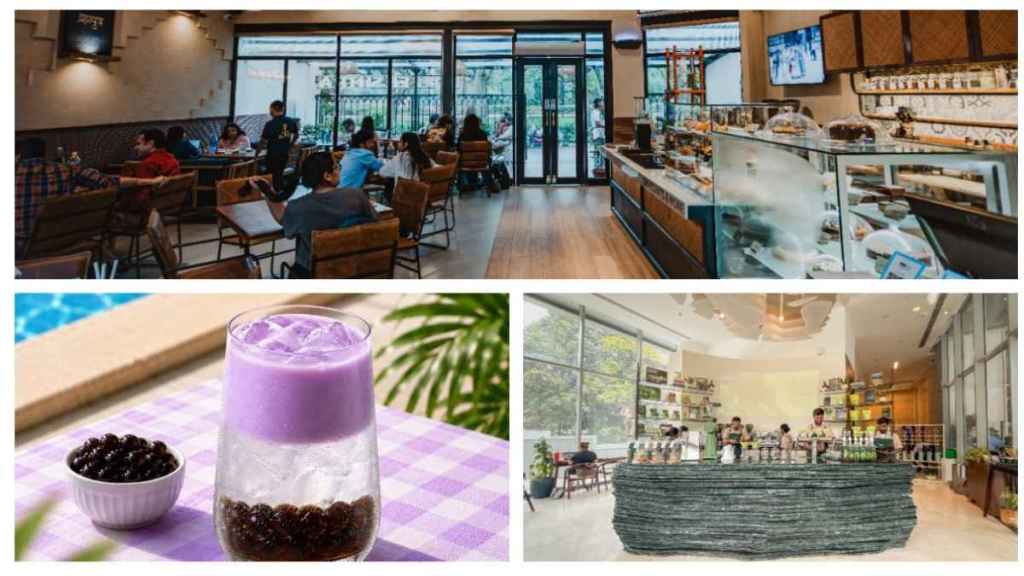

India’s coffee story is no longer confined to the familiar cappuccino or the traditional south Indian filter coffee. From espresso tonics and coffee mocktails to purple-hued ube lattes, protein coffees, peanut chikki filter kaapi and Thai coconut milk lattes, the popular beverage is undergoing one of its biggest transformations – and café chains and speciality brands are now racing to satisfy consumers seeking novelty, premium experiences and global flavours.
The shift is translating into robust business growth for two reasons. Firstly, café operators say consumers, particularly Gen Z and millennials, are treating coffee as an experience rather than just a beverage, prompting brands to invest in innovation labs, premium ingredients, manual brewing methods and origin-led offerings. Additionally, companies believe India’s speciality coffee market has reached an inflection point where consumers are becoming as interested in bean origins, roasting techniques and brewing methods as they are in flavour.
Cups of change
As per the Coffee Board of India’s post-blossom estimates, the country’s total coffee production is likely to reach 403,000 tonne (6.72 million 60-kg bags) in the 2025-26 crop year, up 10.9% from the previous year. Gains are anticipated across the country’s three major coffee-growing states — Karnataka, Kerala and Tamil Nadu.
Karnataka, India’s largest coffee-producing state, is projected to account for 4.67 million bags, including 3.26 million bags of Robusta and 1.42 million bags of Arabica. Kerala is expected to produce 1.42 million bags, almost entirely Robusta, while Tamil Nadu’s output is estimated at 338,583 bags.
Although India is the world’s seventh-largest coffee producer, contributing around 4% of global output, it imports about 1.3 million bags of coffee annually, primarily green beans, to supply its soluble coffee industry. Soluble coffee dominates domestic consumption, accounting for an estimated 1.16 million bags of the 1.58 million bags expected to be consumed this year, according to the United States Department of Agriculture (USDA).
Industry estimates suggest India’s organised café market, currently valued at around Rs 5,000 crore, continues to grow at a double-digit pace, driven by urbanisation, rising disposable incomes and the increasing popularity of cafés as workplaces, social hubs and lifestyle destinations. Coffee companies say coffee consumption is expanding well beyond its traditional southern base, with cafés serving as hubs for work, socialising and premium food-and-beverage experiences in cities across northern and western India.
“Over the past 20 years, coffee culture in India has changed tremendously. Earlier, coffee was mostly limited to black or coffee with milk. Today, consumers are exploring a wide variety of coffee experiences,” says Dushyant Singh, founder of Coffee Sutra, a 360-degree speciality coffee brand started in 2021, covering farm sourcing, roasting, and cafes. According to Singh, nearly 30-35% of consumers are shifting from regular coffees to experimental beverages, including coffee mocktails and espresso blended with fruit juices. Manual brewing methods such as V60 (a crisp, nuanced cup using 1:15 coffee-to-water ratio), AeroPress (manual coffeemaker) and Gabi Pour Over (multi-chamber dripper) are gaining popularity as consumers seek more refined coffee experiences. “People today are equally interested in understanding how coffee is brewed, where it comes from and what makes every cup unique,” he says.
The evolution is visible across major café chains. Third Wave Coffee, which now operates more than 220 cafés nationwide, recently entered eastern India with three outlets in Kolkata, with plans to add another six cafés during the current financial year while targeting several other cities.
The company has built an innovation lab dedicated to tracking global coffee trends and developing new beverage formats. This year, it introduced an ‘espresso tonics’ range in collaboration with Schweppes, while previous seasonal launches included pistachio lattes, saffron cold coffee and tiramisu frappes. Beyond coffee, the chain has also expanded into adjacent beverage categories such as matcha and iced teas, reflecting changing consumer preferences. For instance, it has expanded into desserts through its Third Rush brand launched in April to boost evening and after-hours cafe visits. It features an extensive menu of roughly 200 items, including tres leches, cheesecakes, and skillet cookies.
Similarly in Mumbai, Grounded cafe has launched a curated menu from classics like the espresso, Americano, flat white, cappuccino, and cold brew, to zesty Spanish latte, Nutella latte, filter kaapi latte, coconut Vietnamese latte, and Bandstand tiramisu latte.
Several café chains like Starbucks and Tim Hortons have introduced plant-based milks and functional wellness drinks like oat, almond, and coconut alternatives alongside protein-boosted or functional beverages and globally inspired recipes to broaden their customer base. Coffee Island India launched Proffee, a protein-forward coffee innovation sourced from single-estate beans across Ethiopia, Brazil, Nicaragua, Kenya, Colombia, and Peru. It claims to combine 100% premium coffee with 24.6 gm of protein per serving and zero added sugar.
“The out-of-home coffee market is expected to reach $2.6-3.2 billion by 2028,” says Rajat Luthra, CEO of Third Wave Coffee, adding, “Consumers today are no longer limiting themselves to traditional cappuccinos and lattes. They’re actively exploring flavour-forward beverages, cold brews and globally inspired formats.” Third Wave Coffee is growing 40-45% year-on-year, with innovation-led beverages helping nearly 90% of its stores become EBITDA positive.
Premiumisation is emerging as the industry’s biggest growth driver, with consumers willing to spend on single-origin beans, artisanal brewing methods and limited-edition offerings rather than conventional instant coffee. Large café chains are responding by broadening their portfolios beyond traditional espresso beverages. For intstance, Nestlé’s coffee division, anchored by Nescafé and Nespresso, achieved steady performance driven by steady international demand and strategic expansions. Over the past year, Nespresso has expanded its presence across Delhi-NCR, Mumbai, and Bengaluru through a range of retail formats, including boutique, pavilion, and pop-up. The launch of the Nespresso pavilion in Bengaluru in Q1FY27 marks another step in taking the brand closer to discerning consumers where they seek premium coffee experiences.
Similarly, Barista Coffee, which now operates more than 530 cafés across 170 cities in India and Sri Lanka, has expanded into frappes, cold coffees, functional beverages and premium seasonal offerings. “Our objective is to ensure Barista remains relevant both for coffee connoisseurs and young consumers looking for experimentation,” says CEO Rajat Agrawal.
Global flavours
India’s booming coffee culture has drawn major global names like Starbucks, Tim Hortons, and Costa Coffee to expand across the country in the past few years. But new names have now entered the segment.
Coffee Island India, a European coffee chain that officially launched in India in January 2025 and opened its first store in Gurugram through a partnership with local operator Vita Nova, plans to scale up to 250 cafes across India by 2029, targeting metros like Mumbai, Bengaluru and Pune. The chain has introduced India’s first ‘ube’ beverage range, featuring an iced ube latte, iced ube matcha and ube smoothie, inspired by the purple yam widely used in Filipino desserts. “The consumer today is constantly looking for experiences that feel fresh, exciting and visually appealing,” says Samit Khanna, co-founder of Vita Nova, which operates Coffee Island in India.
India’s evolving coffee palate is also encouraging premium roasters to introduce internationally sourced speciality beans. Pour Over Coffee Roasters has launched an exclusive ‘Colombian collection’ in India featuring distinctive coffees from Colombia’s renowned Huila region. The collection includes the rare papayo natural variety, Colombian blend natural and an Indo-Colombian blend that combines premium Indian and Colombian arabicas. Founder Ritika Sharma says the collection reflects growing consumer interest in origin-led coffees and stronger connections between producers and consumers. “Every lot is selected because it represents something unique — a producer, a process or a story worth sharing,” she says.
Meanwhile, Colombian speciality coffee chain Libertario, which entered the Indian market last year, plans to open four more cafés in the Delhi-NCR region this year before expanding into Mumbai, Hyderabad and Bengaluru in early 2027, underscoring the growing confidence global players have in India’s premium coffee market.
Raising the bar
Indian speciality coffee brands are equally bullish. Coffee Sutra now operates four cafés while supplying beans to over 60 brands across India. The company has reported over 100% growth compared with the previous financial year, with turnover of around Rs 20 crore in 2026.
Speciality coffees now contribute around 15% of orders at its cafés, reflecting rising consumer interest in single-origin and microlot coffees. The company has also expanded beyond conventional offerings to include three varieties of cold brews while serving India’s only Gabi Pour Over coffee.
While Indians beat the heat with iced coffee, Swiggy’s Summer Trends 2026 report shows that the demand for cold beverages rose 20.7% year-on-year, with coffee and mocha-based drinks seeing a 38.4% jump.
Meanwhile, brands like Nandan Coffee establish that traditional coffee can be reinvented without losing its roots. The farm-to-cup coffee company grows three coffee varieties at its organic estate in Kodaikanal, Tamil Nadu, and produces 13 different coffees using natural and washed processing methods. The cafés offer everything from classic pour-overs to orange cardamom filter coffee, peanut chikki filter coffee, raspberry cold brew, Vietnamese protein coffee shake and mini bullet coffee.
This year, Nandan Coffee introduced Filter Kaapi Bar, a dedicated south Indian filter coffee station featured inside the brand’s flagship store in Bengaluru, that helps customise beverages with flavours such as honey cardamom filter kaapi and spiced orange vanilla filter kaapi, while limited-edition Nandan gold beans target specialty coffee enthusiasts. “We’ve grown by over 100% year-on-year over the last three years,” Yahvi Mariwala, co-founder of Nandan Coffee, tells FE.
For Mariwala, consumers are the biggest innovators. “Today, they are not only asking where their coffee comes from, how it’s grown and why different coffees taste different, but also looking for spaces that fit naturally into their everyday lives. They want a coffee they can analyse over a pour-over, but they also want a place where they can meet a friend, bring their family, work for a few hours, or then enjoy a good meal. For Nandan Coffee, the opportunity has been in bridging those two worlds. We can trace our coffee back to our own estate, but we present it in a way that feels accessible to a wide range of consumers. That combination has helped us build a loyal customer base and has contributed significantly to our growth over the past few years.”
Hosa, the south Indian restaurant known for its contemporary exploration of regional flavours and traditions, is also reimagining the humble filter coffee. It has introduced the Hosa Filter Coffee Club, a curated coffee experience that brings the ritual of south Indian filter kaapi into focus. Designed as a slow pause in the day, the club reimagines coffee not as a quick beverage, but as a moment to connect and savour with a selection of signature brews, including classic filter coffee and filter coffee frappes in exciting variations like strawberry cake, hazelnut, monsoon Malabar, and single-estate offerings, each reflecting the diversity of south India’s coffee culture.
Meanwhile, Indian coffee brands are also going global. Blue Tokai Coffee Roasters recently entered the Gulf Cooperation Council (GCC) market with its first café at BurJuman Mall in Dubai through a strategic partnership with F&B platform, Ambrosia Foods. The move marks the Indian speciality coffee brand’s regional debut, with plans to open more than 10 outlets across the GCC over the next few years. Founded in 2013, Blue Tokai now operates over 250 cafés and three roasteries in India and works with more than 80 coffee farms.
The premium coffee boom is unfolding despite one of the most volatile periods for global coffee markets. Poor harvests in Brazil and Vietnam, adverse weather and climate-related disruptions have pushed bean prices sharply higher over the past two years. Yet café operators say demand has remained resilient, with consumers willing to pay more for differentiated experiences. For instance, Nestle expects coffee to remain well supplied, supported by higher production in Brazil and Vietnam, though short-term volatility may persist due to fund activity and weather related harvest delays in Brazil.
Sustainability is emerging as a key differentiator as brands source traceable coffees, work directly with growers and promote regenerative farming practices. Industry experts believe climate resilience and ethical sourcing will become as important as flavour, ambience and presentation in shaping the next phase of India’s coffee industry. Manoj Kumar, CEO of Naandi Foundation and co-founder of Araku Coffee, says climate change is forcing the industry to rethink coffee cultivation. “Following regenerative and organic agriculture practices is the only way to improve resilience as climate change increasingly affects coffee-growing regions,” he adds.