



Imagine stealing a masterpiece worth millions of euros, escaping without being caught, and then discovering that you cannot sell it to anyone without risking arrest. What good is a fortune on canvas if turning it into cash could land you in prison? It is the paradox of the international art-theft trade. Museums are raided, display cases smashed and cultural treasures spirited away in daring operations. Yet the thieves face a problem. The more famous the stolen object, the harder it can be to sell.
So why do they keep doing it? And who is willing to buy something that was never theirs to own?
France has been confronted with that mystery again. In early October, thieves stole the enormous, jewel-encrusted bronze cover of Salvador Dalí’s Livre de l’Apocalypse (Book of Revelation) from the C Karoutzos Contemporary Art Centre in Issoire. The cover, weighing approximately 150 kg, was decorated with gold, precious stones and pearls. The unique book was created between 1958 and 1961 through a collaboration involving seven artists and seven writers. Its owner was devastated, while investigators were left with the question of how such an extraordinary object could disappear.
The Dalí theft is not alone. It is part of a wave of robberies that has exposed the vulnerability of cultural institutions across Europe.
Thieves struck the Louvre in Paris on October 19 last year, escaping with French crown jewels valued at approximately €88 million. The daytime raid shook confidence in the security of one of the world’s most celebrated museums. This year, the museum’s Apollo Gallery reopened, but the stolen jewels remained missing.
In another extraordinary theft in Spain on August 27, burglars raided the Museum of Villena and stole much of its prehistoric Treasure of Villena, a collection of gold artefacts dating back roughly 3,000 years. The raid reportedly lasted less than four minutes. The treasure’s gold alone was estimated to be worth at least €1.7 million, although its archaeological and historical significance is far greater than the value of its metal.
In Vienna, in August, two men entered the Museum of Applied Arts as ordinary visitors before smashing a display case and stealing a platinum necklace set with 673 diamonds. The necklace had once belonged to Queen Nazli of Egypt and was valued at more than £3 million. The brazen daytime robbery illustrated how objects displayed for public enjoyment can become targets for criminals seeking valuable, portable loot.
In Sicily, four Renaissance panels by Antonello da Messina were reported stolen from a museum in Messina in August. Meanwhile, a July raid on France’s Lalique Museum saw thieves escape with 27 crystal pieces and jewellery valued at approximately €4.5 million.
Historic jewels, ancient gold, celebrated paintings and unique works of art are all being targeted.
But who buys stolen art? A painting by Renoir or a jewel-encrusted object associated with Dalí may command an extraordinary price in a legitimate market. But once reported stolen, its fame becomes a liability. Auction houses, reputable dealers and collectors face legal and reputational risks if they attempt to trade in it.
The answer is that not every stolen artwork is destined for a conventional sale. Some criminals may seek buyers in illicit networks, while others may use stolen objects as collateral, bargaining chips or leverage in negotiations. In some cases, thieves may hope to sell an object for a fraction of its legitimate value to someone willing to ignore its history. Others may target precious materials rather than the artwork itself. For some perpetrators, the challenge of penetrating a museum and escaping with a celebrated object may be part of the attraction. The theft can offer notoriety, a sense of power or the thrill of outsmarting authorities. Political or ideological motives can also drive the destruction, removal or appropriation of culturally significant objects.
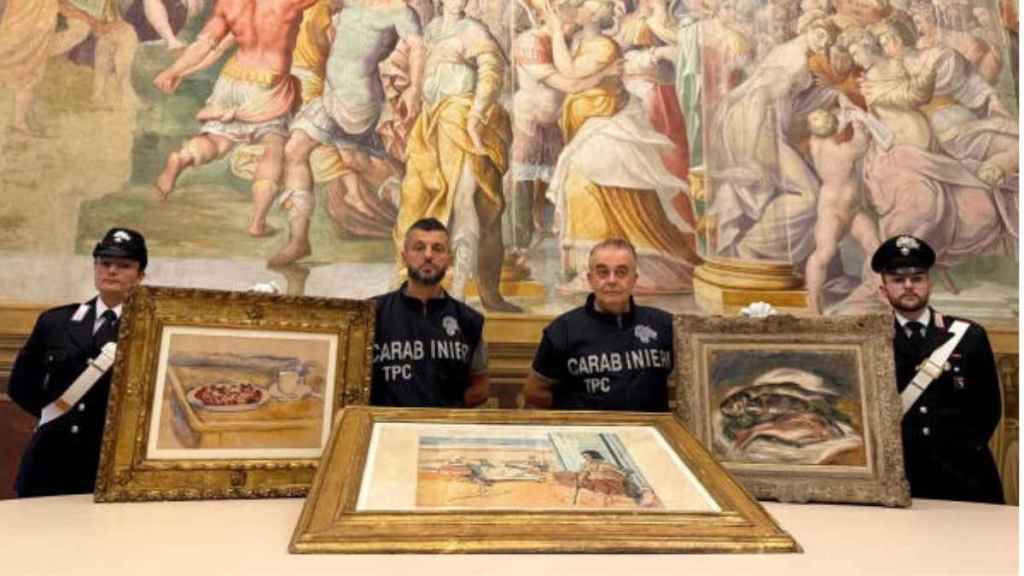
The two stolen Renoir paintings in France are a good example of the criminal afterlife. Taken from the Renoir Museum in Cagnes-sur-Mer on September 8, the works were recovered in October, hidden behind a false wall in a private home. Investigators used DNA evidence and vehicle-tracking information to help identify suspects. Prosecutors also said the investigation uncovered suspicions of a possible second museum raid. The paintings had become evidence and objects that had to be concealed.
Europol, the European Union‘s law-enforcement agency, warned in August that museum thefts were becoming more aggressive, with criminals targeting precious metals, gemstones and culturally significant objects. Its findings suggest that the problem extends beyond individual security failures to a wider criminal ecosystem. So, what do art thieves gain? Sometimes money, leverage, sometimes the thrill of the crime. But the rewards are uncertain, and the risks can be considerable.