


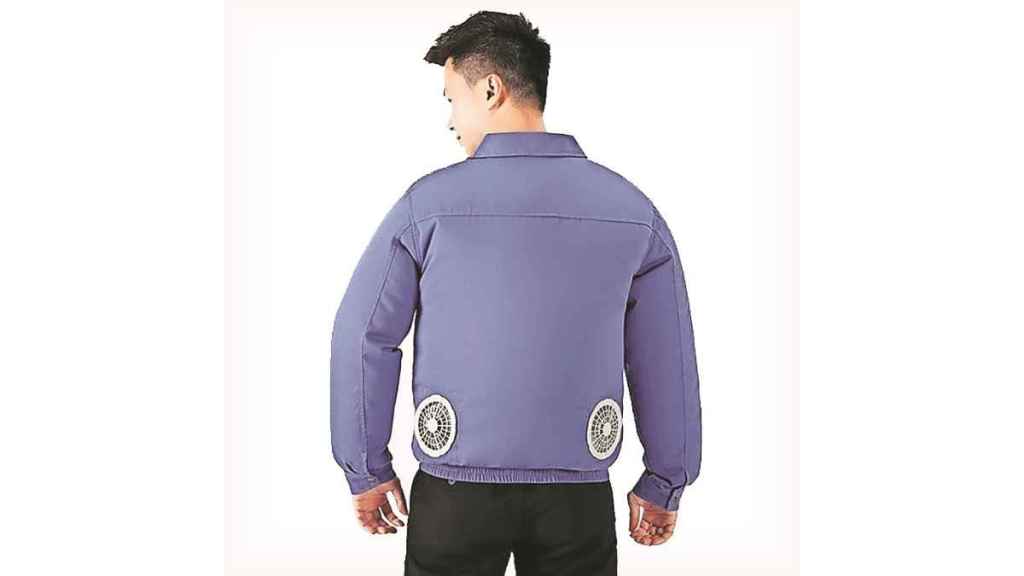

As heatwaves become more frequent and intense across the world, a new wave of personal cooling gadgets and devices is making its way into everyday life. From palm-cooling devices and air-conditioned jackets to high-tech handheld fans and UV-blocking parasols, consumers are increasingly looking for ways to manage extreme temperatures without relying solely on air conditioning.
The trend is particularly visible across east Asia, where record heat this summer has pushed people to invest in personal cooling devices, especially those who work long hours out in the open, such as delivery workers and construction workers, among others.
South Korea, Japan and China have experienced intense heat in recent weeks. South Korea witnessed a national temperature record of 42.5 degrees Celsius in Yangsan, while parts of Japan reached or exceeded 40 degrees. China has also experienced severe heat, with temperatures reaching 50 degrees in parts of Xinjiang. These extreme conditions have brought several sectors to a screeching halt or severely slowed them down — agriculture, outdoor work and sporting events, thereby increasing demand for practical ways to cope with the heat. Japan has emerged as one of the biggest markets for such devices.
Handheld fans remain ubiquitous, but newer models are increasingly using thermoelectric technology, incorporating a small cooling plate that can be held against the neck or other parts of the body. The country’s online market for ‘heat countermeasure’ products has expanded more than sixfold since 2020, according to Rakuten, a quick commerce platform, and now contains hundreds of thousands of products.
Wearable cooling is also gaining popularity. Fan-cooled jackets, first developed in Japan more than two decades ago, use battery-powered fans to circulate air inside clothing. Newer versions are being developed with cooling plates or other technologies. In China, delivery workers in Chongqing are testing air-con jackets while some workers in Hubei are using waist-mounted mini-fans. As for South Korea, cooling neck bands filled with coolant are becoming popular among commuters and outdoor workers.
A specially designed cooling vest using a vortex-tube system is being tested at hundreds of farms. The technology is particularly aimed at greenhouse workers, who can face dangerous combinations of heat and humidity. Even relatively traditional accessories are getting a technological makeover. UV-blocking parasols have gained popularity in Japan and South Korea, with some featuring dark undersides designed to reduce ultraviolet exposure. Solar-powered fan hats, hands-free parasols and even air-conditioned pet houses are among the other products emerging from the rapidly expanding personal cooling market.
The sporting world has also helped push some of these technologies into the public eye. During the 2026 FIFA World Cup in the United States, England’s players used specialist palm-cooling devices as part of their efforts to manage heat during training and matches.
The portable devices cool the palms, helping the body dissipate heat more efficiently. Cooling vests and other recovery equipment have also featured in the team’s preparations. Therabody’s CryoTherm Palm, a cordless palm-cooling device designed for recovery and heat management, is another example. Once considered only for elite athletes, it is now becoming a near necessity for commoners. This shows how sports science is increasingly influencing consumer cooling products, due to the rising temperatures in certain regions. Some experts caution that gadgets are not a substitute for basic heat-safety measures.
Fans can become less useful once temperatures climb sufficiently high as they may simply circulate hot air. Cooling bands can lose their effectiveness quickly. Hydration, shade, appropriate clothing and avoiding strenuous activity during the hottest part of the day remain important. The popularity of these products points to a broader change, where personal cooling devices are being treated not as a novelty, but as an adaptation to a hotter world.