



Come October 26, and part of Oxford Street in London, UK, will enter a new era. The stretch between Orchard Street and Great Portland Street, almost a kilometre of one of the world’s best-known shopping streets, will become traffic-free, with buses, taxis, bicycles and other vehicles diverted elsewhere. Deliveries will be restricted to overnight hours. The aim is to make walking more pleasant, and give a retail destination competing with online shopping and malls a new lease of life.
The idea to turn high streets into car-free zones has a long urban history. Copenhagen’s Strøget was pedestrianised as an experiment in 1962, despite retailers’ fears that removing cars would also remove customers. Instead, the street became a model for the modern pedestrian shopping district. Dublin’s Grafton Street has seen similar experiments. A weekend pedestrianisation trial around the street in 2020 was followed by reported increases in business takings of between 40% and 100% among surveyed businesses.
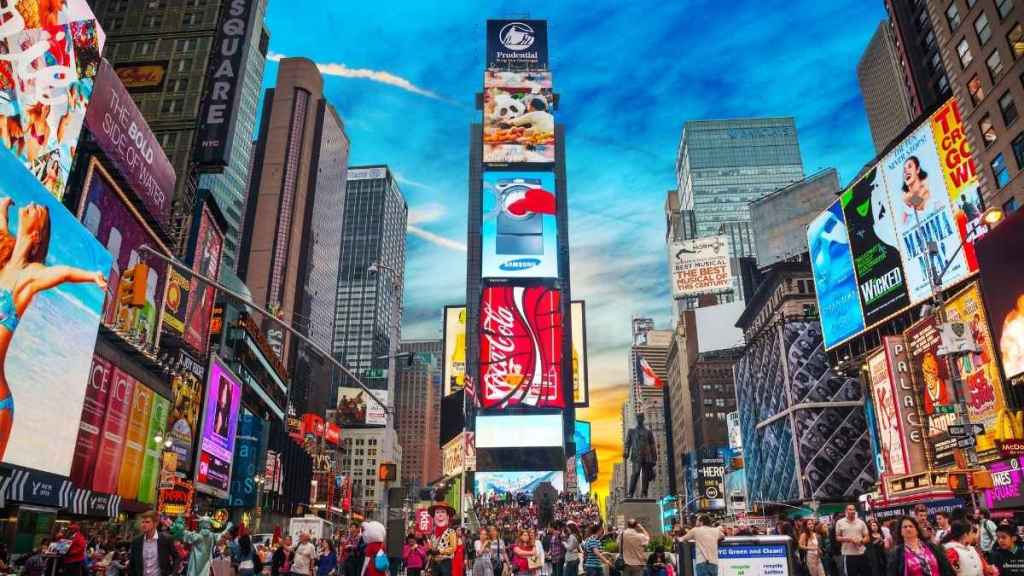
New York’s Times Square, once synonymous with traffic and congestion, gradually surrendered road space to pedestrians, turning what had been a place to pass through into a place to linger. Brussels created one of Europe’s largest central pedestrian zones, known as Le Piétonnier, by transforming major thoroughfares like Boulevard Anspach into car-free public spaces.
The economics from such examples is clear. Shoppers do not necessarily need to arrive by car to spend money. They need a destination that is comfortable, accessible and worth spending time in. India already has a familiar version of the car-free shopping street — Shimla’s Mall Road, for instance. The area is closed to vehicles, apart from emergency access, and remains one of the city’s defining retail and tourism spaces. Visitors stroll, browse, eat and stop. The street becomes part of the attraction.
Bengaluru offers a more urban example. Church Street has been used for pedestrianisation experiments, with the move associated with more outdoor activity, greater use of public transport and a 162% increase, as per some reports, in visitors at the MG Road Metro station on pedestrianised weekends. MG Road itself has also been tested as a no-traffic zone during Open Street Day. Bengaluru’s mobility plans have identified several other commercial streets including Commercial Street, Brigade Road, Gandhi Bazaar and Russel Market Road, as potential pedestrian streets.
Delhi and Mumbai are not too far in this approach. Ajmal Khan Road and the Chandni Chowk corridor in the national capital showed that removing cars can change the character of a market. The Chandni Chowk pedestrian corridor spans a 1.3- to 1.6-km stretch from the Red Fort (Lal Jain Mandir) to Fatehpuri Masjid, and was opened to the public in September 2021 after a major urban redevelopment project. Motorised vehicles are banned on the main arterial road from 9 am to 9 pm to prioritise shoppers and foot traffic. Early results have shown sharply higher footfall and a more lively public realm, despite frequent incidents of violations on such streets.
Mumbai’s Kala Ghoda is now testing a more gradual model. Five heritage streets — VB Gandhi Marg (Forbes Street), Rope Walk Lane, Saibaba Road, B Bharucha Road, and Rutherfield Street— are vehicle-free on weekend evenings, creating space for walking, cafés, public art and events. The precinct’s plans include underground parking, while delivery access is being managed through designated arrangements.
Similarly, earlier this month, the New Delhi Municipal Council (NDMC) sought public views on making Connaught Place’s inner circle vehicle-free for parts of the day. However, the proposal has triggered strong opposition from traders’ associations due to concerns that restricting cars can make the market less accessible to shoppers.
Here the idea is about fewer cars, more room to walk, street performances, outdoor activity and perhaps a high street that feels like a destination rather than a traffic interchange.
While a high street is a public space where people browse, meet, eat, sit, watch and linger, cars are useful for getting people to cities and not necessarily for making a shopping street attractive once people arrive. It won’t be wrong to say that pedestrianisation can save a high street, but only when the street is designed around the people who use it.