



What if getting enough sleep is no longer enough, studying hard is not sufficient, and even relaxing must serve a purpose?
Welcome to the world of ‘maxxing’, where almost every aspect of life can be turned into a project of self-improvement. From perfecting one’s appearance to optimising sleep, diet, productivity or leisure, the new-age pursuit is not about doing better but about doing as much as possible.
We live in a world where social media constantly shows idealised versions of success, and the word ‘maxxing’ points out the growing urge to squeeze the maximum potential out of everything we do. That’s why it is Dictionary.com’s Word of the Year 2026, reflecting the growing influence of internet slang on contemporary language and culture.
Derived from ‘maximising’, the term refers to pursuing an activity to its fullest or optimising a particular aspect of life. This word is used in niche online communities and has now entered mainstream conversations, fuelled by memes, influencers, short-form videos and the internet’s appetite for the next big trend.
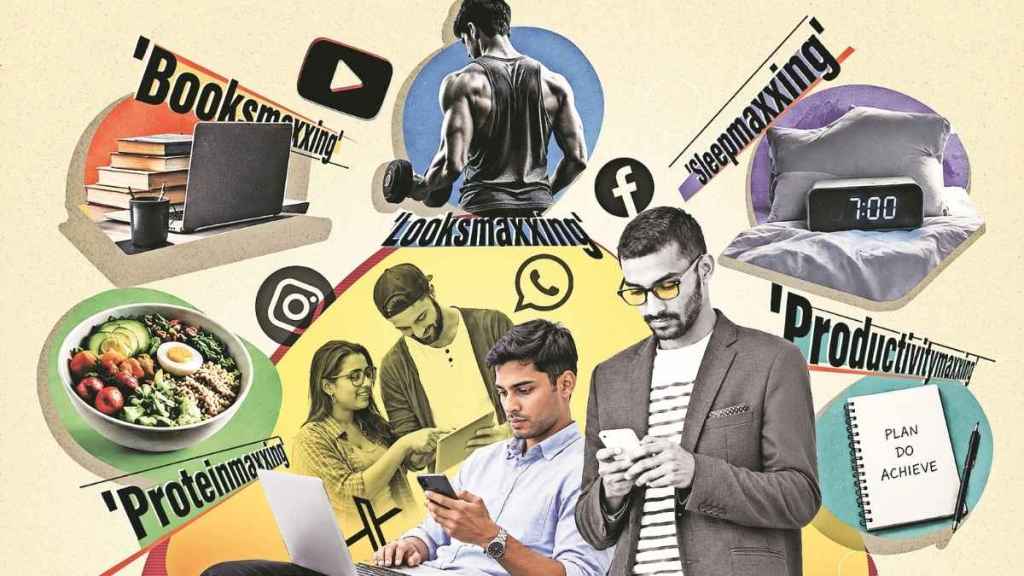
The word is a flexible suffix, attached to any activity to describe an intensified effort to achieve a desired outcome. For instance, ‘looksmaxxing’ involves improving one’s physical appearance through grooming, skincare, fitness and fashion. ‘Sleepmaxxing’ focuses on improving sleep quality, while ‘studymaxxing’ involves refining study routines and learning techniques.
‘Proteinmaxxing’ refers to increasing protein intake, while ‘cozymaxxing’ celebrates the pursuit of comfort through relaxing environments and everyday rituals. Other expressions, such as ‘productivitymaxxing’ and ‘booksmaxxing’, extend the idea to work, reading and personal development.
Today, the popularity of this word is not surprising. As more people are encouraged to improve their skills, maintain their health, pursue educational opportunities and build successful careers, digital platforms offer advice, from fitness plans and skincare routines to study strategies and productivity systems.
Maxxing, in a way, can be a positive force. It encourages people to take an active role in their development, experiment with new approaches and set meaningful goals. The desire to improve is not new; what has changed is the vocabulary through which people express it and the intensity with which it is often pursued.
There is also a deeper cultural shift. Self-improvement, once largely a personal aspiration, appears to be a continuous obligation. There is pressure to become healthier, smarter and efficient, often according to standards shaped by online communities rather than individual needs. Thanks to social media that has played a central role in popularising this mindset.
Influencers show elaborate morning routines, disciplined workout schedules, carefully planned diets and effortless transformations. Their content offers inspiration, but it can also create an endless stream of comparisons. But this is just one half of the picture. A transformation may not show years of effort, financial privilege, professional assistance or personal struggles that never make it into a video. So, self-improvement can become a competition rather than a personal journey.
Maxxing can encourage perfectionism, anxiety and burnout. Productivitymaxxing, for instance, may lead people to measure their days entirely by completed tasks. Rest begins to feel unproductive, hobbies must offer benefits, and free time becomes something to optimise rather than enjoy.
Looksmaxxing can create similar problems when physical appearance becomes an endless project. Exposure to unrealistic beauty standards and extreme online advice may intensify insecurities, shifting attention from health and personal expression towards perceived imperfections. Adhering to a daily routine using facial cleansers, moisturisers, and SPF 50 sunscreen, alongside regular haircuts and eyebrow shaping is softmaxxing while undergoing plastic surgery such as rhinoplasties (nose jobs), chin extensions, maxillofacial procedures, or botox is a hardmaxxing example.
There is also a limitation to the idea that everything can be optimised through effort alone. Individual circumstances, financial resources, health, opportunities and chance all influence outcomes. Not every setback reflects poor discipline, and not every ambition can be achieved by working harder.
A healthier approach to maxxing begins with recognising the difference between meaningful growth and compulsive optimisation. Therefore, sleep should support well-being, not become another source of anxiety. Exercise should build strength and confidence, not reinforce dissatisfaction with one’s body. Productivity should help people create time for what matters, rather than consume every available moment.
The rise of ‘maxxing’ is a contradiction of the digital age. There have never been so many tools and resources available to help people learn, grow and achieve their ambitions, at the same time, the pressure to measure against an ideal life.