



Protocols
Andrew Huberman
Penguin Random House
Pp 320, Rs 1,299
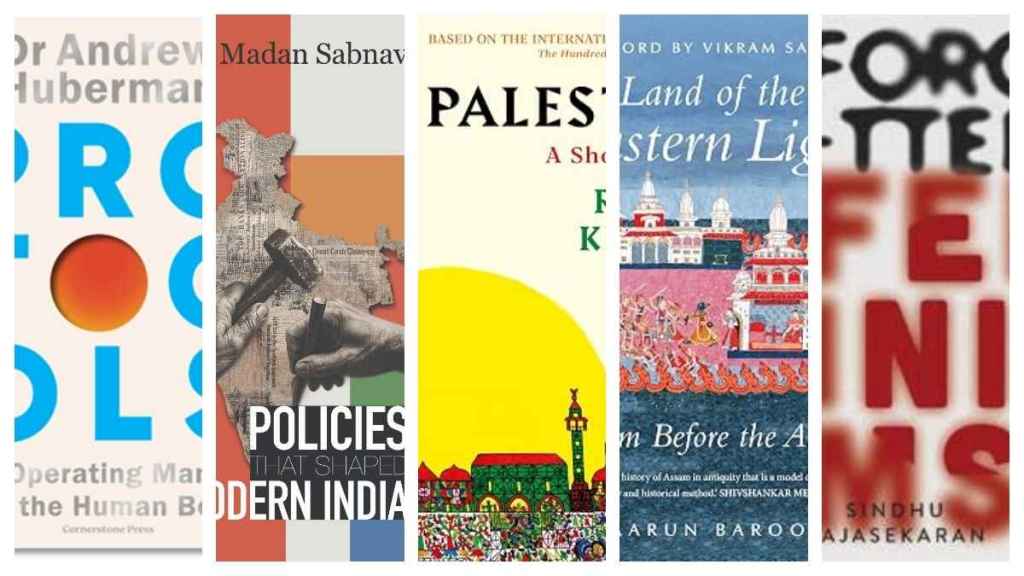
Small, deliberate changes can alter how we feel, think and perform, proposes Protocols. Andrew Huberman explains the science behind each protocol and, importantly, how to adapt it to individual needs rather than treating health as a one-size-fits-all prescription. From morning light and sleep to stress regulation, the book addresses the ordinary problems that shape extraordinary amounts of our lives.
Palestine: A Short History
Rashid I Khalidi
Hachette
Pp 256, Rs 499
Palestine offers a powerful introduction to Palestinian history through a century of conflict and resistance. Blending incisive research with his own family memories, celebrated scholar Rashid Khalidi traces Palestine’s story from the British occupation to Israel’s ongoing colonial war. Powerfully explaining the history behind the world’s most urgent — and misunderstood — conflict, Rashidi explores why Israel has long fought against Palestine.
Forgotten Feminisms
Sindhu Rajasekaran
Aleph Book Company
Pp 320, Rs 899
In most historical accounts, Indian women have figured as footnotes to the history of ‘great’ men, and have usually been cast as victims of the patriarchy. Forgotten Feminisms challenges this reading of history. Rajasekaran argues that, historically, Indian women weren’t helpless victims in need of saviours — our foremothers, across the socio-economic spectrum, gave fierce battle to both the brahmanic patriarchy and British colonialism.
Policies That Shaped Modern India
Madan Sabnavis
Rupa Publications
Pp 208, Rs 695
Policies That Shaped Modern India delves into the experimental nature of policy planning, engaging in an economics-based understanding and historical discourse of the Indian growth story. Through the course of single-party dominance in Indian politics, and the changes of the late 1980s and 1990s, there were some policies that completely changed the economic and financial sphere of the country, while there were a few others that failed to make the desired impact.
Land of the Eastern Light
Nabaarun Barooah
HarperCollins
Pp 336, Rs 599
Long before Sukaphaa, the
Tai-Ahom king, crossed into the Brahmaputra valley in the 13th century, Assam had lived under different names: Pragjyotisha in epic memory, Kamarupa in historical record — around which had gathered a world of kings and gods, elephant armies and sacred rivers, fortified cities and ritual power. In Land of the Eastern Light, Nabaarun Barooah tells the story of Assam from mythic antiquity to the eve of the Ahom age.