



Friday evenings have always carried a certain magic.
The weekend lies ahead.
A chance to switch off.
To slow down.
To escape the pressures of work.
The holiday calendar brings similar anticipation.
Long weekends.
Summer breaks.
That annual vacation we look forward to for months.
There is nothing wrong with any of this.
In fact, these pauses often help us recharge.
But every now and then, I find myself wondering about a different question.
What if we designed a life that didn’t constantly make us wait for Friday?
For much of our working lives, escape is understandable.
Responsibilities are real.
Deadlines are demanding.
There are careers to build, children to raise, parents to care for and financial commitments to
meet.
Life often moves at a pace we don’t entirely control.
But something changes in the second half of life.
Gradually, choice begins replacing obligation.
Time becomes more flexible.
Responsibilities become lighter.
The question is no longer, “How do I fit life around work?”
It becomes,
“How do I shape my days now that I have greater freedom to choose?”
And perhaps that is where many people make an interesting mistake.
They recreate the same pattern they have lived for decades.
The calendar fills again.
Committees.
Meetings.
Advisory roles.
Social obligations.
Travel that feels rushed rather than restorative.
Almost without noticing, busyness returns wearing different clothes.
Perhaps this stage of life invites something else.
Not a fuller calendar.
A fuller life.
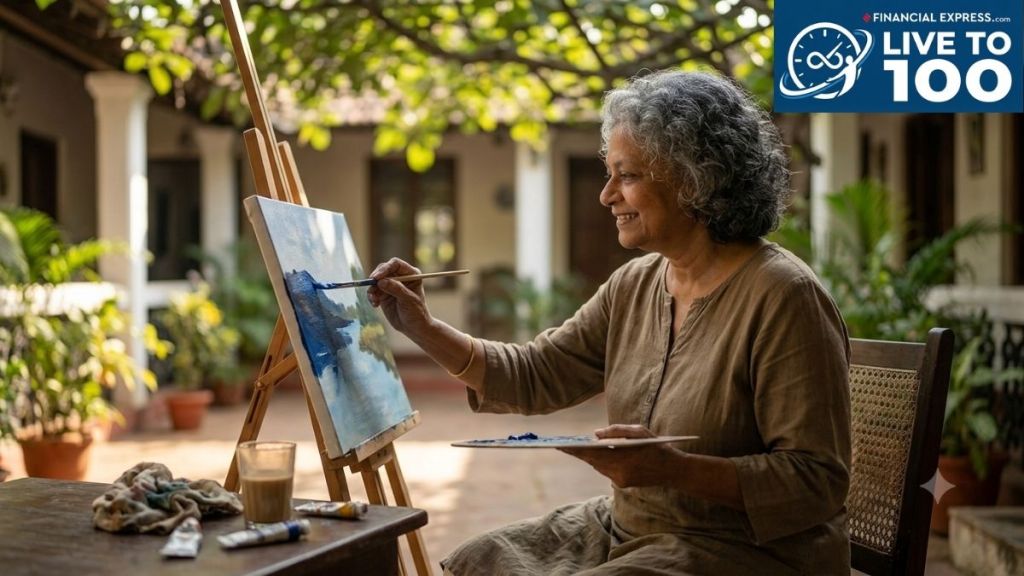
One where an ordinary Tuesday can be just as satisfying as a Saturday.
Where lunch with a friend matters as much as a business meeting once did.
Where a morning walk is not squeezed into the day, but becomes the day.
Where reading for an hour no longer feels indulgent.
Where learning something new is not preparation for a career, but an expression of curiosity.
The irony is that many of us spent decades earning the freedom we always wanted.
Yet when freedom finally arrives, we often don’t know what to do with it.
Perhaps because no one ever taught us how to design a life.
We were taught how to build careers.
How to accumulate wealth.
How to manage responsibilities.
Very few of us were taught how to live intentionally when those responsibilities begin to recede.
Maybe that is the real opportunity of the second half of life.
Not simply to slow down.
But to become deliberate.
To ask whether our days reflect our values.
Whether our calendar reflects our priorities.
Whether the way we spend our time resembles the life we have worked so hard to create.
Because in the end, a meaningful life is not built during two weeks of annual vacation.
It is built in the ordinary rhythm of everyday living.
Perhaps the greatest luxury is not the ability to escape from life.
It is creating a life you no longer feel the need to escape from.
A question to reflect on:
If every day carried the same promise as a Friday evening, what would you choose to do
differently tomorrow morning?
Since its debut, Live to 100 has explored the essential shifts needed for a fulfilling second half of life. Early installments focused on cultivating ‘inner fitness,’ navigating the quiet middle, and redefining money from pure accumulation to peace of mind. Subsequent pieces tackled the emotional landscapes of aging—from managing loneliness and retirement anxiety to reclaiming time management, rebooting financial communication as a couple, and navigating the quiet identity shifts that occur when professional demands slow down.
More recently, the series examined how finding a renewed sense of purpose and usefulness becomes the ultimate key to fulfillment after 50. We decoded why learning to say “no” is a critical life skill for editing our time, why embracing the courage to become a beginner again keeps us emotionally young, and how regret—when handled with intention—can transform from a look backward into a clear guide for building the years ahead.
Sanjay Mehta is a digital entrepreneur, investor, board advisor, and public speaker. He is the founder of Ananta Quest and co-founded Social Wavelength, which became one of India’s leading social media agencies and was later acquired by WPP to become Mirum India.